



Numismatiek
43 boeken gevonden









Aleksander Bursche, Jaros?aw Bodzek, Anna Zapolska (eds)
Proceedings of the XVI International Numismatic Congress, 11?16.09.2022, Warsaw: Vol. II. Roman Numismatics. 11.1 Coinage, 11.2 Circulation
Brepols, 2025. Paperback, Pages:2 vols, 848, Size:216 x 280 mm, Illustrations:112 b/w, 30 col., Languages: English, French, Spanish. ISBN: 9782503616728
Summary The XVI International Numismatic Congress, held in Warsaw, Poland, in September 2022, was a landmark event, drawing the largest number of participants in its history. With over 550 papers presented during thematic sessions and round tables, this congress showcased the latest advancements and research in the field of numismatics from leading experts and scholars in their field. A curated selection of papers from the conference have now been drawn together into peer-reviewed conference proceedings, representing a comprehensive spectrum of numismatic studies from antiquity to modern times. Each paper is meticulously illustrated with high-quality images, often of unique specimens, along with detailed diagrams, maps, and die/typological chains. Topics covered include coins and coin finds, medals, tokens, banknotes, the history of collections and collecting, and cutting-edge chemical analyses and technologies used in coin examination. This volume, the second in four thematic volumes, focuses on Roman coinage. Divided into two separate volumes, covering respectively forty-four chapters on coinage and forty on circulation, the contributions gathered here explore not only Rome and the Imperial mints, but also local phenomena from Spain to Asia Minor, including graffiti, imitations, and copies of Roman coinage. TABLE OF CONTENTS List of Illustrations Introduction Jaros?aw Bodzek, Aleksander Bursche, Anna Zapolska 11.1 Coinage 1. The Celtic Small Silver Coinage of the Upper Danube Markus Möller 2. The Contribution of 3D Digitisation to the Study of the Riedones Celtic Coins (Fr, 35) Katherine Gruel, Caroline Plumel, Benjamin Houal, Olivier Masson, Thierry Lejars 3. 3D Scanning of Celtic Coins and Deep Learning to Identify Monetary Dies Sofiane Horache, Katherine Gruel, Jean-Emmanuel Deschaud, François Goulette, Thierry Lejars 4. Image Recognition Applied to the Hoard of Le Câtillon II Chrisowalandis Deligio, Karsten Tolle, Philip de Jersey 5. The Manerbio Hoard (Lombardy, Italy) and 3D Digitisation: The Rediscovery of Cisalpine Gaul's Drachmas Elodie Paris, Ermanno A. Arslan, Katherine Gruel, Joseph Lleres 6. The Roman Republican Die Project (RRDP). History and New Methodologies Lucia F. Carbone, Liv M. Yarrow, Alice Sharpless 7. The Roman Republican Die Project (RRDP). Methods and Preliminary Findings Alice Sharpless, Lucia Carbone, Liv Yarrow 8. The Debasement of the Denarius in the 80s BC Kevin Butcher, Matthew Ponting 9. Un caso singular de la monetización del SO de Hispania en época republicana: Mesas do Castelinho (Almodôvar, Portugal) Amilcar Guerra, Carlos Fabião, Susana Estrela, Bartolomé Mora 10. Minting in the Middle Ground. Counterfeited Roman Coins in the Lake Geneva Region (60-20 BC) Charles Parisot-Sillon 11. Tracing Roman Gold Stocks with LA-ICP-MS Analysis of Coins from the Second Punic War to the End of the First Century AD Arnaud Suspène, Maryse Blet-Lemarquand 12. Non-Destructively Determining the Composition of Coinage from Rome and the Mediterranean, from 200 BC to 64 AD Adrian D. Hillier, Toluwalase Agoro, Katsu Ishida, Matthew Ponting, Kevin Butcher 13. The Representation of Sicily on the Roman Coinage from the Republic to Augustus Manon Larue 14. Decades Without Bronze Minting in the First Century AD: Their Significance and Impact on Coin Circulation Johan van Heesch 15. Una riconsiderazione di un Aureo a nome di Plotina Aug Divi dalla collezione di Campana Maria Cristina Molinari 16. The Return of the Pious Son. Additional Evidence on the Restored Denarius Issue Signed by Hadrian Bernhard E. Woytek 17. Einhaltung eines Gewichtsstandards in der antiken Münzprägung am Beispiel der Cistophoren Wolfgang Bretz, Gunther Eggeler, Jan Frenzel, Bärbel Morstadt, Clara Pohl 18. The Antonines: An Economy of Silver, not Gold Gilles Bransbourg 19. The Antonine Denarii from Mesopotamia: Preliminary Observations and Interpretations of Two Series from Edessa and Carrhae Edward Dandrow 20. Numi plumbei antinoënsi Giovanni Maria Staffieri 21. A Die Study of the Alexandrian Coinage of Commodus Mona Ashour 22. Natus vincere: the Image of Emperor Gallienus (AD 253-268) through Rome's Mint Coinage David Serrano Ordozgoiti 23. Die aeternitas Augusti im Licht der Münzen Katarzyna Balbuza 24. A Spanish Charioteer on a New Contorniate from Rome? Claudia Ferro 25. Numismatic Panorama: Mythical Founding Heroes in the Third Century AD Agata Aleksandra Kluczek 26. Theomorphic Ruler Images of the Counter-Emperor Postumus. Frontality as an Element of Ruler Representation in the Crisis Period of the 260s AD Michele Lange 27. La frappe de l'aureus dans les ateliers balkaniques et orientaux entre 293 et 313 Jay Dharmadhikari 28. Multiple inédit de 2 solidi de Constantin Ier à l'atelier de Trèves Marie-Laure Le Brazidec, Laurent Schmitt 29. Two Silver Ingots from the Mid-Fourth Century AD Alenka Mi?kec 30. The SM Mark on Honorius Age Bronze Issues Stefano Bruni 31. Coins of Antioch and the Transition from Late Antiquity to Early Byzantium (324-610 AD) Pavla Gkantzios Drapelova 32. A Taxonomy of Bilingual Coins from Augustus to the Mid-third Century AD Bartosz Awianowicz 33. The Coins of Nicopolis ad Istrum Kept in the Medagliere of the Veneranda Biblioteca Ambrosiana (Ambrosian Library): A Preliminary Report Giancarlo Alteri, Eleonora Giampiccolo 34. Mythical Past of Thrace and its Reflection in the Selected Monetary Issues of Hadrianopolis Marek Jurkowski 35. Rare Coin Types of Pautalia and Serdica Nikolay Dimitrov 36. Iconographic Interactions between the Roman Provinces of Thrace, Pontus Bithynia, and Asia Minor Marina Tasaklaki 37. Countermarks on the Coins of Bithynia and Pontus in the Roman Period: Some General Observations Barbara Zaj?c 38. The Identity of the Warrior God on the Coins of Ariassos Esra Tütüncü 39. A New Year of an Old Era? Christian Schinzel 40. More Than Just a Scratch. A Preliminary Categorisation of Graffiti on Roman Gold Coin Friederike Stahlke 41. Not Only Postumus. Roman and Byzantine Gold Coins with Graffiti in the Collection of the Ossolineum Adam Degler 42. Los nuevos plomos monetiformes de Eucleratus David Martínez Chico 43. Ancient Ponderal items from the Roman Camp in Cáceres el Viejo (Cáceres, Spain) Diego Barrios, Cruces Blázquez 11.2 Circulation 44. The Coin Finds Hub - Italy Project: Management and Use of Numismatic Data from Archaeological Contexts Renata Cantilena, Federico Carbone, Giacomo Pardini 45. The Coin Hoards of the Roman Republic [Online] Database: Reflections and Development after Nine Years Kris Lockyear 46. Differences in the Circulation Patterns of Roman Republican Coinage in the Imperial Period with a Particular Focus on the Denarii Serrati Katharina Huber 47. La présence des deniers républicains en Méditerranée orientale durant les troisième et deuxième siècles avant J.-C. Eleni G. Papaefthtymiou 48. The Underwater Coin Deposit of Gran Carro, in Lake Bolsena Samuele Ranucci, Barbara Barbaro 49. Preliminary Report on the 2019 Varzi Hoard (Northern Italy, Province of Pavia) Alessandro Bona, Florence Caillaud, Alessandro Cavagna, Cecilia Norfini, Claudia Perassi 50. Coin Circulation in Mediolanum between the First Century BC and the Second Century AD: New Data from Archaeological Contexts Alessandro Bona 51. The Coin Treasure from the Cardus IV Excavation of Herculaneum (Ancient Campania) in the Coin Cabinet of the Museo Archeologico Nazionale at Naples-Italy (562 AR): a Preliminary Report Emanuela Spagnoli 52. The Coin Hoards of the Roman Empire Project. 10 Years On! Unum Fiat ex Pluribus. The Case of Sicily Mariangela Puglisi 53. Late Roman Empire Coin Hoards from Archaeological Excavations in Lamego's Castle (PORTUGAL) Alice Baeta 54. La continuidad en el uso de nummi tardorromanos cortados y recortados en el Castillo de Viguera (La Rioja) Fernando López Sánchez, José María Tejado Sebastián 55. The Roman Hoard of Tomares: Preliminary Results of a 'Too Big' Monetary Find Ruth Pliego, Enrique García-Vargas 56. Nummi tardoantiguos en Gallaecia y Lusitania: conjuntos monetales en el siglo V d. C. Alberto Martín Esquivel, Cruces Blázquez Cerrato 57. L'affirmation du pouvoir par la monnaie sous Gunthamund (484-496) et Thrasamund (496-523) Aurélien Ros 58. Las monedas del yacimiento tardoantiguo (ss. VI-VII d.C.) de València la Vella (Riba-roja de Túria, València, España) Òscar Caldés Aquilié 59. Hallazgos de moneda antigua en contexto arqueológico de la bahía de Algeciras (Cádiz, España) Alicia Arévalo-González, Elena Moreno-Pulido 60. Monedas romanas bajoimperiales y tardoantiguas de la excavación de la plaza de la catedral de Tortosa (Tarragona, España) Xavier Sicart Chavarria, Òscar Caldés Aquilié, Ramon Ferré Anguix 61. El conjunto monetario hallado en el balneum de la villa romana de Vilauba (Catalunya) Pere Castanyer Masoliver, Marc Bouzas Sabater, Joan Frigola Torrent, Joaquim Tremoleda Trilla, Andrea Ferrer Welsch 62. The Beaurains (Arras) Hoard: A Hundred Years Later Vincent Drost 63. Usages et usagers des monnaies d'or en territoire éduen sous l'Empire romain Kévin Charrier 64. Initiators, Status, Degree of Tolerance of Authorities and Other Key Features of Irregular Radiates: An Updated Overview Fabien Pilon 65. Usages et circulation monétaires dans le sud de la Gaule aux Ve et VIe siècles : le cas des monnayages de bronze Marie-Laure Le Brazidec 66. The Monetization of the Rural Countryside in the German Rhineland Rahel Otte 67. The Coin Hoards of the Roman Empire and Switzerland Rahel C. Ackermann 68. Coin Finds from the Insulae 3, 13 and 15 in Aventicum/Avenches (Switzerland) Isabella Liggi Asperoni 69. The Roman Hoard of Ueken 2015 (Canton of Aargau, Switzerland) Fanny Puthod, Markus Peter, Pierre Zanchi 70. The Claustra Alpium Iuliarum: A Frontier for Monetary Circulation in the Late-Roman Period Andrea Stella 71. Coin Hoards from the 4th Century AD Found in the Administrative Territory of Augusta Traiana/Beroe Mariana ?inkova 72. First Insights of Roman Monetary Circulation in Ancient Armenia Anahide Kéfélian 73. Roman Denarius Hoards in Denmark: A methodological critique Rasmus Holst Nielsen 74. Large Imperial Gold Medallions from the Fourth Century - the Hoard from Vindelev, Denmark Helle W. Horsnæs 75. The Manufacture and Use of Roman Imperial Denarii Subaerati by Barbarian Inhabitants of Central, Eastern, and Northern Europe, an Overview Arkadiusz Dymowski 76. Multidisciplinary Studies of Counterfeit Roman Imperial Denarii from Belarus Vital Sidarovich 77. Irregular Roman Coins from Roman and Migration Period Settlements in Western Lesser Poland Jaros?aw Bodzek, Jan Bulas, Szymon Jellonek, Barbara Zaj?c 78. From individual finds to a broader picture - the influx and circulation of solidi in Polish part of Barbaricum (Poland) Anna Zapolska 79. Cast Copies of Roman Imperial denarii Discovered in Western Moldavia (Romania) Lucian Munteanu 80. Some Aspects of the Distribution of Cast Copies of Roman Denominations in the 'Barbarian' Territories of South-Eastern Europe Oleh Pohorilets', Oleksandr Nadvirnyak 81. Ancient Coins from Pest County Lajos Juhász 82. Updating Roman Coins from India: ultra posse nemo obligatur Paula J. Turner 83. The Movement of Roman Coins into Southeast Asia. What Does it Mean? Brigitte Borell 85. Interference in Ancient Numismatics in the Ossolineum in Wroclaw and the National Museum in Warsaw Anna Anzorge-Potrzebowska
Boeknummer: 70578 | Prijs: EUR 159.00
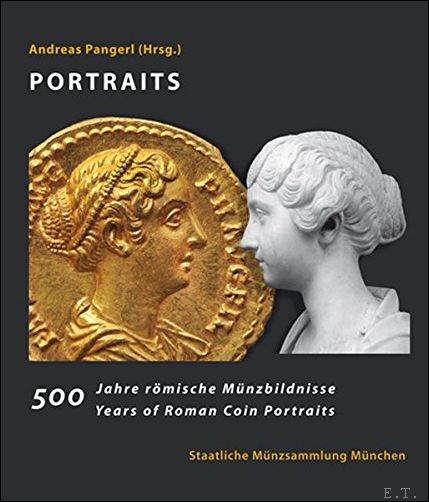
Andreas Pangerl (ed.)
Portraits : 500 years of Roman coin portraits = 500 Jahre römische Münzbildnisse
Staatliche Münzsammlung München, 2017. Hardcover, ix, 474 pages : colour illustrations ; 30 cm. Introduction and foreword in German and English; essays in German with abstracts in English, and one essay in English. ISBN: 9783922840404
Introduction and foreword in German and English; essays in German with abstracts in English,
Boeknummer: 57428 | Prijs: EUR 125.00
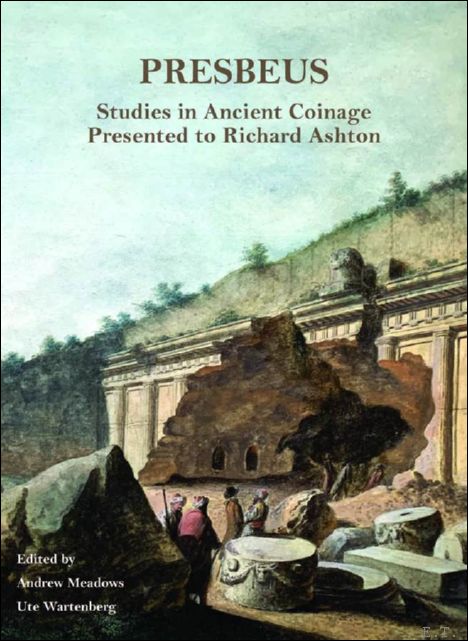
Andrew Meadows, Ute Wartenberg (eds)
Presbeus: Studies in Ancient Coinage Presented to Richard Ashton
Brepols, 2022. Hardback, xii + 544 pages, Size:216 x 280 mm, Illustrations:300 b/w, 47 tables b/w., Language: English. ISBN: 9780897223768
Summary Edited by Andrew Meadows and Ute Wartenberg, this Festschrift is presented to numismatic scholar Richard Ashton on the occasion of his 75th birthday. These 20 articles present new research into the numismatics of the Greek East and provide significant advances in archaeological, historical, and numismatic scholarship. TABLE OF CONTENTS 1. Christopher S. Lightfoot. Was there a Core-Formed Glass Industry in Archaic Rhodes? 2. Wolfgang R. Fischer-Bossert. The Electrum Coinage of Lindos Again 3. Alain Bresson. Palmette Coins: An Update 4. Jonathan Kagan. Return to Xanthos: New Numismatic Light on the Harpagid Dynasty of Western Lycia 5. Ute Wartenberg. A Persian Queen on the Black Sea: The Coinages of Amastris and Herakleia 6. Philip Kinns. Understanding the Later Civic Coinage of Miletus 7. Koray Konuk. MY Stands for Mylasa 8. Andrew Meadows. The Double-Axe Mint: The Coinage of Tenedos in the Third and Second Centuries BC 9. Amelia Dowler. The New Mint under Nicomedes I (c. 278-255 BC 10. Kerstin Höghammar. The Koan Series of Posthumous Alexander Tetradrachms, c. 200 BC 11. Vassiliki E. Stefanaki. Les 'plinthophores' de Cos: état de la question 12. Peter Thonemann. Cistophoric Geography Revisited 13. Aneurin Ellis-Evans. The Wreathed Tetradrachms and Gold Staters of Magnesia on the Maeander 14. Nicholas Sekunda. The Cretan and Pisidian Keraitai 15. Lucia Carbone. The Standardization of Asian Bronze Denominations in the First Century BC 16. Fabrice Delrieux. Fleuves et riviéres de l'Asie Mineure gréco-romaine. Généralités et tudes de cas dans les monnayages de Carie 17. Laurent Bricault. Images civiques de Mithra 18. Andrew Burnett. The Severan Coinage of Galatia 19. Elena Korka, Constantine Lagos, and Maria Syrrou. An Early Byzantine Gold Hoard from Tenea, Corinthia 20. François de Callataÿ. Correspondence about the Coin Market in Constantinople and Smyrna Prior to 1800 Indexes
Boeknummer: 64563 | Prijs: EUR 115.00
Aneurin Ellis-Evans
Alexandreia Troas in the Hellenistic Period. War, Finance, and Civic Identity
Brepols - American Numismatic Society, 2025. Hardback, Pages: xxviii + 234, Size:210 x 297 mm, Illustrations:47 b/w, 8 tables b/w., 27 b&w plates, Language: English. ISBN: 9780897227438
Summary This book uses the best but least exploited evidence we have for Alexandreia Troas-its coinage-to explore the city's Hellenistic history and the reception of that Hellenistic past in the imperial period after the polis was replaced by a Roman colony under Augustus. Alexandreia was especially valued by the various states that contended for control of the Greek world in the Hellenistic period for its strategic location at a crossroads in the eastern Mediterranean. As a result, the fate and fortunes of this community were tied to the shifting geopolitics of the Hellenistic world to an unusual degree. In the relative absence of other evidence, it is the coinage of Alexandreia that allows us to reconstruct the city's complex relations with external powers, to trace the community's struggle as a newly founded polis to define its place in the Greek world, and to understand how the city's Hellenistic past was rewritten in the imperial period. TABLE OF CONTENTS List of Maps and Figures List of Tables List of Plates Acknowledgments Abbreviations Credits Part I: Alexandreia Troas in the Hellenistic Period Introduction The Synoikism of Alexandreia Troas Alexandreia Troas in the Third Century Alexanders for the Attalids The Cult of Apollo Smintheus The Coinage in the Name of Apollo Smintheus Alexandreia Troas and the First Mithridatic War The Era of Alexandreia Troas Alexandreia Troas and Rome Alexandreia Troas and Its Past in the Time of Commodus Conclusions Part II: Catalogue Introduction to the Catalogue Alexandreia Troas: Persic-Weight Coinage Alexandreia Troas: Posthumous Alexanders Alexandreia Troas: Seleucid Coinage Alexandreia Troas: Apollo Smintheus Coinage Alexandreia Troas: Bronze Coinage Hamaxitos, Kebren, and Larisa: Bronze Coinage Alexandreia Troas: Figures for Gold and Silver Alexandreia Troas: Summary of Hoards for Gold and Silver Alexandreia Troas: Summary of Types for §§2-4 Addenda and Corrigenda Bibliography Index of sources General index
Boeknummer: 70574 | Prijs: EUR 185.50
Arkadiusz Dymowski, Kyrylo Myzgin (eds)
Counterfeits, Imitations, and Copies of Roman Imperial Denarii. Making and Faking Coins on Both Sides of the Limes
Brepols, 2025. Hardback, 220 pages, Size:216 x 280 mm, Illustrations:20 b/w, 75 col., 13 tables b/w., 4 maps b/w, 6 maps color, Language: English. *new ISBN: 9782503612447
Summary Roman Imperial denarii from the first-third centuries AD are, almost without exception, the most common ancient coinage to be found in Central, Northern, and Eastern Europe beyond the Roman limes. Perhaps surprisingly, however, a significant percentage of these coins are in fact counterfeit, comprised largely of denarii subaerati (plated denarii, fourrées) and denarii flati (base-metal cast copies). Moreover, these fake coins were not only manufactured by Romans themselves, but also by barbarian peoples in Eastern Europe, far from the Roman limes, in what should be considered a mass-scale phenomena. This volume draws together archaeological, numismatic, and historical research in order to offer a new assessment of the production and use of counterfeit Roman Imperial denarii both within the European provinces of the Roman Empire and in European Barbaricum. Drawing on the results of the research project Barbarian Fakers. Manufacturing and Use of Counterfeit Roman Imperial Denarii in East-Central Europe in Antiquity, from the University of Warsaw, the papers gathered here explore the transfer of ideas, technology, and finished products that led to the transfer of counterfeit coinage across the Empire, and shed light on how, why, and when such coins were created and used. TABLE OF CONTENTS List of Illustrations List of Abbreviations Introduction Arkadiusz Dymowski and Kyrylo Myzgin 1. Counterfeit Coin Moulds from Britannia Inferior: A Summary and Brief Discussion Richard Brickstock 2. The Production of Struck and Cast Denarii in Châteaubleau (France) during the Second Half of the Third Century AD Fabien Pilon 3. Counterfeit Denarii North of Hadrian's Wall: Roman or 'Barbarian'? Fraser Hunter 4. Non-official Roman Denarii in Thuringia: The Finds from the Germanic Settlement of Frienstedt Mario Schlapke 5. The ONAV Group of Barbarian Imitations and Copies of Roman Imperial Coins: Manufacturing of denarii subaerati in Eastern Europe in Antiquity Arkadiusz Dymowski 6. Finds of Counterfeit Roman Denarii at Selected Roman Period Settlement Sites in Western Lesser Poland: The State of Research and Prospects Jaros?aw Bodzek, Szymon Jellonek, and Barbara Zaj?c 7. Cast Copies of Roman Imperial Denarii from Belarus Vital' Sidarovich 8. Technological Variety of Methods Used in the Production of Cast Copies of Roman Denarii on the Territory of the Chernyakhiv Culture between the Middle Dniester and Southern Bug Oleksandr Nadvirniak and Oleh Pohorilets 9. Elemental Composition of Cast Copies of Denarii and Related Production Waste from Ukraine Determined Using PIXE and XRF Methods Oleksandr Buhay, Kyrylo Myzgin, Oleksandr Nadvirniak, and Oleh Pohorilets 10. Denarii flati Kyrylo Myzgin 11. Cast Counterfeit Coins or pecunia flata? Ancient Latin Sources and the Term denarii flati Bartosz Awianowicz
Boeknummer: 66488 | Prijs: EUR 80.00
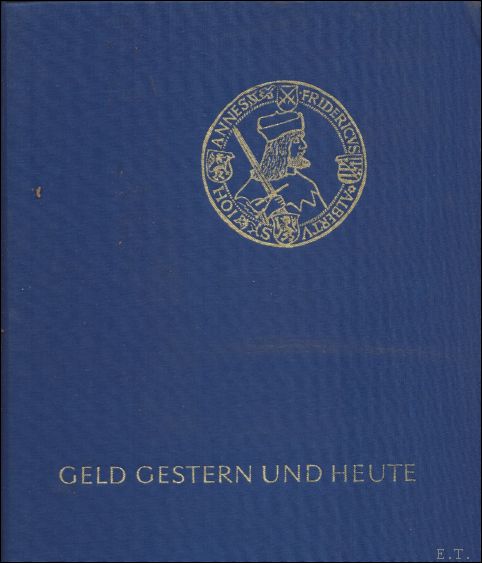
Blessing
GELD GESTERN UND HEUTE.
Graz, Volksbank Ransbach, 1967. Gebunden in leinnen, 21,5x25cm, 128pp.
Eine Dokumentation uber Geldwesen und Wahrung in der Bundesrepublik Deutschland.Mit fotodokumentation: Volksbanken der Bundersrepublik Deutschland.
Boeknummer: 1603 | Prijs: EUR 15.00
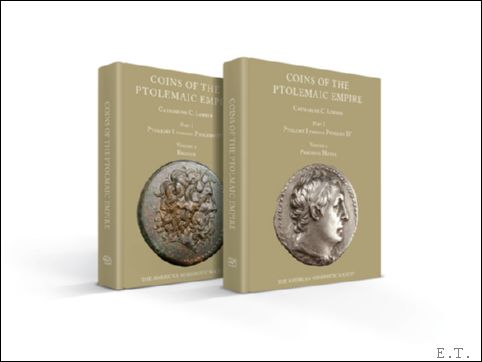
Catharine C. Lorber
Coins of the Ptolemaic Empire, Part I: Ptolemy I through Ptolemy IV. Volume 1: Precious Metal, Volume 2: Bronze
Brepols, 2024. Hardback, 2 vols, xxxiv + 836 pages, Size:210 x 297 mm, Illustrations:37 b/w, 122 plates, Language: English.*New. ISBN: 9780897223980
Summary Coins of the Ptolemaic Empire, Part 1, Volumes 1 and 2 (Precious Metal and Bronze) by Catharine Lorber, is the massive, long-anticipated catalogue of coins struck by the first four Ptolemaic kings. It essentially rewrites the sections on these rulers in J. N. Svoronos' classic, but now much out of date,?Ta Nomismata tou Kratous ton Ptolemaion?(1904). The body of coinage catalogued by Svoronos is enlarged by more than 300 further emissions in precious metal and more than 180 emissions in bronze, recorded from subsequent scholarship, from hoards, from commercial sources, and from private collections, and constituting about a third of the total catalogue entries. Lorber's attributions, dates, and interpretations rest on numismatic research since Svoronos, or on the latest archaeological and hoard information. She also provides extensive historical and numismatic introductions that give the coins deeper context and meaning. The coinage of Ptolemies I through IV is supplemented by a few issues possibly attributable to Cleomenes of Naucratis, the predecessor of Ptolemy I in Egypt, as well as by coinages of Ptolemy Ceraunus, Magas, and Ptolemy of Telmessus, members of the Lagid dynasty ruling their own kingdoms outside of Egypt. TABLE OF CONTENTS Volume 1: Precious Metal Preface Acknowledgements Guide for Users Maps Introduction Ptolemy I Soter Ptolemy II Philadelphus Ptolemy III Euergetes Ptolemy IV Philopator Precious Metal Catalogue Cleomenes of Naucratis Ptolemy I Soter Ptolemy II Philadelphus Ptolemy III Euergetes Ptolemy IV Philopator Third-Century Provincial(?) Tetradrachms Unattributable as to Reign (Ptolemy I-IV) Late Additions to the Catalogues Appendices Ptolemaic Precious Metal Hoards Additional Provenances of Precious Metal Coins Bibliography Concordance to Svoronos Indices Remarkable Types in Gold and Silver Remarkable Denominations in Gold and Silver Remarkable Inscriptions on Gold and Silver Controls on Precious Metal Coins Image Credits Plates Volume 2: Bronze Preface Acknowledgements Guide for Users Bronze Catalogue Cleomenes of Naucratis Ptolemy I Soter Macedonia under Ceraunus and Meleager Ptolemy II Philadelphus Ptolemy of Telmessus Ptolemy III Euergetes Ptolemy IV Philopator Appendices 1. Ptolemaic Bronze Hoards 2. Additional Bronze Provenances Bibliography Concordance to Svoronos Numbers Indices 1. Remarkable Types in Bronze 2. Remarkable Inscriptions 3. Controls Image Credits Plates
Boeknummer: 63512 | Prijs: EUR 335.00
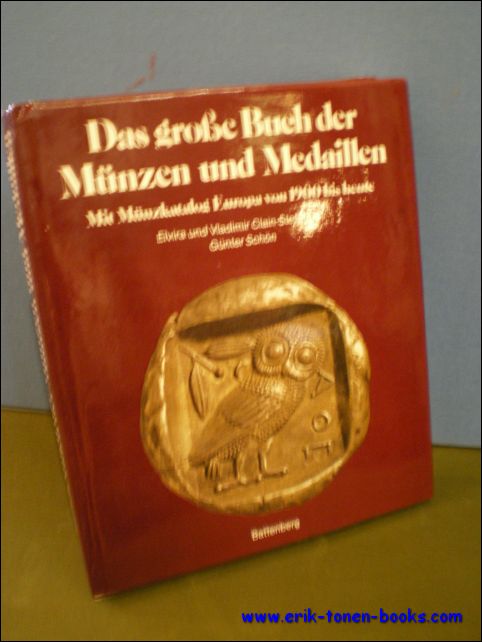
CLAIN-STEFANELLI, Elvira und Vladimir/ SCHON, Gunter;
DAS GROSE BUCH DER MUNZEN UND MEDAILLEN. MIT MUNZKATALOG EUROPA VON 1900 BIS HEUTE,
Munchen, Battenberg Verlag, 1976. Gebunden, Leinen mit Schutzumschlag, 210 x 255mm., 308S., 1000 ein- und mehrfarbigen Abbildungen.
Fachkundig geschrieben und prachtvoll ausgestattet, dient dieses Werk dem angehenden wie dem fortgeschrittenen Sammler gleichermaBen. Guter Zustand
Boeknummer: 20878 | Prijs: EUR 25.00
Collectif
TARIF GENERAL AVEC LES NOUVELLES REDUCTIONS DES MONNAIES DES CI - DEVANT PAYS - BAS AUTRICHIENS.
1824, Bruxelles, Rampelberhg. Relie de l' epoque, plein maroquin brun, veau marbre, dos endommage, dos orne de fil. fleuronne dore, piece de titre dore sur maroquin rouge, 14x18,5cm, 328pp.
D' apres l' arrete du 8 decembre 1824.
Boeknummer: 19876 | Prijs: EUR 90.00
Collectif
TARIF GENERAL AVEC LES NOUVELLES REDUCTIONS DES MONNAIES DES CI - DEVANT PAYS - BAS AUTRICHIENS.
Bruxelles, Rampelbergh, 1829. Relie de l' epoque, plein maroquin brun, veau marbre, dos endommage, dos orne de fil. fleuronne dore, piece de titre dore sur maroquin rouge, 14x18,5cm, 328pp.
D'apres l' arrete du 8 decembre 1829
Boeknummer: 19877 | Prijs: EUR 90.00
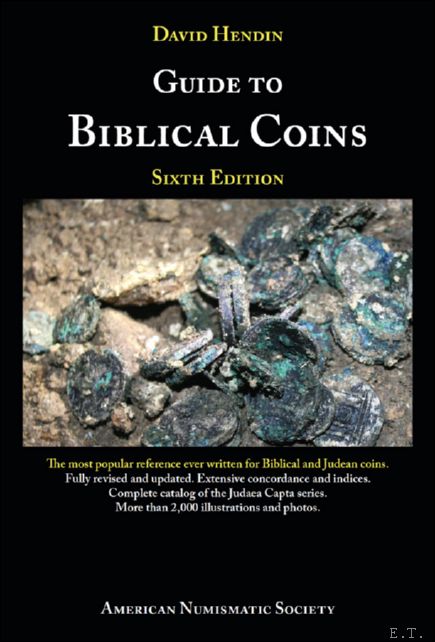
David Hendin
Guide to Biblical Coins
Brepols, 2021. Hardback, xx + 643 pages, Size:152 x 229 mm, Illustrations:500 b/w, 5 tables b/w., Language: English. ISBN: 9780897227414
Summary Forty-five years after its first edition, Hendin has revised and updated this book to reflect relevant discoveries in archaeology and numismatics of ancient Israel. The metallurgy of Judean coins, symbols on Hasmonean coins, the Hasmonean coin chronology, Herodian mints, irregular issues, the Jewish War, and coin denominations are only a few of the topics that Hendin has updated. New to the sixth edition is numismatic information about the Kingdom of Adiabene, the Ituraean Kingdom, the Roman Governors of Syria, and coins with images of Old Testament stories. Many hundreds of new and improved graphics help illuminate the text. The photo plates have been expanded dramatically as have the images in the catalog and text. Includes a complete concordance between previous editions of GBC as well as other key references, elaborate end notes, an expanded bibliography, a full index, and an index of Latin inscriptions on the Judaea Capta coins. LEARN MORE "A Half a Century of Studying Biblical Coins", by David Hendin,?The Ancient Near East Today?9.11 (The American Society of Overseas Research) "A Conversation with David Hendin", the?Planchet?podcast of the American Numismatic Society Winner of the 2022 Shekel Prize TABLE OF CONTENTS INTRODUCTION CHAPTER ONE: Biblical Coins CHAPTER TWO: Scale Weights to Coinage CHAPTER THREE: Persian Period: Philistia CHAPTER FOUR: Persian Period: Samaria and Judea CHAPTER FIVE: Ptolemaic and Seleucid Coins CHAPTER SIX: Hasmonean Dynasty CHAPTER SEVEN: Herodian Dynasty CHAPTER EIGHT: The Roman Governors of Judaea CHAPTER NINE: The Jewish War CHAPTER TEN: Bar Kokhba Revolt CHAPTER ELEVEN: Judaea and Rome CHAPTER TWELVE: New Testament Coins CHAPTER THIRTEEN: Related Issues ENDNOTES ABBREVIATIONS BIBLIOGRAPHY CONCORDANCE APPENDIX A. Alphabets and Numeric Equivalents APPENDIX B. Metrological Chart for Jewish Bronze Coins APPENDIX C. Index of Latin Legends INDEX PLATES ABOUT THE AUTHOR
Boeknummer: 65500 | Prijs: EUR 92.00
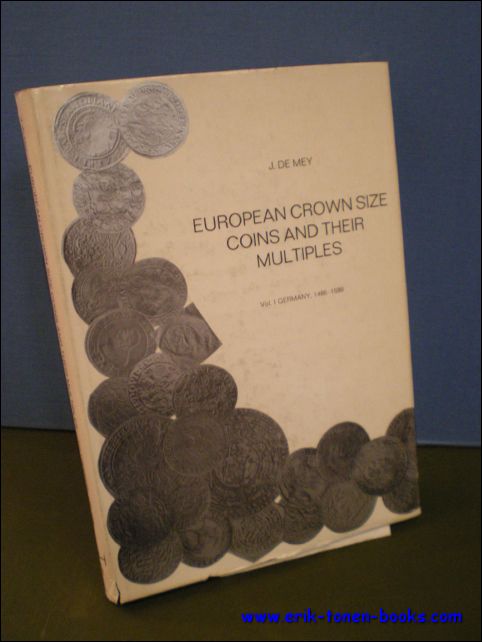
DE MEY, J.;
EUROPEAN CROWN SIZE COINS AND THEIR MULTIPLES. VOL. I GERMANY, 1486 - 1599,
Amsterdam, Mevius, 1975. Bound, green imitation leather, illustrated dustjacket, 210 x 300mm., 332pp., illustrated.
Taler struck within the boundaries of present-day Germany. Jacket a bit worn, otherwise in good condition.
Boeknummer: 20870 | Prijs: EUR 19.95
Dimitrios Gerothanasis, Johannes Stelzhammer, Alan Walker, Rex Gao (eds)
The James M. Collier Collection of Greek and Roman Coins. A Selection
Brepols - The American Numismatic Society, 2026. Hardback, Pages: xii + 144, Size:152 x 229 mm, Illustrations:236 col., Language: English. ISBN: 9780897227537
Summary Professor James M. Collier was an ardent lover of the history and culture of Europe and the ancient world, and a passionate collector of ancient Greek and Roman coins. Born in 1943 in Bellingham, Washington, he pursued his early academic training at Pacific Lutheran University (PLU) in Tacoma, receiving a Bachelor of Arts in History in 1965. After graduating from PLU, he worked for the Boeing Corporation as an engineer. When he was seconded to Washington, DC, on the Minuteman project, his office was located-quite fortuitously, as it turned out-across from the National Gallery of Art. For two years he spent every lunch hour at the Gallery, where he discovered his real love for art and art history. Returning to the Pacific Northwest, he attended the University of Oregon and graduated with a Master of Arts in Art History in 1970. He then pursued a PhD in Art History at the University of Michigan, completing the degree in 1975. He was appointed an Assistant Professor in the Art History Department at Auburn University (Auburn, Alabama), where he eventually was tenured and became department chair. Over the course of his academic career, he lectured widely and published on the Italian Renaissance and Early Netherlandish perspective-the subject of his doctoral dissertation, entitled "Linear Perspective in Flemish Painting and the Art of Petrus Christus and Dirk Bouts." Professor Collier was published as an artist as well. In 1987, he left his teaching post and devoted himself to his passion for painting, studying at the National Academy of Design in New York City. He and his wife, Carole Anne Menzi Collier, moved to Amsterdam in 1990 and eventually attained dual citizenship. He continued to pursue and share his love of art and ancient coinage for the rest of his life. The Collier Prize in Ancient Numismatics was first given by the American Numismatic Society (ANS) in 2022. Established by Carole Anne Menzi Collier in memory of her late husband, James M. Collier, the biennial award honors the best book, catalogue, or online digital work in the field of ancient numismatics (650 bc-ad 300). In 2025, the ancient Greek and Roman coins of the Collier Collection were sold at auction to fund the endowment; highlights from the collection are featured within. "Ancient numismatics . . . intersects art history, political history, economic history, and religious studies," writes ANS Executive Director Ute Wartenberg Kagan. "When done properly, it is a truly interdisciplinary field that benefits scholars willing to explore different disciplines." The Collier Prize rewards this important, often underappreciated work and encourages the scholars who undertake it. TABLE OF CONTENTS Foreword, by Ute Wartenberg Kagan The James M. Collier Collection, by Dimitrios Gerothanasis The Collier Prize in Ancient Numismatics, by Peter van Alfen Introduction, by Carole Anne Menzi Collier Catalogue: Magna Graecia and the West Sicily Macedon, Thrace, and Moesia Greece Asia Minor The Near East and Central Asia Africa The Roman Republic and the Imperatores The Twelve Caesars The Roman and Byzantine Empires Abbreviations
Boeknummer: 70427 | Prijs: EUR 85.00
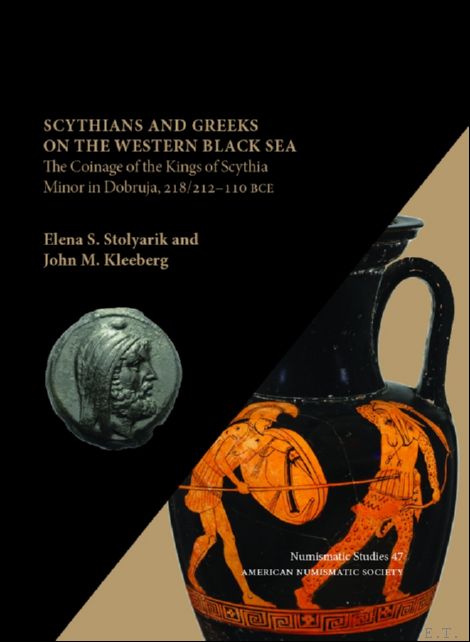
Elena S Stolyarik, John M. Kleeberg
Scythians and Greeks on the Western Black Sea. The Coinage of the Kings of Scythia Minor in Dobruja, 218/212-110 BCE
Brepols, 2023. Hardback, viii + 228 pages, Size:216 x 280 mm, Illustrations:201 b/w, 17 tables b/w., Language: English. ISBN: 9780897224062
Summary The Scythians have fascinated investigators since the time of Herodotus. This study examines the bronze and silver coinage of the kingdom of Scythia Minor in Dobruja at the mouth of the Danube River, a Scythian successor state that emerged in the second century BCE after the breakup of Scythia Magna. It is based on a corpus of over 1,500 coins, more than ever before, and draws upon scholarship in nine languages, including hard-to-find sources from Bulgaria, Romania, USSR, Ukraine, and Russia. The much-debated chronology of the six kings of Scythia Minor (Kanites, Tanousas, Charaspes, Ailis, Sariakes, and Akrosas) is determined through literary evidence, inscriptions, die linkage, shared monograms, coin hoards, and counterstamps. Metrological analysis distinguishes four denominations, plus the alterations and debasements of the weight standard during the troubled reigns of Ailis and Sariakes. Fifteen counterstamps that appear on Scythian coins are attributed to the local Greek poleis of Callatis, Tomis, Istros, and Dionysopolis. An inventory of four hoards and 47 findspots of single coins identifies the mint site, Dionysopolis. The volume concludes with a catalog of 63 major coin types and 15 counterstamps, plus bibliography and index. TABLE OF CONTENTS Acknowledgements Introduction Scythia Magna and Dobruja Literary and Epigraphic Sources for the Kingdom of Scythia Minor in Dobruja Earlier Studies of the Coins of Scythia Minor Ethnic Identification and Chronology of the Kings of Scythia Minor Coin Types, Legends, and Magistrates' Monograms Metrology, Weight Standard, Denominations, and Die Orientation Countermarks on Scythian Coins The Geographic Pattern of the Circulation of Scythian Coins The Mint Location: Dionysopolis Conclusion Catalog of Coins and Countermarks Appendix: List of Magistrates' Monograms and Mintmarks Abbreviations Ancient Sources Inscriptions Papyri Auction Catalogs and Electronic Sales Bibliography Index
Boeknummer: 63356 | Prijs: EUR 151.00
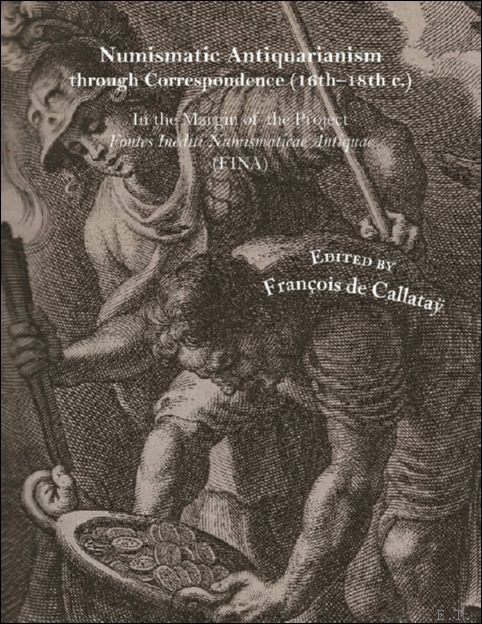
François de Callataÿ (ed)
Numismatic Antiquarianism through Correspondence (16th-18th c.). In the Margin of the Project Fontes Inediti Numismaticae Antiquae (FINA)
Brepols, 2023. Hardback, x + 270 pages, Size:216 x 280 mm, Illustrations:108 b/w, 12 tables b/w., Language: English. * NEW. ISBN: 9780897223911
Summary This book brings together 14 articles into a volume of conference proceedings from the 2017 meeting on numismatic antiquarianism held in Rome. TABLE OF CONTENTS Foreword François de Callataÿ About the Authors 1. Fool Me Once, Don't Fool Me Twice: Collecting Forgeries to Train the Eye (17th-early 19th Centuries) Daniela Williams. 2. Moulages de monnaies antiques ou comment produire des copies (XVIe-XVIIIe siècles) Guy Meyer 3. The Missing Caesar: Inventing Bronze Coins for Otho Johan van Heesch 4. Speaking about Manuscripts: Unpublished Works in Correspondence Michiel Verweij 5. Recording Coin Finds and Hoards in Early Modern England Ute Wartenberg and Jonathan H. Kagan 6. Two Centuries of Collecting, Describing, and Explaining Contorniates John Cunnally 7. Di vizi e di virtù. Di Pertinaci e di Didii, di Pescenniie di Gordiani Federica Missere Fontana 8. Numismatic Antiquarianism: Coins from the Ancient East in Early Modern Europe Martin Mulsow 9. Queen Elizabeth and the Twelve Caesars Andrew M. Burnett 10. Peiresc and the Coins through his Correspondence Elena Vaiani 11. About Books and Coins: The Letters of Charles Patin to Giulio Antonio Arevoldi between 1679 and 1693 Marco Callegari 12. The Story of Francesco Gottifredi's Unpublished Book through the Analysis of the Letters of his Contemporaries Maria Cristina Molinari 13. Monastic Antiquarianism in Austria and the République de Médailles: The Numismatic Collection of Göttweig Abbey Manuela Mayer 14. Publishing the Doctrina Numorum Veterum: New Evidence on the Three Editions of Joseph Eckhel's Masterwork Bernhard E. Woytek
Boeknummer: 64346 | Prijs: EUR 150.00
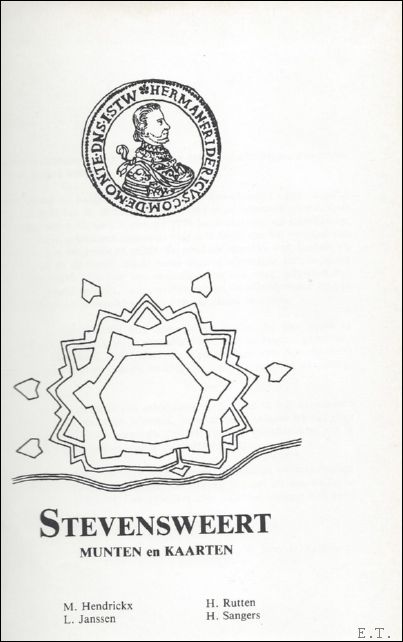
HENDRICKX, M., JANSSEN, L., RUTTEN, H., SANGERS, H.
STEVENSWEERT. MUNTEN EN KAARTEN.
Leeuwarden, Hugo Suringar, 1983. ( dub.). GEBONDEN, kunstleder, 21x15cm, 264pp, geillustreerd z/w.
STEVENSWEERT. MUNTEN EN KAARTEN.
Boeknummer: 13125 | Prijs: EUR 40.00
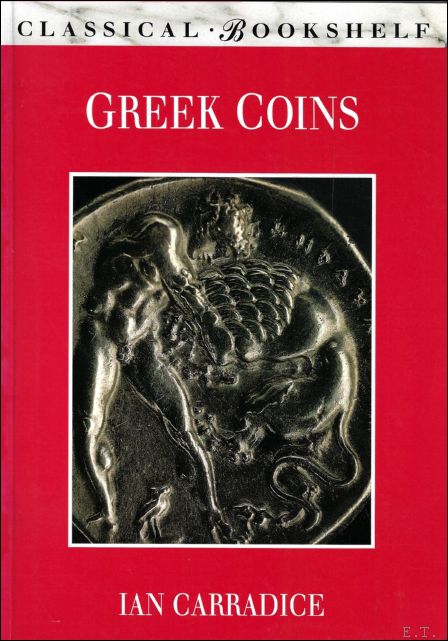
Ian Carradice
Greek Coins
Trustees of the British Museum 1995, 1995. 1. Paperback, 112 pages, ENG, 240 x 170 mm, fine book, illustrations in b/w, . ISBN: 9780714122106
Of the many traditions we have inherited from the ancient Greeks, the use of coins should rank as one of the most important. From its first appearance in the region of Lydia (western Turkey) in the late-17th century BC, coinage gradually spread throughout the Greek world, and the history of the ancient Greeks is reflected in its evolution. Designs on Greek coins include the badges of city-states, portraits of rulers, images of Greek gods, scenes from myths and objects of daily life, and are often works of art in themselves. The dies, carved by craftsmen, sometimes bear the name or initials of the mint official responsible for their issue, and the coins might have circulated in trade, been used as gifts or dedications, or hoarded as valuables.
Boeknummer: 58611 | Prijs: EUR 22.50
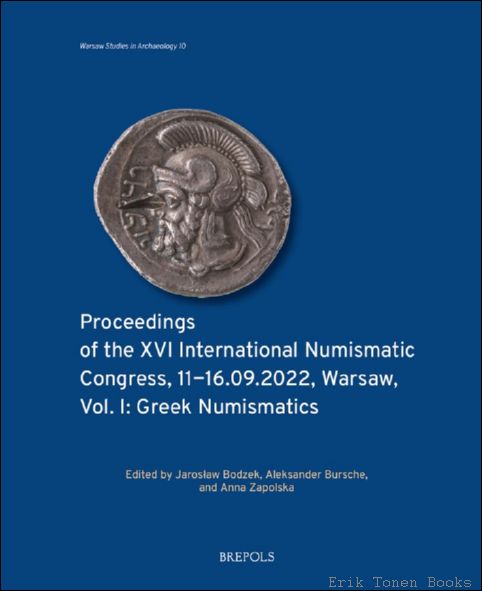
Jaros?aw Bodzek, Aleksander Bursche, Anna Zapolska (eds)
Proceedings of the XVI International Numismatic Congress, 11?16.09.2022, Warsaw, Vol. I. Greek Numismatics
Brepols, 2025. Paperback, Pages: 562, Size:216 x 280 mm, Illustrations:474 b/w, 324 col., 32 tables b/w., Languages: English, Italian, German. ISBN: 9782503616568
Summary The XVI International Numismatic Congress, held in Warsaw, Poland, in September 2022, was a landmark event, drawing the largest number of participants in its history. With over 550 papers presented during thematic sessions and round tables, this congress showcased the latest advancements and research in the field of numismatics from leading experts and scholars in their field. A curated selection of papers from the conference have now been drawn together into peer-reviewed conference proceedings, representing a comprehensive spectrum of numismatic studies from antiquity to modern times. Each paper is meticulously illustrated with high-quality images, often of unique specimens, along with detailed diagrams, maps, and die/typological chains. Topics covered include coins and coin finds, medals, tokens, banknotes, the history of collections and collecting, and cutting-edge chemical analyses and technologies used in coin examination. This volume, the first in four thematic volumes, focuses on Greek numismatics, and comprises fifty-nine chapters exploring different elements of Greek coinage, as well as touching on coins from ancient India. TABLE OF CONTENTS List of Illustrations Introduction Jaros?aw Bodzek, Aleksander Bursche, Anna Zapolska 1. Hermes con petaso: Analisi diacronica e diatopica di un lemma del Lexicon Iconographicum Numismaticae Ivan Caparelli, Benedetto Carroccio 2. Minting to Accommodate the Building Process John Mooring 3. For Good Measure. The Control of Measuring Instruments in the Ancient Greek Market Louise Willocx 4. The Online Die Study Database of the ERC 'SILVER' Project Caroline Carrier 5. Eine digitale Forschungsinfrastruktur für antike Münzen: neue Entwicklungen im Projekt Corpus Nummorum Ulrike Peter, Jan Adamik-Köster, Angela Berthold, Claus Franke, Sebastian Gampe, Andrea Gorys, Vladimir Stolba, Karsten Tolle, Bernhard Weisser 6. Comparative Metal Analyses of Original and Counterfeit Ancient Coins - Some Examples from Bulgaria Marina Doychinova 7. A New Catalogue for the Ancient Iberian Coinages: monedaiberica.org Pere Pau Ripollès, Juan Francisco Onielfa, Alejandro Peña, Manuel Gozalbes 8. Le premier chalque de la Marseille grecque Jean-Albert Chevillon 9. The Coinage of Larinum and the Frentani. Reviewing the Evidence Valentino Piva 10. The Coinage of Thurioi and its Contexts - A Die Study Marc Philipp Wahl 11. The Early Double-Relief Coinage of Croton Stefanie Baars 12. Il sakkos come elemento identificativo dello status delle figure femminili: un caso da Locri Spinelli Marianna 13. Ritrovamenti monetali dall'antica Medma, oggi Rosarno (RC, Italia) Giorgia Gargano 14. Cenni di epigrafia monetale in Sicilia: contesti e tipologie Sara Quartarone 15. Alaisa/Halaesa (Sicily): The Ancient Site and Its Monetary Profile until the Augustan Period Mariangela Puglisi 16. The Historical Fight between the Athenian 'Owl' and the Sicilian 'Lizard' on Kamarina's Bronze Coins Maria Caltabiano Caccamo 17. Figura femenina portando llave en la moneda de Entela (440-430 a.C.): Análisis y significado José Miguel Puebla Morón 18. The Bronze Coinage of Hieronymus: Posthumous Series, Parallel Mintings, and Organizational Changes Benedetto Carroccio 19. Coin Circulation in Lipari (Sicily) from the Greek to the Roman Period Ludovica Di Masi, 20. Le monete di Cossyra e la lingua delle monetazioni locali del Mediterraneo occidentale dopo la conquista romana Martin Ziegert 21. The Hoard of Cala Tramontana in Pantelleria (Trapani, Sicily): Preliminary Observations Lavinia Sole 22. Ancient Coins and Hoards from the Carevi Kuli Settlement, Strumica Sanja Bitrak 23. The Drachms of Dyrrhachium and Apollonia: Witness to the Rise and Fall of the Power of the Dacians Silviu Istrate Purece 24. Numismatic Evidence from Ancient Cassandreia at Chalcidice, Northern Greece Eleni K. Klinaki, Antonia G. Nikolakopoulou 25. Archaeological, Historical, and Technological (XRF Analysis) Aspects of Early Silver Coins and Coin Hoards from Southwestern Thrace Nina Hadzhieva 26. The Hemidrachms of the Thracian Chersonese and Their Political Environment Julia Tzvetkova 27. Money and the Odrysian Rulers: Paying the Patrios Phoros Selene E. Psoma 28. The Demeter Coinages of Byzantium and Chalcedon - A Reassessment Constantin Marinescu 29. The Palaiopolis1995 Hoard from Corcyra: A Preliminary Report Georgia Tsouvala, Lee L. Brice, Goulielma-Kyriaki Avgerinou 30. The Silver Coinages of Achaian and Aitolian Federal States Catherine Grandjean, Maryse Blet-Lemarquand, Eleni Papaefthymiou 31. 'Put Money in thy Purse': Presence and Circulation of the Ptolemaic Coins in the Peloponnese Alessandro Cavagna 32. Cretan Coinage: Insularity and Connectivity Giorgia Capra 33. Politics and War on Cretan Gold Coinage (Fourth - Third Century BC) Federico Carbone, Vassiliki E. Stefanaki 34. The Coinage of Ancient Aptera Manolis Marinakis 35. The Coinage of Lyttos / Crete: Some Iconography & Distribution Patterns Katerina Panagopoulou 36. Coin Types in Georgia and the Graeco-Roman World Natia Phiphia 37. Fabrication and Flan Preparation Marks, Their Origin and Tools Used for Manufacturing. Numismatic and Historical Aspects Jean Hourmouziadis 38. Production Characteristics of Archaic Drachms Depicting the Gorgoneion and Problems with their Attribution to Parion Ed Snible 39. A New Obol of Hippias of Athens Koray Konuk 40. Tisna in Aiolis and Its Coinage Dinçer Sava? Lenger 41. Hellenistic Weights and Measures in Western Asia Minor (Propontis, Troas and Aeolis) Thomas Leblanc 42. The Coinage of Erythrai and Historia Numorum Online Ersin Bak?? 43. FA?FET and KVKA?IM Wolfgang Fischer-Bossert 44. Les monnaies hellénistiques de bronze d'Acmonea (Phrygie) Barbara Hiltmann 45. History and Coinage in Lycia. An Overview Wilhelm Müseler 46. Ptolemaic Coins in Southwestern Asia Minor: New Attributions and Suggestions Ömer Tatar 47. Archaic and Classical coinage of Cilicia - an Overview Jaros?aw Bodzek 48. Der lykaonische Wolf. Kleinsilber aus Laranda Katharina Martin 49. Hoards in Ancient Anatolia c. 630 - 30 BC: A Statistical Overview Leah Lazar 50. Numismatic Data on the Status of Artaxata (Artashat) During the Reign of the Artaxiad Dynasty of Armenia Sergii Lytovchenko 51. Database Challenges for SNP Volumes 2 & 4 Chris Hopkins 52. The Coinage of the Characenian Kings Attambelos IV and V of Mesene (AD 54/5-73/4). A Tribute to Ernest Babelon Patrick Pasmans 53. A Brief Look at Coinage in Khuzistan from Alexander the Great to the End of the Sasanians Michael Stal 54. Coins of the Bactrian and Indo-Greek Rulers (BIGR): A New Typology for Graeco-Bactrian and Indo-Greek Coins Gunnar R. Dumke, Simon Glenn 55. Coin Finds from Barikot: New Evidence for Monetary Circulation in the Indo-Iranian Borderlands Ehsan Shavarebi 56. The Coinage of Pratishthana-Purisa, a City State in Ancient Punjab Karan Singh 57. A Preliminary Analysis of the Metal Content of Gupta Gold Coins Pankaj Tandon 58. The Metrological Survey of Ptolemaic Bronze Coins: A Progress Report Daniel Wolf 59. A Small Personal Touch: Some Trends about Graffiti on Carthaginian Gold Coins Jérémy Artru 60. Les reflets de Carthage dans les monnayages de l'Hispanie et de la Gaule Jean-Albert Chevillon
Boeknummer: 70588 | Prijs: EUR 127.20
Jaroslaw Bodzek, Aleksander Bursche, Anna Zapolska (eds)
Proceedings of the XVI International Numismatic Congress, 11-16.09.2022, Warsaw: Vol. III: Medieval Numismatics
Brepols, 2025. Paperback, Pages: 373, Size:216 x 280 mm, Illustrations:265 b/w, 13 col., 5 tables b/w., Languages: English, French, German. ISBN: 9782503616742
Summary The XVI International Numismatic Congress, held in Warsaw, Poland, in September 2022, was a landmark event, drawing the largest number of participants in its history. With over 550 papers presented during thematic sessions and round tables, this congress showcased the latest advancements and research in the field of numismatics from leading experts and scholars in their field. A curated selection of papers from the conference have now been drawn together into peer-reviewed conference proceedings, representing a comprehensive spectrum of numismatic studies from antiquity to modern times. Each paper is meticulously illustrated with high-quality images, often of unique specimens, along with detailed diagrams, maps, and die/typological chains. Topics covered include coins and coin finds, medals, tokens, banknotes, the history of collections and collecting, and cutting-edge chemical analyses and technologies used in coin examination. This book, the third in four thematic volumes, explores medieval coinage. Research presented in forty-two different chapters ranges from the early Byzantine period through to the late Middle Ages, including Asiatique and Islamic coinages, and medieval tokens. TABLE OF CONTENTS List of Illustrations Introduction Jaros?aw Bodzek, Aleksander Bursche, Anna Zapolska 1. Publishing Catalogues and Hoards in Medieval Numismatics: the Medieval European Coinage project Elina Screen 2. Income Sources and Effects of Medieval Emergency Debasements Roger Svensson 3. When Small Change Was not a Big Problem Roger Svensson, Andreas Westermark 4. The Silver Coinage of Constans II Revisited Nikolaus Aue 5. A Small Byzantine Hoard from the Desert of Aswan Elena Baldi, Maria Carmela Gatto, Antonio Curci 6. Silk Road Imitations of Byzantine and Sasanian Coins: Evidence from Shoroon Bumbagar in Mongolia Anran Mao, Chi Xu 7. Coin Types in Georgia and the Byzantine World Leri Tavadze 8. Distribution of Coins in Late Antiquity and the Early Middle Ages in Southern Italy (325-725 AD): a Comparison Between Border and Inland Area Domenico Luciano Moretti, Giuseppe Sarcinelli 9. The Use of Coins in Tombs in Veneto During Late Antiquity and the Middle Ages Noé Conejo 10. Vorstellung des abgeschlossenen Promotionsprojekts: Fränkische Bildpolitik auf Münzen und Siegeln im Kulturvergleich Daniel Seelbach 11. Les oboles mérovingiennes unifaces et leurs techniques de frappe Philippe Schiesser 12. Modeling the Lifetime in Circulation of Visigothic Gold Coins David Yoon 13. North Sea Gold Economy in the Age of 'Gift Exchange', c.450-c.760 Kevin Hoffman 14. Kings, Bishops and Vikings: Coinage in 9th-century Northumbria Lucy Moore 15. The Coinage of the Kingdom of Italy from Louis II to Berengar II (855-961): a Reappraisal Luca Gianazza 16. Biskupiec - The First Hoard of Carolingian Coins from Poland. A Preliminary Report Mateusz Bogucki 17. Rome and Coinage in the Tenth Century: Possible Reasons for the Closure of the Mint Mariele Valci 18. An Early Medieval Silver Hoard from an Unknown Locality in the Ossolineum Collection Barbara Butent-Stefaniak 19. Monetization in Medieval Bohemia Roman Zaoral 20. Sicily and al-Andalus: Trade Relationships and Monetary Circulation in the Eleventh Century Carolina Doménech-Belda 21. Pourquoi, sur ses deniers, Boleslas le Vaillant se designa-t-il comme DVX INCLITVS? Stanis?aw Suchodolski 22. The Circulation of the Coinage of Lucca in Emilia-Romagna (Italy) in the Eleventh and Twelfth Centuries Mattia Francesco Antonio Cantatore, Domenico Luciano Moretti 23. The Discovery of the Second Medieval Hoard from S?uszków Adam K?dzierski, Micha? Zawadzki 24. The Medieval Hoard from G?ogów - an Unsolved Mystery of Polish Coinage from the End of the 12th Century Krystian Ksi??ek 25. Origins of the Recoinage in Poland in the Light of New Research Grzegorz ?nie?ko 26.'Latin' Imitations of Hyperpyra of John III Vatatzès of Nicaea - A Coinage of Geoffrey II of Villehardouin, Prince of Achaea Robert D. Leonard Jr. 27. Monetization as a Process rather than an Outcome: Coin Use in Denmark, AD 1074-1241 Thomas Guntzelnick Poulsen 28. Who Used Silver Money and in Which Markets? Some Reflections on Hybrid Economic Forms in Twelfth and Early Thirteenth Century Piast Poland Dariusz Adamczyk 29. Returning Again to Early Minting in Riga, Livonia Ivar Leimus 30. Münzwesen von P?emysl Otakar II. (Przemysl Ottokar II.) in den österreichischen Ländern in der 2. Hälfte des 13. Jahrhunderts Dagmar Grossmannová, Tomá? Krej?ík 31. The First 100 Years of the Gold Florin of Florence (1252-1351): Analysis and New Research Perspectives Massimo De Benetti 32. New Research on the Gold Florin of Florence and its Imitations (1252-1351): the Case of the Zalewo and ?roda ?l?ska Hoards (Poland) Massimo De Benetti 33. Une Renaissance en Haute Mésopotamie aux douzième et treizième siècles? Quelques remarques à propos des monnayages zangides et artuqides Nicolas Consiglio 34. How to Catalogue the Gros Au Lis Marcus Phillips 35. Silver Payment Ingots in Eastern Europe: Genesis and Dating Ilya Shtalenkov 36. An Archaeological Study of the Places of Hoard Finds in Belarus Luda Tolkacheva, Raman Krytsuk 37. From Local Authority to Papal Authority: The Mint of Ancona During the Expansion of the Papal States, 14th-15th Centuries William R. Day, Jr 38. The Early Coinage of Mircea the Elder Cristiana T?taru 39. Beyond the Catalogue of Georgian Numismatics - New Coin Finds from Georgia Evgeni Chanishvili 40. Numismatic Evidence for a Brief Restoration of Royal Power in Armenia in the Fifteenth Century: Coins by King Smbat Sefedinian-Arcruni and Hakkari Kurds Aram Vardanyan 41. Once more into the Broach: The Mamluk Silver Dirhams from Codrington's 'The Broach Hoard' in JRASBB, 1881-1882 Warren C. Schultz, 42. Finding the 'Missing Pieces': Coin Weights and the Circulation of Gold Coin in England and Wales, 1300-1600 Murray Andrews
Boeknummer: 70579 | Prijs: EUR 137.80
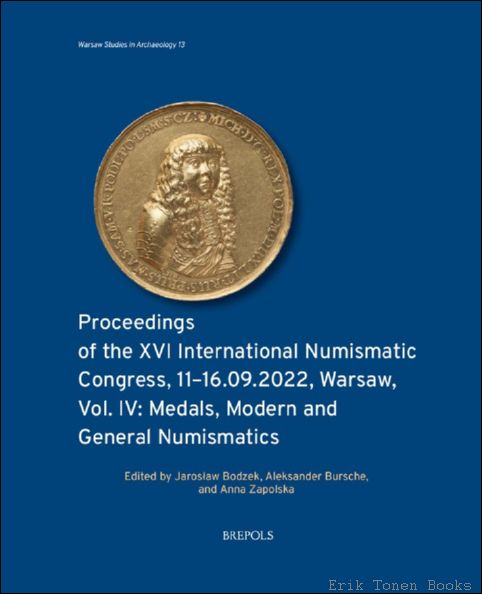
Jaroslaw Bodzek, Aleksander Bursche, Anna Zapolska (eds)
Proceedings of the XVI International Numismatic Congress, 11-16.09.2022, Warsaw: Vol. IV: Medals, Modern and General Numismatics
Brepols, 2025. Paperback, Pages: 506, Size:216 x 280 mm, Illustrations:407 b/w, 35 col., 17 tables b/w., Languages: English, German, Italian. ISBN: 9782503616247
Summary The XVI International Numismatic Congress, held in Warsaw, Poland, in September 2022, was a landmark event, drawing the largest number of participants in its history. With over 550 papers presented during thematic sessions and round tables, this congress showcased the latest advancements and research in the field of numismatics from leading experts and scholars in their field. A curated selection of papers from the conference have now been drawn together into peer-reviewed conference proceedings, representing a comprehensive spectrum of numismatic studies from antiquity to modern times. Each paper is meticulously illustrated with high-quality images, often of unique specimens, along with detailed diagrams, maps, and die/typological chains. Topics covered include coins and coin finds, medals, tokens, banknotes, the history of collections and collecting, and cutting-edge chemical analyses and technologies used in coin examination. This volume, the last in four thematic volumes, comprises fifty-five chapters that explore modern numismatics, as well as medal making and tokens. It also includes discussions that touch more broadly on the general field of numismatics, among them digital numismatics, counterfeit coins, coin finds, and the history of coin collecting. TABLE OF CONTENTS List of Illustrations Introduction Jaros?aw Bodzek, Aleksander Bursche, and Anna Zapolska Part I. MODERN 1. Barcelona, centro de manufactura de cajas de balanzas monetarias (siglos XVIII-XIX). A propósito del taller Farriols Albert Estrada-Rius 2. Dalle Fiandre a Milano. Un gruzzolo di monete d'oro e d'argento da una fossa comune della prima metà del XVI secolo Alessandro Bona 3. Early-Modern Coins Under Threat in Sicily: An Italian Prisoner Prosecuted by the Allied Government and the Presumed 'Palermo AMGOT Hoard 1943' Antonino Crisà 4. Les outils monétaires d'Augustin Dupré pour le Franc Philippe Theret, Xaveer Bourbon, Laurent Schmitt 5. Real Fake. Research on Emergency Coinage in the Netherlands Jan Pelsdonk 6. Swiss Coins in Circulation at the Imperial Court in Prague in the Early Seventeenth-Century Petr Vorel 7. Kupfer als Münzmetall in der Frühen Neuzeit: der besondere Beitrag Westfalens Stefan Kötz 8. Counterfeiters' Molds for Casting Polish Coins of 1923-1924 from Lviv Region Andrii Boiko-Haharin 9. Illegitimate 'Dutch' Gold Ducats in the Russian Empire Ivan Sintchouk 10. A Desire for Monetary Sovereignty: The Circulation of Foreign Coinage in the United States in the 18th and 19th Centuries Jesse Kraft 11. Liberty and the Nineteenth Amendment Mary N. Lannin 12. Image and Republican Sovereignty: Negotiating the Numismatic Iconography of the Early American Republic Douglas Mudd 13. Graffiti on Chinese Currency Duoduo Zhang 14. Money Plurality in the Early Modern Colonial Context: The Case of the Mascarene Islands Juliere Francois Part II. MEDALS AND TOKENS 15. Holding, Handling, Flipping: Remarks on the Perception of Medals (Fifteenth to Seventeenth Centuries) Agnieszka Smo?ucha-S?adkowska 16. The Majorcan Ecclesiastical Lead Tokens: a System to Control Clergymen's Presence at Mass Jaume Boada-Salom 17. Les médailles de la reine Anne, 1702-1714. Représenter une reine en temps de guerre à la Tour de Londres Thomas Cocano 18. Plagues, Epidemic Diseases, and Natural Disasters Through Papal Medals: Some Examples Eleonora Giampiccolo 19. Money of the Poor: An overview of seventeenth-century trade tokens Laura Burnett 20. The Life of Maria Klementyna Sobieska-Stuart Written in Medals Commemorating the Most Important Moments in her Life Francesca Ceci, Jaros?aw Pietrzak 21. Medaillen für den österreichischen Kaiser Ferdinand I. (reg. 1835-1848). Konzeption, Stellenwert und Funktion Andrea Mayr 22. Prize Medals from the Reign of Stanislaus Augustus (1764-1795). An Overview with a Short Description of Medals in the Numismatic Cabinet of the Royal Castle in Warsaw Juliusz W. Zacher Part III. GENERAL NUMISMATICS 23. IKMK - The Münzkabinett's Online Catalogue(s) 2015-2022 Bernhard Weisser, Karsten Dahmen, Jürgen Freundel, Klaus Vondrovec, Johannes Wienand, Katharina Martin, Susanne Börner, Benedikt Zäch 24. How to transform a private monetary database into a collaborative tool on the web? Eneko Hiriart, Katherine Gruel, Sébastien Durost, Guillaume Reich, Agnès Tricoche, Yadh Riahi 25. Online Celtic Coinage: A Virtual Union Catalogue for the Coinage of Pre-Roman Iron Age Europe David Wigg-Wolf, Mirko Brand, Chrisowalandis Deligio, Kerstin P. Hofmann, Markus Möller, Caroline von Nicolai, Katja Rösler, Julia Tietz, Karsten Tolle 26. Coin Issues in Georgia. General Survey - A Presentation of an Online English-Georgian Catalogue of Georgian Numismatics Tedo Dundua 27. Linked Open Data for Coin Finds: Antike Fundmünzen in Europa (AFE) David Wigg-Wolf, Karsten Tolle 28. A New Database on Carthaginian Coin Finds Iván Fumadó Ortega 29. Numista: Building a Collaborative Universal Numismatic Database Xavier Rogé 30. Digital Numismatics from the User Perspective Lily Grozdanova, Hristina Ivanova-Anaplioti 31. Using modern technologies for the 3D vizualization of the Roman Imperial coins Klara Burianova 32. Re-Imagining Through Re-Imaging: RTI Helping Us See Museum Collections in a New Light Elizabeth Benge 33. Proyecto WONDERCOINS. Digitalización de hallazgos numismáticos de la Antigüedad en el sur de Hispania (Baetica, Lusitania y Mauretania) desde una perspectiva arqueológica Elena Moreno Pulido, Felipe Bergua, Alicia Arévalo González, Bartolomé Mora Serrano 34. Digital Numismatics and Data Visualization for Ancient Antioch Kristina Neumann, Peggy Lindner, Liz Rodwell, 35. The 'Rares-Bares' Project. A Digital Fingerprint for Central German Coin Finds Anika Tauschensky, Ulf Dräger, Veit Dresely, Erik Trostmann 36. Valentina Grigorova-Gencheva, Ancient Coins Counterfeits Dilyana Boteva, Ilya Prokopov, Jan Köster, Jonas Emmanuel Flueck, Valentina Grigorova-Gentcheva 37. Worrying the Coins of Antioch; How Dorothy Waagé Saved the 1932-1939 Antioch Expedition's Numismatic Record Kirstin Ohrt 38. I reperti numismatici dagli scavi di Dibsi Faraj, Siria settentrionale (1971-1974) Massimiliano Munzi 39. Los Siglos VI al X en las Colecciones del Gabinet Numismàtic de Catalunya (Barcelona, España) Maria Clua Mercadal 40. A Gold 'Vota Publica' Token from the Collection of Charles III de Croÿ (1560-1612) Cristian Mondello 41. History of Collecting: Parallel Lives - Samuel Pozzi and Fenerly Bey Mary N. Lannin 42. Lo (stra)ordinario caso della Collezione Zane nella Venezia del XVII e XVIII secolo Michele Asolati 43. The Numismatic Activity of Apostolo Zeno. An Analysis of the Manuscripts Roberto Tomassoni 44. Francesco Gnecchi and the Sulphur Casts of the Vatican Medallions Daniela Williams 45. La collezione numismatica di Francesco Capranesi: le monete degli insorti italici durante la Guerra Sociale Cappellacci Simone 46. Barocke Pracht - Die Rekonstruktion einer fürstlichen Medaillensammlung Simone Vogt 47. The First 'Vienna School' of Numismatics. A New Research Project on the Study of Ancient Coinage in Enlightenment Austria Bernhard E. Woytek 48. Zur Sammlung Zeno im Stift St. Florian im 18. Jahrhundert, auf Grundlage des Briefwechsels zwischen Joseph Khell SJ und Georg Pfisterer CanReg Patrick Fiska 49. Centuries of Coin Collecting in Lower Austria. The Canonry of Klosterneuburg 1700-1970 Specht Edith 50. Numismatische Sammlungen in Niederösterreich - B) Das Stift Klosterneuburg 1970-2024 Wolfgang Szaivert 51. The Collection of Silver Oriental Coins Stored in the Odesa Archaeological Museum Dmytro Yanov 52. Alicia Arévalo-González, Progress in the study of the numismatic collection at the Archaeological Museum of Tétouan (Morocco). The NUMAROC (Numismatics and Archaeology in Morocco) Project Elena Moreno-Pulido and Alicia Arévalo-González 53. Polish Coins and Medals at the American Numismatic Society David Hill 54. Curating Yale's New Gallery of Numismatics Benjamin D.R. Hellings 55. Yaki-naoshi (????): How a Nineteenth-century Craze for East Asian Arts Propelled Imitation Tokugawa Coinage into Numismatic Collections Worldwide Emily Pearce
Boeknummer: 70581 | Prijs: EUR 159.00
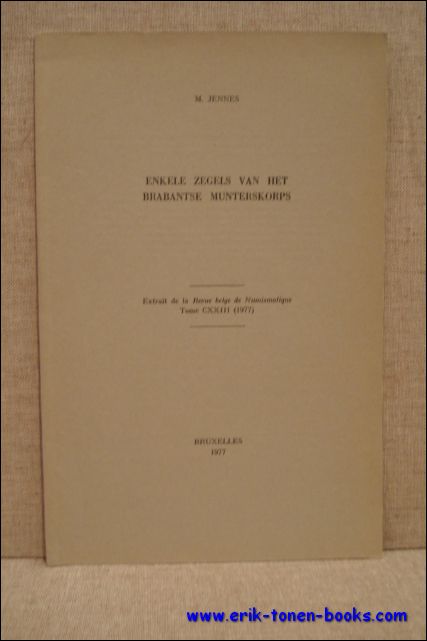
Jennes, M.
Enkele zegels van het Brabantse munterskorps.
Bruxelles, 1977. Gebroch., 7pp., 16x24.5cm., goede staat.
Boeknummer: 32321 | Prijs: EUR 8.00
Jesse Kraft (ed)
Essays for the 150th Anniversary of the Birth of Victor D. Brenner
Brepols - American Numismatic Society, 2026. Hardback, Pages: viii + 268, Size:152 x 229 mm, Illustrations:178 b/w, Language: English. ISBN: 9780897227469
Summary This volume brings together a collection of research papers first presented at the 2021 Coinage of the Americas Conference. Organized to commemorate the 150th anniversary of Victor David Brenner's birth, this assembly of scholarship honors one of the most influential figures in American numismatic history. Best known as the sculptor of the 1909 Lincoln Wheat cent-the longest-running design in U.S. coinage history-Brenner was a master of the "Beaux-Arts" style. The papers within this volume offer a multifaceted look at his career, including: ? Deep-Dive Analysis: Detailed examinations of specific, lesser-known medals and commemorative pieces. ? Artistic Evolution: An exploration of how Brenner's Lithuanian roots and European training influenced his American works. ? Lasting Impact: A critical look at his role in the "Golden Age" of American numismatics and his mentorship within the medallic arts community. TABLE OF CONTENTS Preface Introduction Jesse Kraft Victor D. Brenner's Society of the Cincinnati Medal in Context Patrick McMahon Railroad-Themed Medals by Victor D. Brenner George S. Cuhaj Victor D. Brenner and the 1902 Prince Henry of Prussia Medal Peter van Alfen The Path to the Penny: A Study in Victor D. Brenner's Patronage Jonathan Kagan A Song to Brenner: Victor D. Brenner's A Song to Nature, Public Art, and Sculpture in the Round Taylor Ruth Hartley A Trial List of Non-Medallic Sculpture by Victor D. Brenner Scott H. Miller "Mr. Brenner Has Made So Many Commemorative Medals": Collective Memory, Iconography, and Historical Legacy in the Medallic Arts Jesse Kraft
Boeknummer: 70421 | Prijs: EUR 105.00
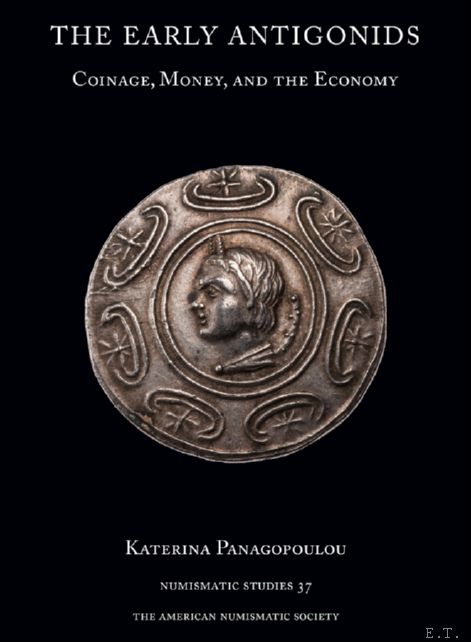
Katerina Panagopoulou
The Early Antigonids: Coinage, Money, and the Economy
Brepols, 2020. Hardback, xlv + 390 pages, Size:216 x 280 mm, Illustrations:63 b/w, 31 col., Language: English. *new ISBN: 9780897223553
Summary This systematic analysis of the gold and silver coinages of "King Antigonos" is intended to explore the nature of the Antigonid cash economy during the second and the third quarter of the third century BC. The author's principal aim in reconstructing the precious metal coinage of "King Antigonos" is to comprehend the way in which the mints concerned functioned and to identify the major issues of the period. This helps us to answer questions such as, whether or not production was continuous; on which occasions/for which purposes the mints operated; where and why the coins produced circulated and what their value at the time was; finally, whether these issues outlasted their initiator, Antigonos Gonatas. The macroeconomic profile of Antigonid Makedonia during this period is completed by an attempt to quantify and to contextualize these Antigonid silver issues. Explanations other than military for the production of this coinage are explored and the chronology and the role of those silver coins issued posthumously in the name of Alexander that are currently assigned to the early reign of Gonatas are reconsidered. Finally, the geographical distribution of these Antigonid issues is reassessed. TABLE OF CONTENTS 1. Introduction 2.0-5.0 Catalogue and Commentary: Gold and Silver Issues "of king Antigonos" 2. Period I: The Chremonidean War and the Battle off Kos (274/1-260/255 BC), "Plain Style" 3. Period II: From the Revolt of Alexander, Tyrant of Korinth, to the Battle of Andros (252/1-246 BC), "Dramatic Style" 4. Period III: From the Battle of Andros to the Death of Demetrios II 246/5-229 BC), "Portrait Style" 5. Period IV: Antigonos Doson (229-221/0 BC), "Expressive Style" 6. Numismatic Evidence: General Considerations 7. Coinage, Money and the Economy 8. Concluding Remarks 9. Appendices 10. Bibliography Plates
Boeknummer: 65546 | Prijs: EUR 155.00
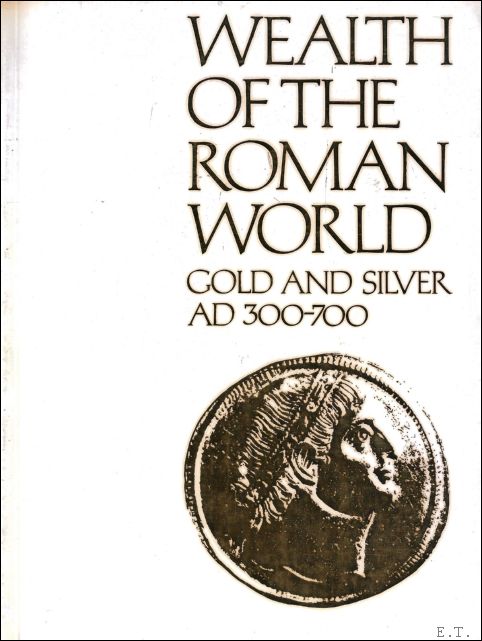
KENT, J.P.C., and K.S. PAINTER,
Wealth of the Roman World. : Gold and Silver AD 300-700
Trustees of the British Museum, London, 1977, 1977. 1. Softcover, 190 pages, ENG, 245 x 190 mm, in good order, bit discoloured through the age of time, dozens of illustrations of artifacts, coins, jewellery, . ISBN: 0714100617
Boeknummer: 58647 | Prijs: EUR 14.00
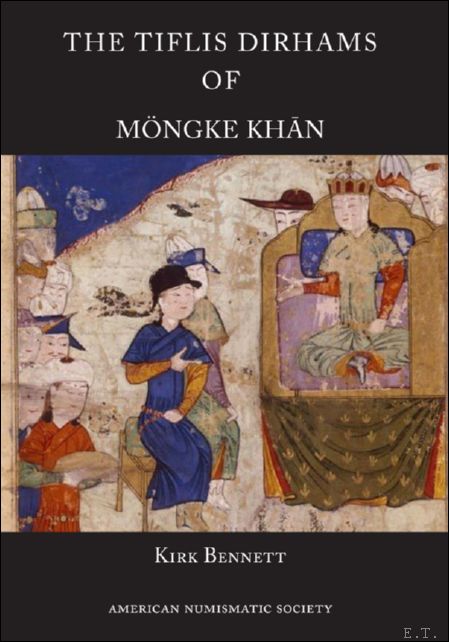
Kirk Bennett
The The Tiflis Dirhams of Möngke Khan
Brepols, 2020. Hardback, vi + 182 pages, Size:152 x 229 mm, Illustrations:219 b/w, 3 tables b/w., Language: English. ISBN: 9780897223652
Summary The dirhams of Möngke Kh?n represent the first major emission of silver coinage in Georgia following the Mongol conquest roughly a generation previously. Struck in the Georgian capital city of Tiflis (modern Tbilisi) from the middle of AH 652 to perhaps as late as the first month of AH 660 (AD 1254-1261), these coins circulated widely throughout the South Caucasus and adjacent areas. This coin type was the first in Georgia to provide a date formula with both the month and year of the Islamic calendar. The placement of the date formula in the four marginal segments of the reverse of the coin means that parts of it are often struck off the flan or effaced on individual specimens. The problem is compounded by poor Arabic calligraphy on many coins, leading to much confusion in the literature about the extant dates. However, using secondary design features such as the varying central obverse and reverse decorative elements, this book creates a systematic framework for dating these dirhams, identifying previously unpublished dates and varieties in the process. The first in-depth monograph on this popular and historically important coin series, this book will be a valuable resource for both scholars and collectors interested in Georgian, Mongol, and Islamic numismatics. TABLE OF CONTENTS Chapter 1. Introduction Chapter 2. Identification Guide Bibliography
Boeknummer: 65881 | Prijs: EUR 77.00
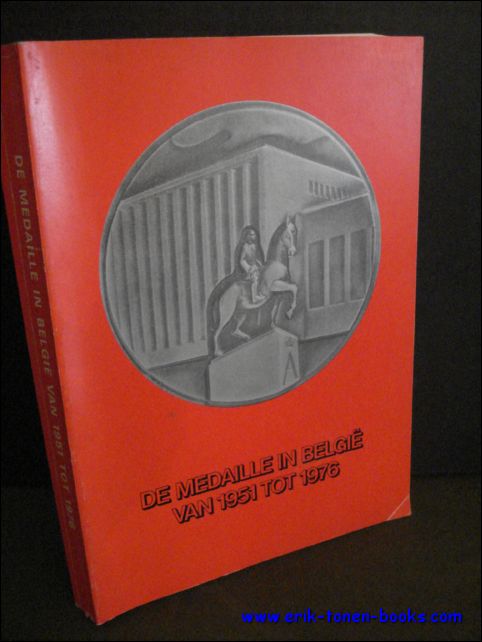
Lippens, Van Keymeulen
DE MEDAILLE IN BELGIE VAN 1951 TOT 1976.
Brussel, Koninklijke bibliotheek Albert I, 1980. ( dub). softcover, geillustreerde uitgeversomslag, 25,5x18,5cm, 247pp. + 70pp, geillustreerd z/w;
tentoonstellingscatalogus.
Boeknummer: 1977 | Prijs: EUR 15.00
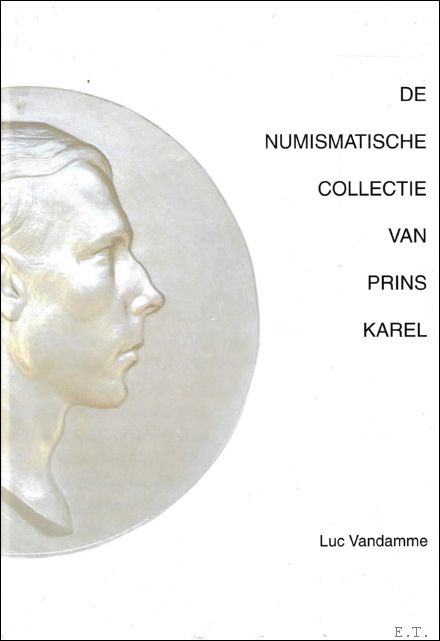
Luc Vandamme.
De numismatische collectie van prins Karel.
Alken, bij de auteur, 2007. Hardcover, 211pp., 16.5x23.5cm., ills. in z/w., nieuwstaat.
De medailles van Prins Karel, graaf van Vlaanderen
Boeknummer: 39938 | Prijs: EUR 20.00
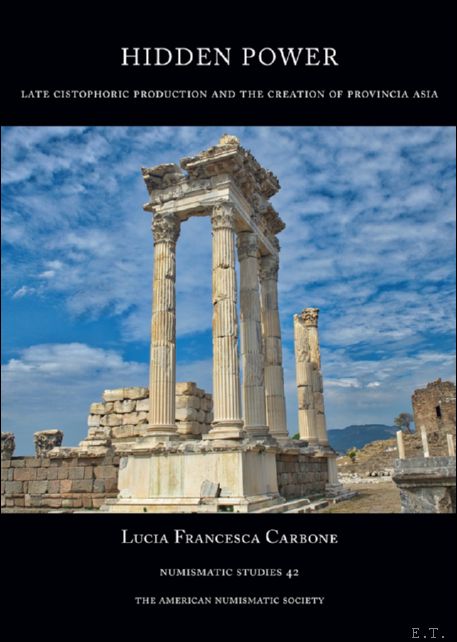
Lucia Carbone
Hidden Power: Late Cistophoric Production and the Creation of Provincia Asia
Brepols, 2020. Hardback, vii + 266 pages, Size:216 x 280 mm, Illustrations:226 b/w, 32 tables b/w., Language: English. ISBN: 9780897223638
Summary Using the production and circulation patterns of the Asian cistophorus as a case study, Hidden Power seeks to develop a better understanding of Roman monetary policy in the province of Asia between its establishment in the 120s BC and the beginning of the Mithraditic Wars. Hidden Power catalogues and illustrates some 1,737 cistophoric tetradrachms and fractions from the mints of Ephesus, Pergamum, Tralles, Laodicea, Apamea, Adramyteum, Nysa, and Smyrna. Most of the coins included in the study are late cistophori, issues between 134.3 BC and the 60s BC. Appendix I provides a discussion of the late cistophori of Tralles struck after 89 BC, showing not only the direct correlation between cistophori and Roman military campaigns, but also Roman taxation. In Appendix II, circulation data have been combined with data derived from the Tralles die study in order to calculate cistophoric production for the entirety of provincia Asia until the end of the late cistophori. This estimate provides a means to assess the financial impact of Roman taxation and exploitation by Roman imperatores over the course of the first half of the first century BC. TABLE OF CONTENTS Introduction Chapter 1: The 2002 Hoard (90/89 BC): An Overview Chapter 2: Cistophoric Production at Pergamum Chapter 3: Cistophoric Production at Ephesus Chapter 4: Cistophoric Production at Tralles Chapter 5: Cistophoric Production at Laodicea Chapter 6: Cistophoric Production at Apamea Chapter 7: Cistophoric Production at Adramyteum Chapter 8: Cistophoric Production at Nysa Chapter 9: Cistophoric Production at Smyrna Chapter 10: Conclusions Appendix I: Late Cistophoric Production at Tralles after 89 BC Appendix II: Cistophoric Production and the Impact of Roman Taxation (105-ca. 58 BC) Conclusions Bibliography Indices Plates
Boeknummer: 65771 | Prijs: EUR 102.00
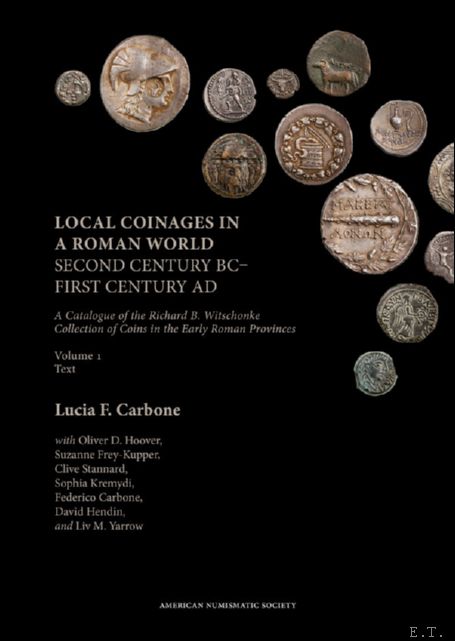
Lucia F. Carbone
Local Coinages in a Roman World (Second Century BC?First Century AD). A Catalogue of the Richard B. Witschonke Collection of Coins in the Early Roman Provinces
Brepols, 2024. Hardback, 2 vols, xvi + 560 pages, Size:210 x 297 mm, Illustrations:7452 b/w, 1 col., 3 tables b/w., Language: English. ISBN: 9780897224017
Summary The Richard B. Witschonke Collection of more than 3,700 coins, now in the collection of the American Numismatic Society, provides the historical and numismatic prologue to the study of Roman provincial coinage. Most of the specimens are of great historical and numismatic value, as explained in the historical introductions preceding each of the 36 sections of this catalogue. This collection offers a unique overview of the diverse ways in which the monetary systems of the Mediterranean basin responded to the Roman conquest in the second and early first centuries BCE and to the related necessity of interconnectivity. TABLE OF CONTENTS Foreword by Gilles Bransbourg Preface Introduction 1. Spain Introduction Catalogue 2. Spanish Imitations of Roman Republican Coinage Introduction Catalogue 3. Gaul Introduction Catalogue 4. Roman Republican Coinage Introduction (Liv M. Yarrow) Catalogue 5. Italian Imitations of Roman Republican Coinage Introduction Catalogue 6. Non-State Coinages of Central Italy Introduction (Clive Stannard) Catalogue (Clive Stannard and Lucia F. Carbone) 7. Italy Introduction (Federico Carbone) Catalogue 8. Sardinia Introduction Catalogue 9. Sicily and Adjacent Islands Introduction (Suzanne Frey-Kupper) Catalogue (Suzanne Frey-Kupper and Lucia F. Carbone) 10. Geto-Dacian Imitations of Roman Republican Coinage Introduction Catalogue 11. Eraviscan Imitations of Roman Republican Coinage Introduction Catalogue 12. Africa Introduction Catalogue 13. Crete and Cyrenaica Introduction (Federico Carbone) Catalogue 14. Achaea Introduction Catalogue 15. "Fleet Coinage" Introduction Catalogue 16. Macedonia Introduction (Sophia Kremydi) Catalogue (Sophia Kremydi and Lucia F. Carbone) 17. Thrace and Moesia Introduction Catalogue 18. Bosporus Introduction (Oliver D. Hoover) Catalogue 19. Paphlagonia Introduction (Oliver D. Hoover) Catalogue 20. Bithynia Introduction (Oliver D. Hoover) Catalogue (Oliver D. Hoover and Lucia F. Carbone) 21. Pontus Introduction Catalogue 22. Asia Introduction Catalogue 23. "Cistophoric" Countermarks Introduction Catalogue 24. Early Cistophori Introduction Catalogue 25. Aristonicus' Cistophori Introduction Catalogue 26. Late Cistophori Introduction Catalogue 27. Later Republican and Pre-Imperial Cistophori Introduction Catalogue 28. Lycia-Pamphylia Introduction (Oliver D. Hoover) Catalogue 29. Galatia and Pisidia Introduction (Oliver D. Hoover) Catalogue 30. Cappadocia Introduction (Oliver D. Hoover) Catalogue (Oliver D. Hoover and Lucia F. Carbone) 31. Cyprus Introduction (Oliver D. Hoover) Catalogue (Oliver D. Hoover and Lucia F. Carbone) 32. Cilicia Introduction (Oliver D. Hoover) Catalogue (Oliver D. Hoover and Lucia F. Carbone) 33. Syria Introduction (Oliver D. Hoover) Catalogue (Oliver D. Hoover and Lucia F. Carbone) 34. Coele Syria Introduction (Oliver D. Hoover) Catalogue (Oliver D. Hoover and Lucia F. Carbone) 35. The Decapolis, Idumaea, and Judaea Introduction (Oliver D. Hoover) Catalogue (David Hendin, Oliver D. Hoover and Lucia F. Carbone) 36. Egypt Introduction (Oliver D. Hoover) Catalogue (Oliver D. Hoover and Lucia F. Carbone) Bibliography Indices
Boeknummer: 64188 | Prijs: EUR 327.00
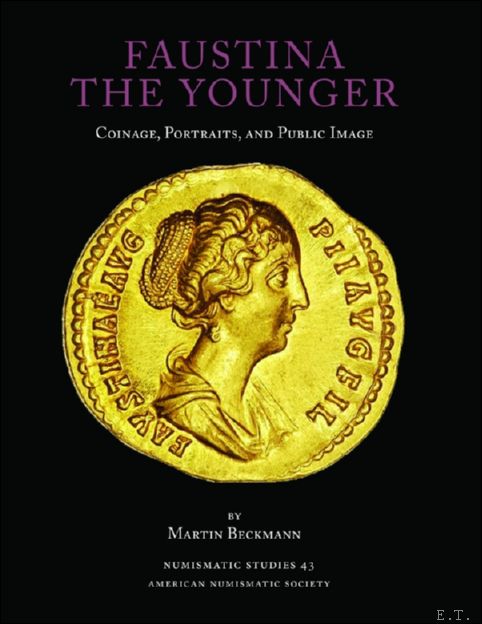
Martin Beckmann
Faustina the Younger. Coinage, Portraits, and Public Image
Brepols, 2022. Hardback, vii + 205 pages, Size:216 x 280 mm, Illustrations:96 col., 1 tables b/w., Language: English. ISBN: 9780897223669
Summary The Roman empress Faustina the Younger, wife of the emperor Marcus Aurelius and mother to at least eleven imperial children, including the future emperor Commodus, not only played a key role in Roman history of the 2nd century AD but also was the subject of almost unparalleled commemoration in visual media, especially sculpture and coinage, during her lifetime. This book examines the single largest surviving ancient source for the portraiture and public image of Faustina the Younger: the coinage struck in her name under Antoninus Pius and Marcus Aurelius. The coinage of Faustina the Younger is rich in original iconography and long in duration but its chronology and the relationships between its various types are unclear at best, unknown at worst. This study seeks to remedy this situation by employing the methodology of die analysis to create a new and firm chronology for Faustina's coinage. The results make it possible to establish an authoritative typology for Faustina's portraiture and to show the precise relationship between the diverse obverse and reverse types. The die analysis also clarifies Faustina's complicated iconographic program, making it possible to compare it directly with the iconography of the better-dated coinage of her male contemporaries. Taken together, these results permit a complete re-evaluation of the coinage, portraits and public image of Faustina the Younger. TABLE OF CONTENTS Introduction. Faustina the Younger: Coinage, Portraits, and Public Image Chapter 1. Material and Methodology Chapter 2. VENVS GENETRIX: Faustina's First Child (Portrait Type 1) Chapter 3. CONCORDIA: The Ideal of the Imperial Marriage (Portrait 35 Types 2-5) Chapter 4. FAVSTINA AVGVSTA (Portrait Types 5-10) Chapter 5. Portraits: Concepts and Processes Chapter 6. A New Typology of Faustina's Portraits Chapter 7. Message and Meaning in the Portraits of Faustina Conclusion. The Public Image of Faustina Appendix 1. Faustina's Children Appendix 2. Relative Proportions of Reverse Types in AV and AR Abbreviations and Bibliography Die Catalogue, Part 1. Aurei of Faustina II under Antoninus Pius Die Catalogue, Part 2. Aurei of Faustina II under Marcus Aurelius Key to the Die Link Charts Die Link Charts List of Die Illustrations Plates Index
Boeknummer: 64571 | Prijs: EUR 72.00
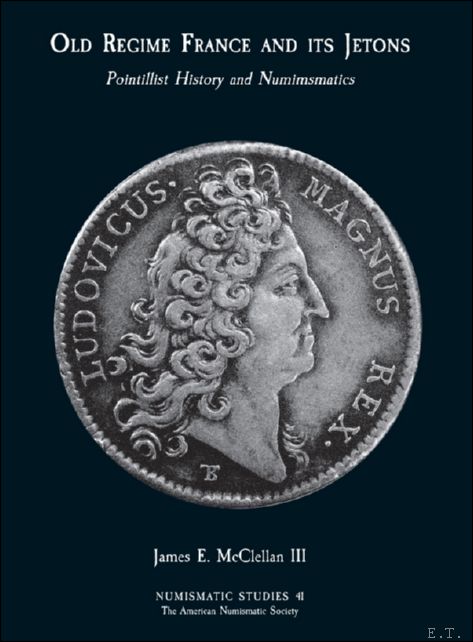
McLellan James E.
Old Regime France and its Jetons: Pointillist History and Numismatics
Brepols, 2020. Hardback, xiii + 268 pages, Size:216 x 280 mm, Illustrations:73 b/w, 4 tables b/w., Language: English. ISBN: 9780897223621
Summary Non-monetary tokens known as jetons originated as counters used on medieval counting tables. In certain parts of France, the Low Countries, and German lands, they continued as such into the nineteenth century. The historical and numismatic interest in jetons stems more from what else they became, particularly though the end of the eighteenth century under the Bourbon monarchs, as perks of office for office holders in the burgeoning nation state of France, New Year's Day presents exchanged among certain segments of society, and lagniappe handed out for attendance at meetings in town halls, regional estates, and learned societies. Jetons figured in the rites and rituals of the guilds and faculties; they were swag for general meetings of the clergy, and they served as calling cards for noble families. Decoding hidden messages became a parlor game for cognoscenti, and as "petit monuments" some jetons are miniature works of high art produced by the world's most talented artists/engravers at the world's preeminent mint. In this book jetons serve as microdots in a pointillist, longue durée account that paints a grand portrait of early modern and Old Regime France leading up to the French Revolution. Winner of the 2021 Numismatic Literary Guild Award for the best book on medals and tokens TABLE OF CONTENTS INTRODUCTION: HISTORIANS AND NUMISMATISTS 1. AN HISTORICAL OVERVIEW OF EARLY JETONS 2. OLD AND NEW IN THE OLD REGIME 3. GOVERNING BODIES 4. ASSIDUITY AND THE ACADEMIES 5. GUILDS AND YET OTHERS 6. AESTHETICS AND THE SPECIAL ROLE OF THE ACAD.MIE ROYALE DES INSCRIPTIONS ET BELLES-LETTRES 7. THE MONNAIE DES MEDAILLES CONCLUSIONS Glossary List of Figures and Tables Bibliography Index
Boeknummer: 65880 | Prijs: EUR 102.00
Merle Eisenberg, Lee Mordechai, David Yoon (eds)
Coins and Money in the Middle Ages. Studies in Honor of Alan Stahl
Brepols - American Numismatic Society, 2026. Hardback, Pages: viii + 406, Size:210 x 297 mm, Illustrations:157 b/w, 21 tables b/w., Language: English. ISBN: 9780897224406
Summary Alan Stahl's distinguished career in numismatics has ranged over numerous topics in the study of coins, monetary history, and medallic art, from antiquity through the Middle Ages and into the modern era. This volume brings together cutting-edge scholarship from three overlapping groups of scholars to honor him: former students from the American Numismatic Society Graduate Summer Seminar whom Stahl taught during the 1980s and 1990s, colleagues and former students at Princeton University where he has taught since 2005, and collaborators in the Framing the Late Antique and Early Medieval Economy research project he has directed since 2014. The broad scope of the articles reveals how widely Stahl has influenced numismatics and numismatists over the last five decades, through his research, teaching, and training of generations of students. Some articles focus on specific aspects of coinage, but far more show how thinking with coins, as a medium, transforms how scholars write the histories of the monetary world, economic life, and social relations. Like Stahl himself, the volume's contributors go beyond technical numismatic details and place coins and money in a broader framework that helps transform our understanding of how people lived in the premodern world. TABLE OF CONTENTS Acknowledgments Merle Eisenberg, Lee Mordechai, and David Yoon. Introduction 1. Victor Revilla and Alejandro G. Sinner. Peasant Economy in Late Roman Northeastern Spain: Diversification, Adaptation, and Recycling 2. David Yoon. The Beginning of the Merovingian Moneyer-Mint Coinage as Seen from Central Spain 3. Andrew Kurt. Forging a New Minting Apparatus under Leovigild and His Son Reccared 4. Paolo Squatriti. Stahlian "Stuffgeschichte," Carolingian Coins, and the Material Eucharist 5. Ildar Garipzanov. Minuscule Texts on Weights and Measures in Carolingian Manuscripts 6. Florin Curta and Lance Maulsby. Renaissance or Recycling? Roman Coins in the Early Middle Ages (Eighth and Early Ninth Centuries) 7. Razieh Taasob. Reassessing the Lifespan of the Heraios Coinage: Insights into the First Kushan Ruler's Enigmatic Tetradrachms 8. Jane Sancinito. 33, 12, 6, 3, and 1: Examining the Byzantine Bronze of Alexandria ad Aegyptum 9. Andrei Gandila. Army Pay or People's Money? The Propontic Mints and the Mediterranean Economy (Sixth and Seventh Centuries) 10. Aikaterini Peppa. Islets and the Shifting Economic Landscape from the Sixth to the Beginning of the Ninth Century 11. Kirstin Ohrt. Saving the Antioch Coin Record from the Margins: Dorothy Waagé's Epic Struggle 12. Pavla Gkantzios Drápelová. Comparative Analysis of the Weight of Byzantine Folles: Antioch vs. Constantinople (Sixth to Early Seventh Centuries) 13. Andrea U. De Giorgi and A. Asa Eger. Anazarbos: Transformations of a Late Antique Capital to an Early Islamic City 14. Tasha Vorderstrasse. Archaeology of Aksumite Coin Circulation in Ethiopia and Eritrea 15. Elena Baldi. A Hoard of Hyperpera of Manuel I from the John Max Wulfing Collection, Washington University in St. Louis 16. Ilia Calogero Curto Pelle. "Coinage and Money in the Latin Empire of Constantinople" Revisited: What Is a Coin in the Early Thirteenth-Century Balkans and Anatolia? 17. James J. Todesca. Striking Dissimilarities: The Gold Dinars of León and Portugal, ca. 1173-1272 18. Sarah M. Kampbell. The Imitation Andrea Dandolo Ducats in the Benjamin Bell Collection at Princeton University 19. William R. Day, Jr. Chequeens, Gubbers, Ibrahimis, and Moorish Ducats: Venetian Gold Ducats and Their Imitations in India, 1300-1800 20. Peter van Alfen. Brief Observations on Ships on Dutch and English Medals of the Seventeenth Century
Boeknummer: 70434 | Prijs: EUR 165.00
N/A;
1000 ans de monnaies hongroises. 1000 jaar Hongaarse munten,
Turnhout, Brepols, 1999. Paperback, 210 x 295 mm. ISBN: 9782503509686
Propose une collection exceptionnelle de monnaies en or et argent ainsi que des medailles commemoratives conservees au Musee National Hongrois de Budapest, qui retrace l'histoire millenaire de la Hongrie. On y decouvre les monnaies sous une grande varation de formes: rectangulaire, octogonale, en forme de lune ou encore d'etoile, le livre presente egalement des cartes, des gravures et des photos. Languages : French,Dutch.
Boeknummer: 39835 | Prijs: EUR 27.00
NASTER, PAUL/ BROUETTE, EMILE/ HACKENS, TONY/ JADOT, JEAN.
REVUE BELGE DE NUMISMATIQUE ET DE SIGILLOGRAPHIE.
Bruxelles, 1975. Broche, couverture d' editeur, 16x24,5cm, 215pp + 16 planches hors-texte n/b.
Tome CXXI. La 'Pietas' et le sentiment de l' enfance a Rome d' apres les monnaies. Gaucher de Chatillon and the imitation of sterlings in the name of Edward of England. De reisen der antwerpse munster en hun reglement voor de reisen naar Maastricht. Ect.
Boeknummer: 2858 | Prijs: EUR 25.00
NASTER, PAUL/ BROUETTE/ HACKENS, TONY/ MARCHETTI, PATRICK.
REVUE BELGE DE NUMISMATIQUE ET DE SIGILLOGRAPHIE/ BELGISCH TIJDSCHRIFT VOOR NUMISTMATIEK EN ZEGELKUNDE.
Bruxelles, 1978. Broche, couverture d' editeur, 16x24,5cm, 277pp + 8 planches hors-texte n/b.
Tome CXXII. L' essai des monnaies dans l' Antiquite... Le cours du cyzicene au Ive siecle... Le temoignage de Pomponius et la date de creation des Triumviri...
Boeknummer: 11033 | Prijs: EUR 25.00
NASTER, PAUL/ COLAERT, MAURICE/ HACKENS, TONY/ MARCHETTI, PATRICK.
REVUE BELGE DE NUMISMATIQUE ET DE SIGILLOGRAPHIE/ BELGISCH TIJDSCHRIFT VOOR NUMISTMATIEK EN ZEGELKUNDE.
Bruxelles, 1978. Broche, couverture d' editeur, 16x24,5cm, 291pp + 25 planches hors-texte n/b. ISBN: 07745885
Tome CXXXIII.
Boeknummer: 1797 | Prijs: EUR 20.00
Oliver D. Hoover
Let Us Have Peace
A Catalogue of Indian Peace Medals at the American Numismatic Society
BREPOLS, 2025. Pages: ix + 535 p.Size:216 x 280 mm Illustrations:600 col. Language:English. *NEW ISBN: 9780897223928
Summary Let Us Have Peace offers a detailed numismatic, art- and socio-historical discussion of 302 Indian peace medals and related objects that entered the cabinet of the American Numismatic Society between 1883 and 2013. The medals represent an important and often under-utilized resource for the history of relationships between the Native peoples of North America and the colonial powers of France, Great Britain, and Spain, as well as their successors, Canada and the United States of America. Despite being inanimate objects of silver and copper, the Indian peace medals in the ANS collection are incomparable storytellers, each offering its own tale of the past that give us insight into the remarkable lives of the medals? creators, distributors, and recipients. TABLE OF CONTENTS Dedication Acknowledgments Introduction Medals Distributed in French North America (ca. 1610?1760) King Louis XIV King Louis XV Medals Distributed in British North America (ca. 1610?1860) Lord Baltimore Queen Anne King George I King George II King George III Medals Distributed in the Province and Dominion of Canada (ca. 1840?1921) Queen Victoria Treaties 1 and 2 Treaty 3 Treaty 6 Assembly of Indian Tribes Treaty 9 Treaty 11 Medals Distributed in Spanish North America (ca. 1769?1806) King Carlos IV Medals Distributed in the United States of America (ca. 1788?1896) Commonwealth of Virginia Continental Congress George Washington John Adams Thomas Jefferson James Madison James Monroe John Quincy Adams Andrew Jackson Martin Van Buren William Henry Harrison John Tyler James K. Polk Zachary Taylor Millard Fillmore Franklin Pierce James Buchanan Abraham Lincoln Andrew Johnson Ulysses S. Grant Rutherford B. Hayes James A. Garfield Chester A. Arthur Grover Cleveland Benjamin Harrison Private and Fur Trade Medals distributed in the United States of America (ca. 1822?1900) Miss White?s Seminary for Select Ladies American Fur Company Pierre Chouteau, Jr. & Co. Union Fur Company George Washington Chief Bacon Rind Appendix A: U.S. Mint Miniature Presidential Medals Appendix B: U.S. Mint Presidential Medals Appendix C: Commemorative Indian Peace Medal Facsimiles Appendix D: Indian Peace Medal Facsimiles and Fantasies Bibliography Index
Boeknummer: 67754 | Prijs: EUR 232.00
Paul Callewaert
Penninxckens van Brugghe : De historische waarde van loden penningen
Eigen Beheer, 2024. 1. Hardcover, 333 pagina's NL kleurendruk op glanzend papier, formaat 16,5 x 24 cm. rijkelijk
geïllustreerd met afbeeldingen in kleur. beperkte oplage van 300ex. ISBN: X De loden getuigenis van een ver verleden, de historische waarde en de rol van de loden penningen in het dagelijkse leven van Brugge. Een vernieuwde kijk op de gekende penningen, aangevuld met tal van nieuwe nog niet beschreven Brugse penningen en hun varianten. Meer dan 300 exemplaren die uitvoerig zijn beschreven. Boeknummer: 63025 | Prijs: EUR 59.99
geïllustreerd met afbeeldingen in kleur. beperkte oplage van 300ex. ISBN: X De loden getuigenis van een ver verleden, de historische waarde en de rol van de loden penningen in het dagelijkse leven van Brugge. Een vernieuwde kijk op de gekende penningen, aangevuld met tal van nieuwe nog niet beschreven Brugse penningen en hun varianten. Meer dan 300 exemplaren die uitvoerig zijn beschreven. Boeknummer: 63025 | Prijs: EUR 59.99
Selene E. Psoma
Corcyra. A City at the Edge of Two Greek Worlds
Brepols, 2022. Paperback, 2 vols, 747 pages, Size:170 x 240 mm, Language: English. ISBN: 9789607905970
Summary The current monograph on Corcyrean history has the aim of offering a synthesis on the history of the island from the time of the Liburnian tribe of the Kerkyres, after which the island was named, to the end of the ancient world and the destruction of the temples of the Greek gods by ????????, the local episkopos. For this reason, it takes into consideration all available evidence deriving from Greek and Latin literary sources, epigraphic documents, Corcyrean coinage and archaeological excavations on the island of Corcyra. All aspects of Corcyrean history are discussed: the geography of the island, the relations with Corinth, Athens, the kings of Epirus and, finally, the Romans, its position in the international politics, the numerous staseis, its institutions, the Corcyrean navy, the island's legendary background and religious life, its coinage and numismatic policy. Prosopography, onomastics and name-giving practices are also discussed as well as Corcyrean society. Finally, different readings of some significant events of Greek history involving Corcyra are discussed: Corcyrean power, the Corcyreans at the sea battle of Salamis, Corcyra and the network of Corinthian colonies in the North West, the beginning of the Peloponnesian War and the real causes of this war, Corcyra during the Peloponnesian War, insularity, geographic position and their impact on the history and shaping of identity of the city-island? The first volume analyzes its geographical location, history, economy and monetary policy (chs I-XII), institutions, legendary background, identity and religious life (chs XIII, XIV, XV). The second volume studies Corcyrean prosopography (XVI), onomastics (XVII) and society (XVIII). This volume also contains lists of names, three Appendices, bibliography and different indices, plates depicting coins of Corcyra, and a map of the island.
Boeknummer: 64559 | Prijs: EUR 75.47
Sophia Kremydi, Marie-Christine Marcellesi (eds)
Les Alexandres après Alexandre. Histoire d'une monnaie commune
Brepols, 2019. Paperback, 464 pages, Size:210 x 280 mm, Language: French.*new ISBN: 9789609538961
Summary This collective volume discusses the coinages with the types of Alexander the Great that were produced by kings, cities and leagues -in parallel with their own local coin issues- for over two centuries after the king's death. The purpose of the book is to elaborate on the role of the 'Alexanders' as a common currency of the Hellenistic world. The topics examined include, among others, the circulation of the 'Alexanders' in specific geographical regions, a discussion of their use through the lens of regional history, the circulation of silver 'Alexanders' throughout the Hellenistic oecumene, the intensive but short-lived production of gold 'Alexanders', the epigraphic evidence for their use, their imitations in the Arabic peninsula, and, more generally, an evaluation of their much disputed role in the economic growth of the Hellenistic world.
Boeknummer: 66105 | Prijs: EUR 56.60