



Numismatics
38 Bücher gefunden










Seite 1
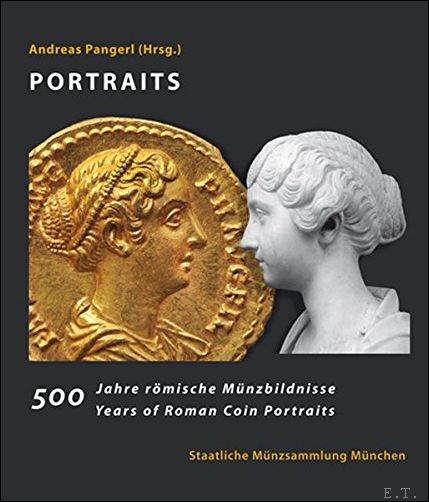
Andreas Pangerl (ed.)
Portraits : 500 years of Roman coin portraits = 500 Jahre römische Münzbildnisse
Staatliche Münzsammlung München, 2017. Hardcover, ix, 474 pages : colour illustrations ; 30 cm. Introduction and foreword in German and English; essays in German with abstracts in English, and one essay in English. ISBN: 9783922840404
Introduction and foreword in German and English; essays in German with abstracts in English,
Buchnummer: 57428 | Preis: EUR 125.00
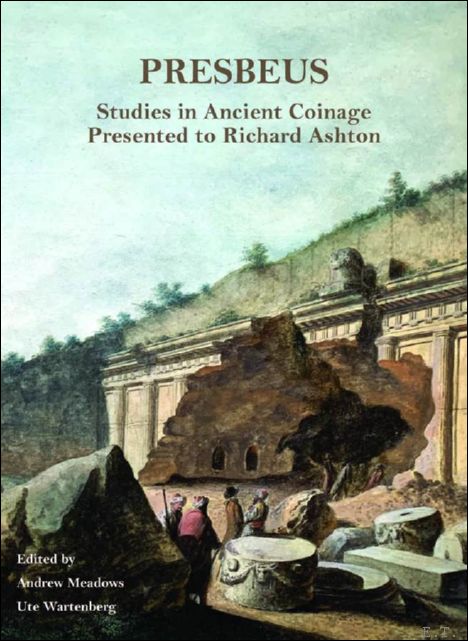
Andrew Meadows, Ute Wartenberg (eds)
Presbeus: Studies in Ancient Coinage Presented to Richard Ashton
Brepols, 2022. Hardback, xii + 544 pages, Size:216 x 280 mm, Illustrations:300 b/w, 47 tables b/w., Language: English. ISBN: 9780897223768
Summary Edited by Andrew Meadows and Ute Wartenberg, this Festschrift is presented to numismatic scholar Richard Ashton on the occasion of his 75th birthday. These 20 articles present new research into the numismatics of the Greek East and provide significant advances in archaeological, historical, and numismatic scholarship. TABLE OF CONTENTS 1. Christopher S. Lightfoot. Was there a Core-Formed Glass Industry in Archaic Rhodes? 2. Wolfgang R. Fischer-Bossert. The Electrum Coinage of Lindos Again 3. Alain Bresson. Palmette Coins: An Update 4. Jonathan Kagan. Return to Xanthos: New Numismatic Light on the Harpagid Dynasty of Western Lycia 5. Ute Wartenberg. A Persian Queen on the Black Sea: The Coinages of Amastris and Herakleia 6. Philip Kinns. Understanding the Later Civic Coinage of Miletus 7. Koray Konuk. MY Stands for Mylasa 8. Andrew Meadows. The Double-Axe Mint: The Coinage of Tenedos in the Third and Second Centuries BC 9. Amelia Dowler. The New Mint under Nicomedes I (c. 278-255 BC 10. Kerstin Höghammar. The Koan Series of Posthumous Alexander Tetradrachms, c. 200 BC 11. Vassiliki E. Stefanaki. Les 'plinthophores' de Cos: état de la question 12. Peter Thonemann. Cistophoric Geography Revisited 13. Aneurin Ellis-Evans. The Wreathed Tetradrachms and Gold Staters of Magnesia on the Maeander 14. Nicholas Sekunda. The Cretan and Pisidian Keraitai 15. Lucia Carbone. The Standardization of Asian Bronze Denominations in the First Century BC 16. Fabrice Delrieux. Fleuves et riviéres de l'Asie Mineure gréco-romaine. Généralités et tudes de cas dans les monnayages de Carie 17. Laurent Bricault. Images civiques de Mithra 18. Andrew Burnett. The Severan Coinage of Galatia 19. Elena Korka, Constantine Lagos, and Maria Syrrou. An Early Byzantine Gold Hoard from Tenea, Corinthia 20. François de Callataÿ. Correspondence about the Coin Market in Constantinople and Smyrna Prior to 1800 Indexes
Buchnummer: 64563 | Preis: EUR 115.00
Arkadiusz Dymowski, Kyrylo Myzgin (eds)
Counterfeits, Imitations, and Copies of Roman Imperial Denarii. Making and Faking Coins on Both Sides of the Limes
Brepols, 2025. Hardback, 220 pages, Size:216 x 280 mm, Illustrations:20 b/w, 75 col., 13 tables b/w., 4 maps b/w, 6 maps color, Language: English. *new ISBN: 9782503612447
Summary Roman Imperial denarii from the first-third centuries AD are, almost without exception, the most common ancient coinage to be found in Central, Northern, and Eastern Europe beyond the Roman limes. Perhaps surprisingly, however, a significant percentage of these coins are in fact counterfeit, comprised largely of denarii subaerati (plated denarii, fourrées) and denarii flati (base-metal cast copies). Moreover, these fake coins were not only manufactured by Romans themselves, but also by barbarian peoples in Eastern Europe, far from the Roman limes, in what should be considered a mass-scale phenomena. This volume draws together archaeological, numismatic, and historical research in order to offer a new assessment of the production and use of counterfeit Roman Imperial denarii both within the European provinces of the Roman Empire and in European Barbaricum. Drawing on the results of the research project Barbarian Fakers. Manufacturing and Use of Counterfeit Roman Imperial Denarii in East-Central Europe in Antiquity, from the University of Warsaw, the papers gathered here explore the transfer of ideas, technology, and finished products that led to the transfer of counterfeit coinage across the Empire, and shed light on how, why, and when such coins were created and used. TABLE OF CONTENTS List of Illustrations List of Abbreviations Introduction Arkadiusz Dymowski and Kyrylo Myzgin 1. Counterfeit Coin Moulds from Britannia Inferior: A Summary and Brief Discussion Richard Brickstock 2. The Production of Struck and Cast Denarii in Châteaubleau (France) during the Second Half of the Third Century AD Fabien Pilon 3. Counterfeit Denarii North of Hadrian's Wall: Roman or 'Barbarian'? Fraser Hunter 4. Non-official Roman Denarii in Thuringia: The Finds from the Germanic Settlement of Frienstedt Mario Schlapke 5. The ONAV Group of Barbarian Imitations and Copies of Roman Imperial Coins: Manufacturing of denarii subaerati in Eastern Europe in Antiquity Arkadiusz Dymowski 6. Finds of Counterfeit Roman Denarii at Selected Roman Period Settlement Sites in Western Lesser Poland: The State of Research and Prospects Jaros?aw Bodzek, Szymon Jellonek, and Barbara Zaj?c 7. Cast Copies of Roman Imperial Denarii from Belarus Vital' Sidarovich 8. Technological Variety of Methods Used in the Production of Cast Copies of Roman Denarii on the Territory of the Chernyakhiv Culture between the Middle Dniester and Southern Bug Oleksandr Nadvirniak and Oleh Pohorilets 9. Elemental Composition of Cast Copies of Denarii and Related Production Waste from Ukraine Determined Using PIXE and XRF Methods Oleksandr Buhay, Kyrylo Myzgin, Oleksandr Nadvirniak, and Oleh Pohorilets 10. Denarii flati Kyrylo Myzgin 11. Cast Counterfeit Coins or pecunia flata? Ancient Latin Sources and the Term denarii flati Bartosz Awianowicz
Buchnummer: 66488 | Preis: EUR 80.00
Blessing
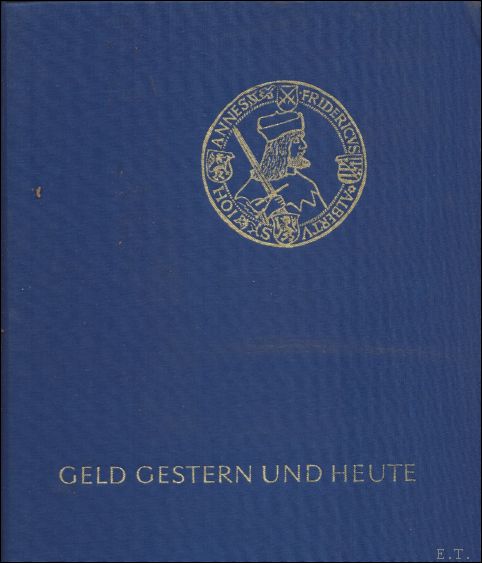
GELD GESTERN UND HEUTE.
Graz, Volksbank Ransbach, 1967. Gebunden in leinnen, 21,5x25cm, 128pp.
Eine Dokumentation uber Geldwesen und Wahrung in der Bundesrepublik Deutschland.Mit fotodokumentation: Volksbanken der Bundersrepublik Deutschland.
Buchnummer: 1603 | Preis: EUR 15.00
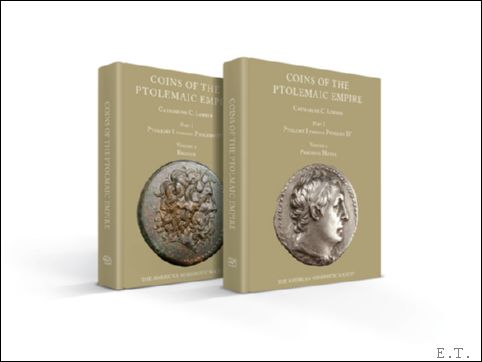
Catharine C. Lorber
Coins of the Ptolemaic Empire, Part I: Ptolemy I through Ptolemy IV. Volume 1: Precious Metal, Volume 2: Bronze
Brepols, 2024. Hardback, 2 vols, xxxiv + 836 pages, Size:210 x 297 mm, Illustrations:37 b/w, 122 plates, Language: English.*New. ISBN: 9780897223980
Summary Coins of the Ptolemaic Empire, Part 1, Volumes 1 and 2 (Precious Metal and Bronze) by Catharine Lorber, is the massive, long-anticipated catalogue of coins struck by the first four Ptolemaic kings. It essentially rewrites the sections on these rulers in J. N. Svoronos' classic, but now much out of date,?Ta Nomismata tou Kratous ton Ptolemaion?(1904). The body of coinage catalogued by Svoronos is enlarged by more than 300 further emissions in precious metal and more than 180 emissions in bronze, recorded from subsequent scholarship, from hoards, from commercial sources, and from private collections, and constituting about a third of the total catalogue entries. Lorber's attributions, dates, and interpretations rest on numismatic research since Svoronos, or on the latest archaeological and hoard information. She also provides extensive historical and numismatic introductions that give the coins deeper context and meaning. The coinage of Ptolemies I through IV is supplemented by a few issues possibly attributable to Cleomenes of Naucratis, the predecessor of Ptolemy I in Egypt, as well as by coinages of Ptolemy Ceraunus, Magas, and Ptolemy of Telmessus, members of the Lagid dynasty ruling their own kingdoms outside of Egypt. TABLE OF CONTENTS Volume 1: Precious Metal Preface Acknowledgements Guide for Users Maps Introduction Ptolemy I Soter Ptolemy II Philadelphus Ptolemy III Euergetes Ptolemy IV Philopator Precious Metal Catalogue Cleomenes of Naucratis Ptolemy I Soter Ptolemy II Philadelphus Ptolemy III Euergetes Ptolemy IV Philopator Third-Century Provincial(?) Tetradrachms Unattributable as to Reign (Ptolemy I-IV) Late Additions to the Catalogues Appendices Ptolemaic Precious Metal Hoards Additional Provenances of Precious Metal Coins Bibliography Concordance to Svoronos Indices Remarkable Types in Gold and Silver Remarkable Denominations in Gold and Silver Remarkable Inscriptions on Gold and Silver Controls on Precious Metal Coins Image Credits Plates Volume 2: Bronze Preface Acknowledgements Guide for Users Bronze Catalogue Cleomenes of Naucratis Ptolemy I Soter Macedonia under Ceraunus and Meleager Ptolemy II Philadelphus Ptolemy of Telmessus Ptolemy III Euergetes Ptolemy IV Philopator Appendices 1. Ptolemaic Bronze Hoards 2. Additional Bronze Provenances Bibliography Concordance to Svoronos Numbers Indices 1. Remarkable Types in Bronze 2. Remarkable Inscriptions 3. Controls Image Credits Plates
Buchnummer: 63512 | Preis: EUR 335.00
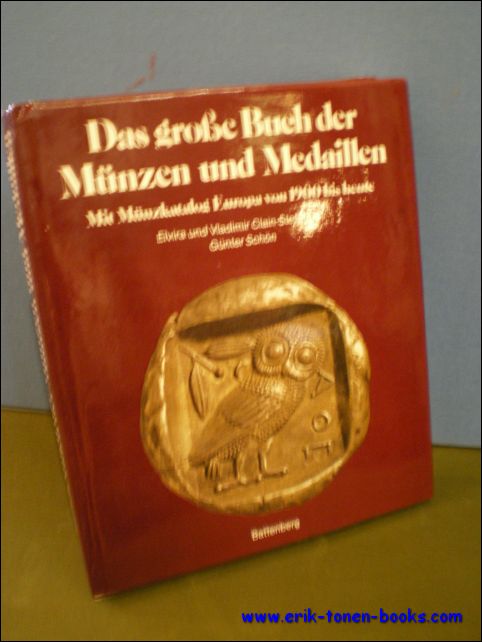
CLAIN-STEFANELLI, Elvira und Vladimir/ SCHON, Gunter;
DAS GROSE BUCH DER MUNZEN UND MEDAILLEN. MIT MUNZKATALOG EUROPA VON 1900 BIS HEUTE,
Munchen, Battenberg Verlag, 1976. Gebunden, Leinen mit Schutzumschlag, 210 x 255mm., 308S., 1000 ein- und mehrfarbigen Abbildungen.
Fachkundig geschrieben und prachtvoll ausgestattet, dient dieses Werk dem angehenden wie dem fortgeschrittenen Sammler gleichermaBen. Guter Zustand
Buchnummer: 20878 | Preis: EUR 25.00
Collectif
TARIF GENERAL AVEC LES NOUVELLES REDUCTIONS DES MONNAIES DES CI - DEVANT PAYS - BAS AUTRICHIENS.
1824, Bruxelles, Rampelberhg. Relie de l' epoque, plein maroquin brun, veau marbre, dos endommage, dos orne de fil. fleuronne dore, piece de titre dore sur maroquin rouge, 14x18,5cm, 328pp.
D' apres l' arrete du 8 decembre 1824.
Buchnummer: 19876 | Preis: EUR 90.00
Collectif
TARIF GENERAL AVEC LES NOUVELLES REDUCTIONS DES MONNAIES DES CI - DEVANT PAYS - BAS AUTRICHIENS.
Bruxelles, Rampelbergh, 1829. Relie de l' epoque, plein maroquin brun, veau marbre, dos endommage, dos orne de fil. fleuronne dore, piece de titre dore sur maroquin rouge, 14x18,5cm, 328pp.
D'apres l' arrete du 8 decembre 1829
Buchnummer: 19877 | Preis: EUR 90.00
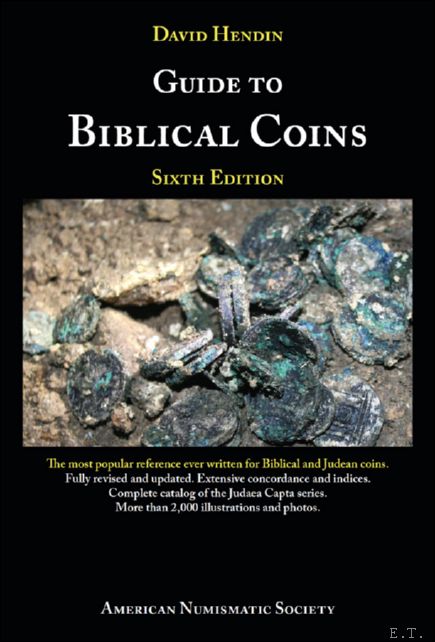
David Hendin
Guide to Biblical Coins
Brepols, 2021. Hardback, xx + 643 pages, Size:152 x 229 mm, Illustrations:500 b/w, 5 tables b/w., Language: English. ISBN: 9780897227414
Summary Forty-five years after its first edition, Hendin has revised and updated this book to reflect relevant discoveries in archaeology and numismatics of ancient Israel. The metallurgy of Judean coins, symbols on Hasmonean coins, the Hasmonean coin chronology, Herodian mints, irregular issues, the Jewish War, and coin denominations are only a few of the topics that Hendin has updated. New to the sixth edition is numismatic information about the Kingdom of Adiabene, the Ituraean Kingdom, the Roman Governors of Syria, and coins with images of Old Testament stories. Many hundreds of new and improved graphics help illuminate the text. The photo plates have been expanded dramatically as have the images in the catalog and text. Includes a complete concordance between previous editions of GBC as well as other key references, elaborate end notes, an expanded bibliography, a full index, and an index of Latin inscriptions on the Judaea Capta coins. LEARN MORE "A Half a Century of Studying Biblical Coins", by David Hendin,?The Ancient Near East Today?9.11 (The American Society of Overseas Research) "A Conversation with David Hendin", the?Planchet?podcast of the American Numismatic Society Winner of the 2022 Shekel Prize TABLE OF CONTENTS INTRODUCTION CHAPTER ONE: Biblical Coins CHAPTER TWO: Scale Weights to Coinage CHAPTER THREE: Persian Period: Philistia CHAPTER FOUR: Persian Period: Samaria and Judea CHAPTER FIVE: Ptolemaic and Seleucid Coins CHAPTER SIX: Hasmonean Dynasty CHAPTER SEVEN: Herodian Dynasty CHAPTER EIGHT: The Roman Governors of Judaea CHAPTER NINE: The Jewish War CHAPTER TEN: Bar Kokhba Revolt CHAPTER ELEVEN: Judaea and Rome CHAPTER TWELVE: New Testament Coins CHAPTER THIRTEEN: Related Issues ENDNOTES ABBREVIATIONS BIBLIOGRAPHY CONCORDANCE APPENDIX A. Alphabets and Numeric Equivalents APPENDIX B. Metrological Chart for Jewish Bronze Coins APPENDIX C. Index of Latin Legends INDEX PLATES ABOUT THE AUTHOR
Buchnummer: 65500 | Preis: EUR 92.00
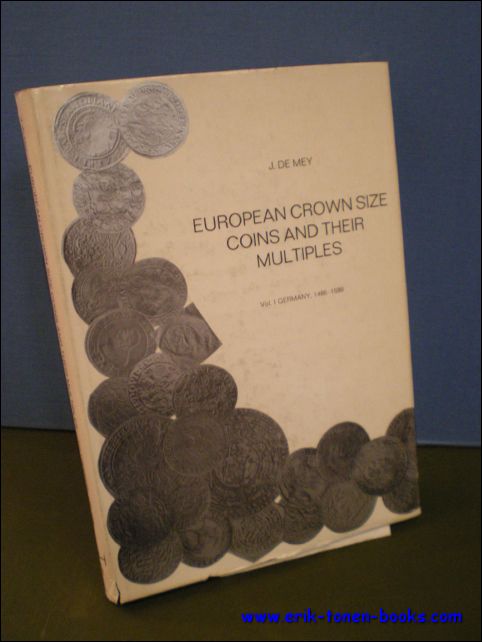
DE MEY, J.;
EUROPEAN CROWN SIZE COINS AND THEIR MULTIPLES. VOL. I GERMANY, 1486 - 1599,
Amsterdam, Mevius, 1975. Bound, green imitation leather, illustrated dustjacket, 210 x 300mm., 332pp., illustrated.
Taler struck within the boundaries of present-day Germany. Jacket a bit worn, otherwise in good condition.
Buchnummer: 20870 | Preis: EUR 19.95
Dimitrios Gerothanasis, Johannes Stelzhammer, Alan Walker, Rex Gao (eds)
The James M. Collier Collection of Greek and Roman Coins. A Selection
The American Numismatic Society, 2026. Hardback, Pages: xii + 144, Size:152 x 229 mm, Illustrations:236 col., Language: English. ISBN: 9780897227537
Summary Professor James M. Collier was an ardent lover of the history and culture of Europe and the ancient world, and a passionate collector of ancient Greek and Roman coins. Born in 1943 in Bellingham, Washington, he pursued his early academic training at Pacific Lutheran University (PLU) in Tacoma, receiving a Bachelor of Arts in History in 1965. After graduating from PLU, he worked for the Boeing Corporation as an engineer. When he was seconded to Washington, DC, on the Minuteman project, his office was located-quite fortuitously, as it turned out-across from the National Gallery of Art. For two years he spent every lunch hour at the Gallery, where he discovered his real love for art and art history. Returning to the Pacific Northwest, he attended the University of Oregon and graduated with a Master of Arts in Art History in 1970. He then pursued a PhD in Art History at the University of Michigan, completing the degree in 1975. He was appointed an Assistant Professor in the Art History Department at Auburn University (Auburn, Alabama), where he eventually was tenured and became department chair. Over the course of his academic career, he lectured widely and published on the Italian Renaissance and Early Netherlandish perspective-the subject of his doctoral dissertation, entitled "Linear Perspective in Flemish Painting and the Art of Petrus Christus and Dirk Bouts." Professor Collier was published as an artist as well. In 1987, he left his teaching post and devoted himself to his passion for painting, studying at the National Academy of Design in New York City. He and his wife, Carole Anne Menzi Collier, moved to Amsterdam in 1990 and eventually attained dual citizenship. He continued to pursue and share his love of art and ancient coinage for the rest of his life. The Collier Prize in Ancient Numismatics was first given by the American Numismatic Society (ANS) in 2022. Established by Carole Anne Menzi Collier in memory of her late husband, James M. Collier, the biennial award honors the best book, catalogue, or online digital work in the field of ancient numismatics (650 bc-ad 300). In 2025, the ancient Greek and Roman coins of the Collier Collection were sold at auction to fund the endowment; highlights from the collection are featured within. "Ancient numismatics . . . intersects art history, political history, economic history, and religious studies," writes ANS Executive Director Ute Wartenberg Kagan. "When done properly, it is a truly interdisciplinary field that benefits scholars willing to explore different disciplines." The Collier Prize rewards this important, often underappreciated work and encourages the scholars who undertake it. TABLE OF CONTENTS Foreword, by Ute Wartenberg Kagan The James M. Collier Collection, by Dimitrios Gerothanasis The Collier Prize in Ancient Numismatics, by Peter van Alfen Introduction, by Carole Anne Menzi Collier Catalogue: Magna Graecia and the West Sicily Macedon, Thrace, and Moesia Greece Asia Minor The Near East and Central Asia Africa The Roman Republic and the Imperatores The Twelve Caesars The Roman and Byzantine Empires Abbreviations
Buchnummer: 70427 | Preis: EUR 85.00
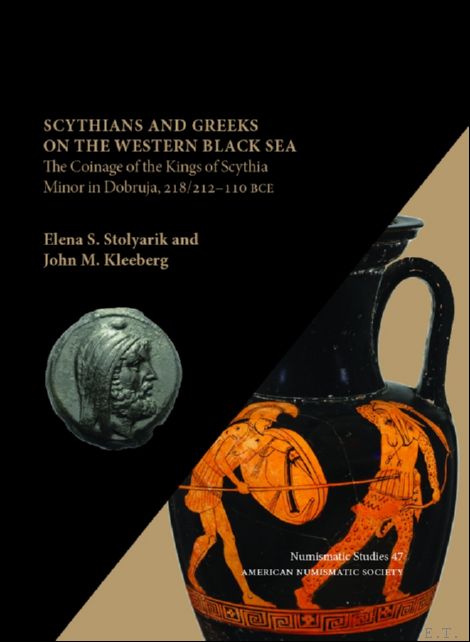
Elena S Stolyarik, John M. Kleeberg
Scythians and Greeks on the Western Black Sea. The Coinage of the Kings of Scythia Minor in Dobruja, 218/212-110 BCE
Brepols, 2023. Hardback, viii + 228 pages, Size:216 x 280 mm, Illustrations:201 b/w, 17 tables b/w., Language: English. ISBN: 9780897224062
Summary The Scythians have fascinated investigators since the time of Herodotus. This study examines the bronze and silver coinage of the kingdom of Scythia Minor in Dobruja at the mouth of the Danube River, a Scythian successor state that emerged in the second century BCE after the breakup of Scythia Magna. It is based on a corpus of over 1,500 coins, more than ever before, and draws upon scholarship in nine languages, including hard-to-find sources from Bulgaria, Romania, USSR, Ukraine, and Russia. The much-debated chronology of the six kings of Scythia Minor (Kanites, Tanousas, Charaspes, Ailis, Sariakes, and Akrosas) is determined through literary evidence, inscriptions, die linkage, shared monograms, coin hoards, and counterstamps. Metrological analysis distinguishes four denominations, plus the alterations and debasements of the weight standard during the troubled reigns of Ailis and Sariakes. Fifteen counterstamps that appear on Scythian coins are attributed to the local Greek poleis of Callatis, Tomis, Istros, and Dionysopolis. An inventory of four hoards and 47 findspots of single coins identifies the mint site, Dionysopolis. The volume concludes with a catalog of 63 major coin types and 15 counterstamps, plus bibliography and index. TABLE OF CONTENTS Acknowledgements Introduction Scythia Magna and Dobruja Literary and Epigraphic Sources for the Kingdom of Scythia Minor in Dobruja Earlier Studies of the Coins of Scythia Minor Ethnic Identification and Chronology of the Kings of Scythia Minor Coin Types, Legends, and Magistrates' Monograms Metrology, Weight Standard, Denominations, and Die Orientation Countermarks on Scythian Coins The Geographic Pattern of the Circulation of Scythian Coins The Mint Location: Dionysopolis Conclusion Catalog of Coins and Countermarks Appendix: List of Magistrates' Monograms and Mintmarks Abbreviations Ancient Sources Inscriptions Papyri Auction Catalogs and Electronic Sales Bibliography Index
Buchnummer: 63356 | Preis: EUR 151.00
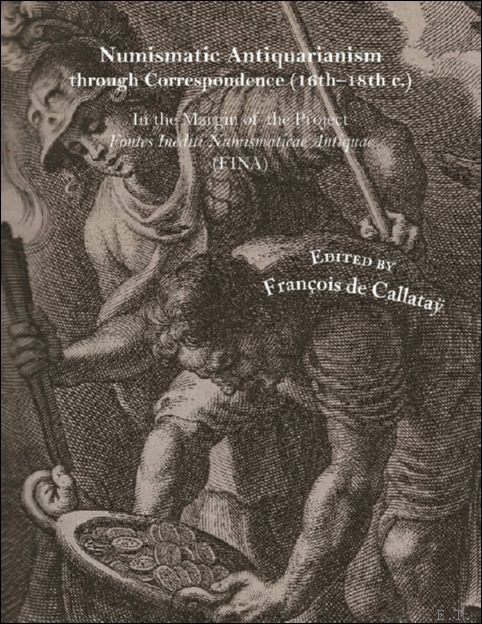
François de Callataÿ (ed)
Numismatic Antiquarianism through Correspondence (16th-18th c.). In the Margin of the Project Fontes Inediti Numismaticae Antiquae (FINA)
Brepols, 2023. Hardback, x + 270 pages, Size:216 x 280 mm, Illustrations:108 b/w, 12 tables b/w., Language: English. * NEW. ISBN: 9780897223911
Summary This book brings together 14 articles into a volume of conference proceedings from the 2017 meeting on numismatic antiquarianism held in Rome. TABLE OF CONTENTS Foreword François de Callataÿ About the Authors 1. Fool Me Once, Don't Fool Me Twice: Collecting Forgeries to Train the Eye (17th-early 19th Centuries) Daniela Williams. 2. Moulages de monnaies antiques ou comment produire des copies (XVIe-XVIIIe siècles) Guy Meyer 3. The Missing Caesar: Inventing Bronze Coins for Otho Johan van Heesch 4. Speaking about Manuscripts: Unpublished Works in Correspondence Michiel Verweij 5. Recording Coin Finds and Hoards in Early Modern England Ute Wartenberg and Jonathan H. Kagan 6. Two Centuries of Collecting, Describing, and Explaining Contorniates John Cunnally 7. Di vizi e di virtù. Di Pertinaci e di Didii, di Pescenniie di Gordiani Federica Missere Fontana 8. Numismatic Antiquarianism: Coins from the Ancient East in Early Modern Europe Martin Mulsow 9. Queen Elizabeth and the Twelve Caesars Andrew M. Burnett 10. Peiresc and the Coins through his Correspondence Elena Vaiani 11. About Books and Coins: The Letters of Charles Patin to Giulio Antonio Arevoldi between 1679 and 1693 Marco Callegari 12. The Story of Francesco Gottifredi's Unpublished Book through the Analysis of the Letters of his Contemporaries Maria Cristina Molinari 13. Monastic Antiquarianism in Austria and the République de Médailles: The Numismatic Collection of Göttweig Abbey Manuela Mayer 14. Publishing the Doctrina Numorum Veterum: New Evidence on the Three Editions of Joseph Eckhel's Masterwork Bernhard E. Woytek
Buchnummer: 64346 | Preis: EUR 150.00
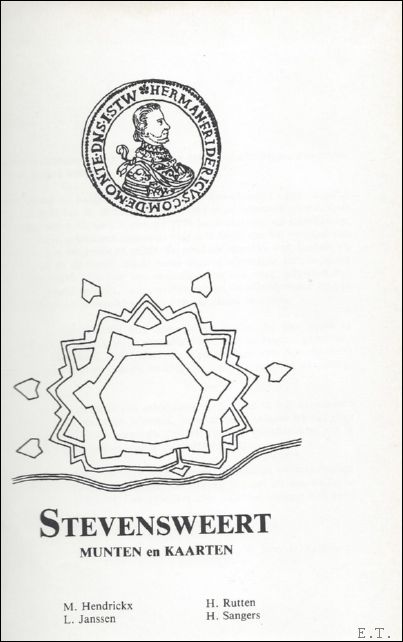
HENDRICKX, M., JANSSEN, L., RUTTEN, H., SANGERS, H.
STEVENSWEERT. MUNTEN EN KAARTEN.
Leeuwarden, Hugo Suringar, 1983. ( dub.). GEBONDEN, kunstleder, 21x15cm, 264pp, geillustreerd z/w.
STEVENSWEERT. MUNTEN EN KAARTEN.
Buchnummer: 13125 | Preis: EUR 40.00
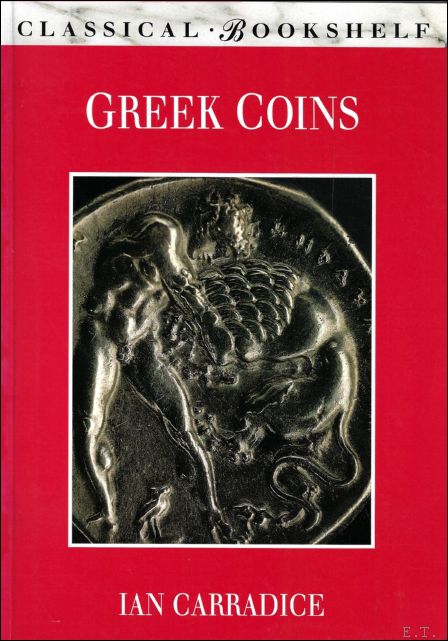
Ian Carradice
Greek Coins
Trustees of the British Museum 1995, 1995. 1. Paperback, 112 pages, ENG, 240 x 170 mm, fine book, illustrations in b/w, . ISBN: 9780714122106
Of the many traditions we have inherited from the ancient Greeks, the use of coins should rank as one of the most important. From its first appearance in the region of Lydia (western Turkey) in the late-17th century BC, coinage gradually spread throughout the Greek world, and the history of the ancient Greeks is reflected in its evolution. Designs on Greek coins include the badges of city-states, portraits of rulers, images of Greek gods, scenes from myths and objects of daily life, and are often works of art in themselves. The dies, carved by craftsmen, sometimes bear the name or initials of the mint official responsible for their issue, and the coins might have circulated in trade, been used as gifts or dedications, or hoarded as valuables.
Buchnummer: 58611 | Preis: EUR 22.50
Jennes, M.
Enkele zegels van het Brabantse munterskorps.
Bruxelles, 1977. Gebroch., 7pp., 16x24.5cm., goede staat.
Buchnummer: 32321 | Preis: EUR 8.00
Jesse Kraft (ed)
Essays for the 150th Anniversary of the Birth of Victor D. Brenner
American Numismatic Society, 2026. Hardback, Pages: viii + 268, Size:152 x 229 mm, Illustrations:178 b/w, Language: English. ISBN: 9780897227469
Summary This volume brings together a collection of research papers first presented at the 2021 Coinage of the Americas Conference. Organized to commemorate the 150th anniversary of Victor David Brenner's birth, this assembly of scholarship honors one of the most influential figures in American numismatic history. Best known as the sculptor of the 1909 Lincoln Wheat cent-the longest-running design in U.S. coinage history-Brenner was a master of the "Beaux-Arts" style. The papers within this volume offer a multifaceted look at his career, including: ? Deep-Dive Analysis: Detailed examinations of specific, lesser-known medals and commemorative pieces. ? Artistic Evolution: An exploration of how Brenner's Lithuanian roots and European training influenced his American works. ? Lasting Impact: A critical look at his role in the "Golden Age" of American numismatics and his mentorship within the medallic arts community. TABLE OF CONTENTS Preface Introduction Jesse Kraft Victor D. Brenner's Society of the Cincinnati Medal in Context Patrick McMahon Railroad-Themed Medals by Victor D. Brenner George S. Cuhaj Victor D. Brenner and the 1902 Prince Henry of Prussia Medal Peter van Alfen The Path to the Penny: A Study in Victor D. Brenner's Patronage Jonathan Kagan A Song to Brenner: Victor D. Brenner's A Song to Nature, Public Art, and Sculpture in the Round Taylor Ruth Hartley A Trial List of Non-Medallic Sculpture by Victor D. Brenner Scott H. Miller "Mr. Brenner Has Made So Many Commemorative Medals": Collective Memory, Iconography, and Historical Legacy in the Medallic Arts Jesse Kraft
Buchnummer: 70421 | Preis: EUR 105.00
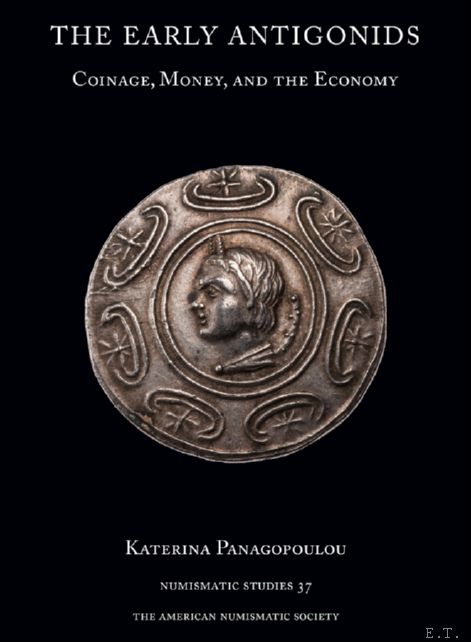
Katerina Panagopoulou
The Early Antigonids: Coinage, Money, and the Economy
Brepols, 2020. Hardback, xlv + 390 pages, Size:216 x 280 mm, Illustrations:63 b/w, 31 col., Language: English. *new ISBN: 9780897223553
Summary This systematic analysis of the gold and silver coinages of "King Antigonos" is intended to explore the nature of the Antigonid cash economy during the second and the third quarter of the third century BC. The author's principal aim in reconstructing the precious metal coinage of "King Antigonos" is to comprehend the way in which the mints concerned functioned and to identify the major issues of the period. This helps us to answer questions such as, whether or not production was continuous; on which occasions/for which purposes the mints operated; where and why the coins produced circulated and what their value at the time was; finally, whether these issues outlasted their initiator, Antigonos Gonatas. The macroeconomic profile of Antigonid Makedonia during this period is completed by an attempt to quantify and to contextualize these Antigonid silver issues. Explanations other than military for the production of this coinage are explored and the chronology and the role of those silver coins issued posthumously in the name of Alexander that are currently assigned to the early reign of Gonatas are reconsidered. Finally, the geographical distribution of these Antigonid issues is reassessed. TABLE OF CONTENTS 1. Introduction 2.0-5.0 Catalogue and Commentary: Gold and Silver Issues "of king Antigonos" 2. Period I: The Chremonidean War and the Battle off Kos (274/1-260/255 BC), "Plain Style" 3. Period II: From the Revolt of Alexander, Tyrant of Korinth, to the Battle of Andros (252/1-246 BC), "Dramatic Style" 4. Period III: From the Battle of Andros to the Death of Demetrios II 246/5-229 BC), "Portrait Style" 5. Period IV: Antigonos Doson (229-221/0 BC), "Expressive Style" 6. Numismatic Evidence: General Considerations 7. Coinage, Money and the Economy 8. Concluding Remarks 9. Appendices 10. Bibliography Plates
Buchnummer: 65546 | Preis: EUR 155.00
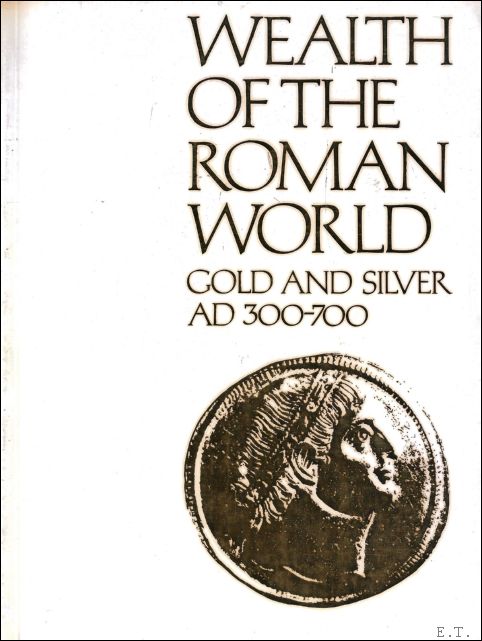
KENT, J.P.C., and K.S. PAINTER,
Wealth of the Roman World. : Gold and Silver AD 300-700
Trustees of the British Museum, London, 1977, 1977. 1. Softcover, 190 pages, ENG, 245 x 190 mm, in good order, bit discoloured through the age of time, dozens of illustrations of artifacts, coins, jewellery, . ISBN: 0714100617
Buchnummer: 58647 | Preis: EUR 14.00
Kirk Bennett
The The Tiflis Dirhams of Möngke Khan
Brepols, 2020. Hardback, vi + 182 pages, Size:152 x 229 mm, Illustrations:219 b/w, 3 tables b/w., Language: English. ISBN: 9780897223652
Summary The dirhams of Möngke Kh?n represent the first major emission of silver coinage in Georgia following the Mongol conquest roughly a generation previously. Struck in the Georgian capital city of Tiflis (modern Tbilisi) from the middle of AH 652 to perhaps as late as the first month of AH 660 (AD 1254-1261), these coins circulated widely throughout the South Caucasus and adjacent areas. This coin type was the first in Georgia to provide a date formula with both the month and year of the Islamic calendar. The placement of the date formula in the four marginal segments of the reverse of the coin means that parts of it are often struck off the flan or effaced on individual specimens. The problem is compounded by poor Arabic calligraphy on many coins, leading to much confusion in the literature about the extant dates. However, using secondary design features such as the varying central obverse and reverse decorative elements, this book creates a systematic framework for dating these dirhams, identifying previously unpublished dates and varieties in the process. The first in-depth monograph on this popular and historically important coin series, this book will be a valuable resource for both scholars and collectors interested in Georgian, Mongol, and Islamic numismatics. TABLE OF CONTENTS Chapter 1. Introduction Chapter 2. Identification Guide Bibliography
Buchnummer: 65881 | Preis: EUR 77.00
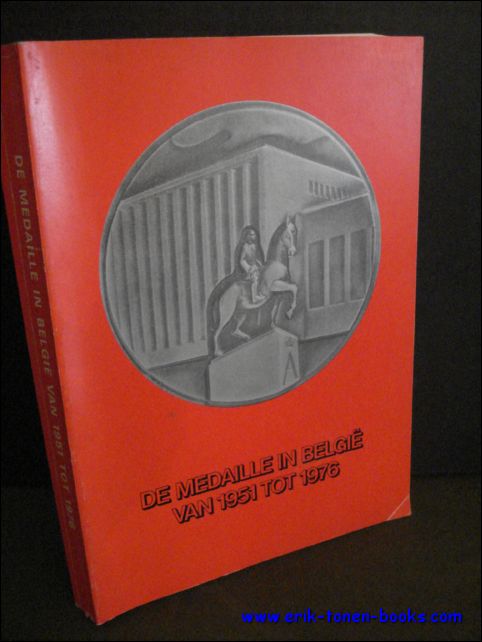
Lippens, Van Keymeulen
DE MEDAILLE IN BELGIE VAN 1951 TOT 1976.
Brussel, Koninklijke bibliotheek Albert I, 1980. ( dub). softcover, geillustreerde uitgeversomslag, 25,5x18,5cm, 247pp. + 70pp, geillustreerd z/w;
tentoonstellingscatalogus.
Buchnummer: 1977 | Preis: EUR 15.00
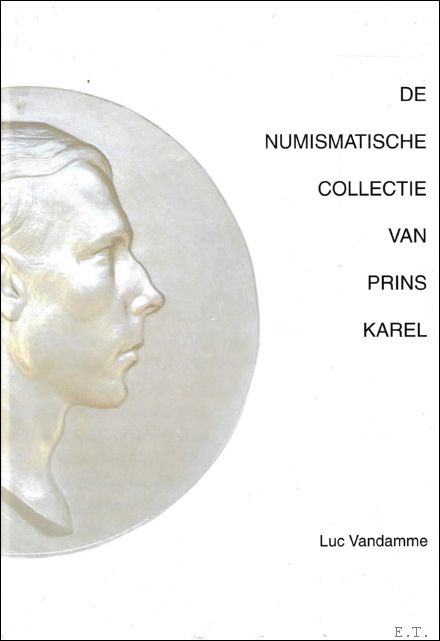
Luc Vandamme.
De numismatische collectie van prins Karel.
Alken, bij de auteur, 2007. Hardcover, 211pp., 16.5x23.5cm., ills. in z/w., nieuwstaat.
De medailles van Prins Karel, graaf van Vlaanderen
Buchnummer: 39938 | Preis: EUR 20.00
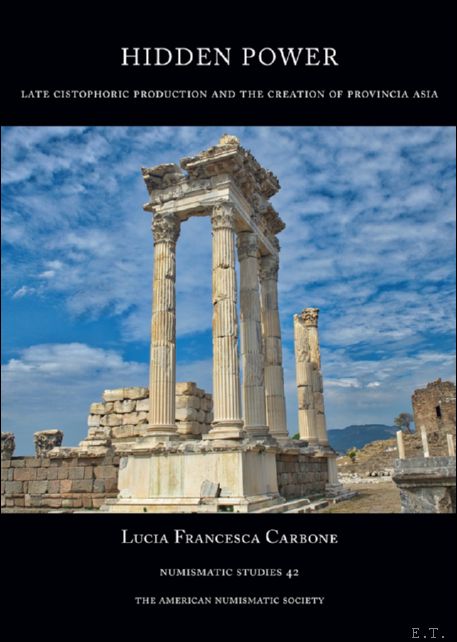
Lucia Carbone
Hidden Power: Late Cistophoric Production and the Creation of Provincia Asia
Brepols, 2020. Hardback, vii + 266 pages, Size:216 x 280 mm, Illustrations:226 b/w, 32 tables b/w., Language: English. ISBN: 9780897223638
Summary Using the production and circulation patterns of the Asian cistophorus as a case study, Hidden Power seeks to develop a better understanding of Roman monetary policy in the province of Asia between its establishment in the 120s BC and the beginning of the Mithraditic Wars. Hidden Power catalogues and illustrates some 1,737 cistophoric tetradrachms and fractions from the mints of Ephesus, Pergamum, Tralles, Laodicea, Apamea, Adramyteum, Nysa, and Smyrna. Most of the coins included in the study are late cistophori, issues between 134.3 BC and the 60s BC. Appendix I provides a discussion of the late cistophori of Tralles struck after 89 BC, showing not only the direct correlation between cistophori and Roman military campaigns, but also Roman taxation. In Appendix II, circulation data have been combined with data derived from the Tralles die study in order to calculate cistophoric production for the entirety of provincia Asia until the end of the late cistophori. This estimate provides a means to assess the financial impact of Roman taxation and exploitation by Roman imperatores over the course of the first half of the first century BC. TABLE OF CONTENTS Introduction Chapter 1: The 2002 Hoard (90/89 BC): An Overview Chapter 2: Cistophoric Production at Pergamum Chapter 3: Cistophoric Production at Ephesus Chapter 4: Cistophoric Production at Tralles Chapter 5: Cistophoric Production at Laodicea Chapter 6: Cistophoric Production at Apamea Chapter 7: Cistophoric Production at Adramyteum Chapter 8: Cistophoric Production at Nysa Chapter 9: Cistophoric Production at Smyrna Chapter 10: Conclusions Appendix I: Late Cistophoric Production at Tralles after 89 BC Appendix II: Cistophoric Production and the Impact of Roman Taxation (105-ca. 58 BC) Conclusions Bibliography Indices Plates
Buchnummer: 65771 | Preis: EUR 102.00
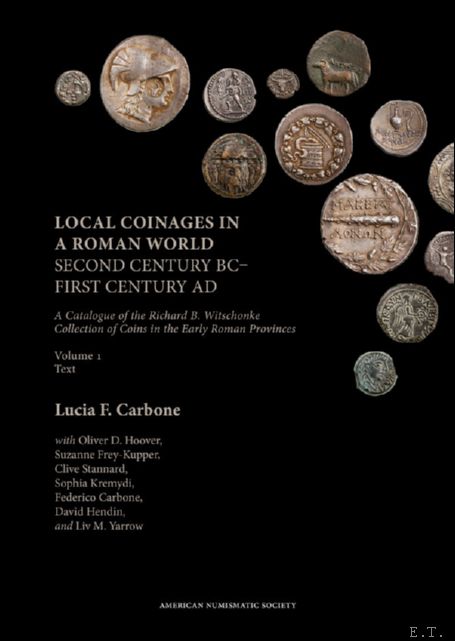
Lucia F. Carbone
Local Coinages in a Roman World (Second Century BC?First Century AD). A Catalogue of the Richard B. Witschonke Collection of Coins in the Early Roman Provinces
Brepols, 2024. Hardback, 2 vols, xvi + 560 pages, Size:210 x 297 mm, Illustrations:7452 b/w, 1 col., 3 tables b/w., Language: English. ISBN: 9780897224017
Summary The Richard B. Witschonke Collection of more than 3,700 coins, now in the collection of the American Numismatic Society, provides the historical and numismatic prologue to the study of Roman provincial coinage. Most of the specimens are of great historical and numismatic value, as explained in the historical introductions preceding each of the 36 sections of this catalogue. This collection offers a unique overview of the diverse ways in which the monetary systems of the Mediterranean basin responded to the Roman conquest in the second and early first centuries BCE and to the related necessity of interconnectivity. TABLE OF CONTENTS Foreword by Gilles Bransbourg Preface Introduction 1. Spain Introduction Catalogue 2. Spanish Imitations of Roman Republican Coinage Introduction Catalogue 3. Gaul Introduction Catalogue 4. Roman Republican Coinage Introduction (Liv M. Yarrow) Catalogue 5. Italian Imitations of Roman Republican Coinage Introduction Catalogue 6. Non-State Coinages of Central Italy Introduction (Clive Stannard) Catalogue (Clive Stannard and Lucia F. Carbone) 7. Italy Introduction (Federico Carbone) Catalogue 8. Sardinia Introduction Catalogue 9. Sicily and Adjacent Islands Introduction (Suzanne Frey-Kupper) Catalogue (Suzanne Frey-Kupper and Lucia F. Carbone) 10. Geto-Dacian Imitations of Roman Republican Coinage Introduction Catalogue 11. Eraviscan Imitations of Roman Republican Coinage Introduction Catalogue 12. Africa Introduction Catalogue 13. Crete and Cyrenaica Introduction (Federico Carbone) Catalogue 14. Achaea Introduction Catalogue 15. "Fleet Coinage" Introduction Catalogue 16. Macedonia Introduction (Sophia Kremydi) Catalogue (Sophia Kremydi and Lucia F. Carbone) 17. Thrace and Moesia Introduction Catalogue 18. Bosporus Introduction (Oliver D. Hoover) Catalogue 19. Paphlagonia Introduction (Oliver D. Hoover) Catalogue 20. Bithynia Introduction (Oliver D. Hoover) Catalogue (Oliver D. Hoover and Lucia F. Carbone) 21. Pontus Introduction Catalogue 22. Asia Introduction Catalogue 23. "Cistophoric" Countermarks Introduction Catalogue 24. Early Cistophori Introduction Catalogue 25. Aristonicus' Cistophori Introduction Catalogue 26. Late Cistophori Introduction Catalogue 27. Later Republican and Pre-Imperial Cistophori Introduction Catalogue 28. Lycia-Pamphylia Introduction (Oliver D. Hoover) Catalogue 29. Galatia and Pisidia Introduction (Oliver D. Hoover) Catalogue 30. Cappadocia Introduction (Oliver D. Hoover) Catalogue (Oliver D. Hoover and Lucia F. Carbone) 31. Cyprus Introduction (Oliver D. Hoover) Catalogue (Oliver D. Hoover and Lucia F. Carbone) 32. Cilicia Introduction (Oliver D. Hoover) Catalogue (Oliver D. Hoover and Lucia F. Carbone) 33. Syria Introduction (Oliver D. Hoover) Catalogue (Oliver D. Hoover and Lucia F. Carbone) 34. Coele Syria Introduction (Oliver D. Hoover) Catalogue (Oliver D. Hoover and Lucia F. Carbone) 35. The Decapolis, Idumaea, and Judaea Introduction (Oliver D. Hoover) Catalogue (David Hendin, Oliver D. Hoover and Lucia F. Carbone) 36. Egypt Introduction (Oliver D. Hoover) Catalogue (Oliver D. Hoover and Lucia F. Carbone) Bibliography Indices
Buchnummer: 64188 | Preis: EUR 327.00
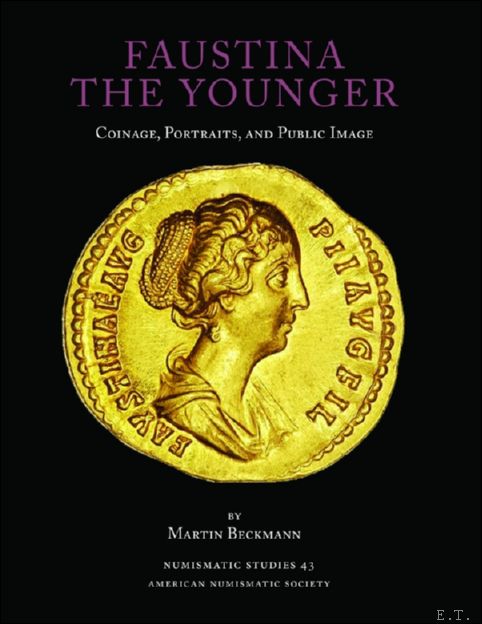
Martin Beckmann
Faustina the Younger. Coinage, Portraits, and Public Image
Brepols, 2022. Hardback, vii + 205 pages, Size:216 x 280 mm, Illustrations:96 col., 1 tables b/w., Language: English. ISBN: 9780897223669
Summary The Roman empress Faustina the Younger, wife of the emperor Marcus Aurelius and mother to at least eleven imperial children, including the future emperor Commodus, not only played a key role in Roman history of the 2nd century AD but also was the subject of almost unparalleled commemoration in visual media, especially sculpture and coinage, during her lifetime. This book examines the single largest surviving ancient source for the portraiture and public image of Faustina the Younger: the coinage struck in her name under Antoninus Pius and Marcus Aurelius. The coinage of Faustina the Younger is rich in original iconography and long in duration but its chronology and the relationships between its various types are unclear at best, unknown at worst. This study seeks to remedy this situation by employing the methodology of die analysis to create a new and firm chronology for Faustina's coinage. The results make it possible to establish an authoritative typology for Faustina's portraiture and to show the precise relationship between the diverse obverse and reverse types. The die analysis also clarifies Faustina's complicated iconographic program, making it possible to compare it directly with the iconography of the better-dated coinage of her male contemporaries. Taken together, these results permit a complete re-evaluation of the coinage, portraits and public image of Faustina the Younger. TABLE OF CONTENTS Introduction. Faustina the Younger: Coinage, Portraits, and Public Image Chapter 1. Material and Methodology Chapter 2. VENVS GENETRIX: Faustina's First Child (Portrait Type 1) Chapter 3. CONCORDIA: The Ideal of the Imperial Marriage (Portrait 35 Types 2-5) Chapter 4. FAVSTINA AVGVSTA (Portrait Types 5-10) Chapter 5. Portraits: Concepts and Processes Chapter 6. A New Typology of Faustina's Portraits Chapter 7. Message and Meaning in the Portraits of Faustina Conclusion. The Public Image of Faustina Appendix 1. Faustina's Children Appendix 2. Relative Proportions of Reverse Types in AV and AR Abbreviations and Bibliography Die Catalogue, Part 1. Aurei of Faustina II under Antoninus Pius Die Catalogue, Part 2. Aurei of Faustina II under Marcus Aurelius Key to the Die Link Charts Die Link Charts List of Die Illustrations Plates Index
Buchnummer: 64571 | Preis: EUR 72.00
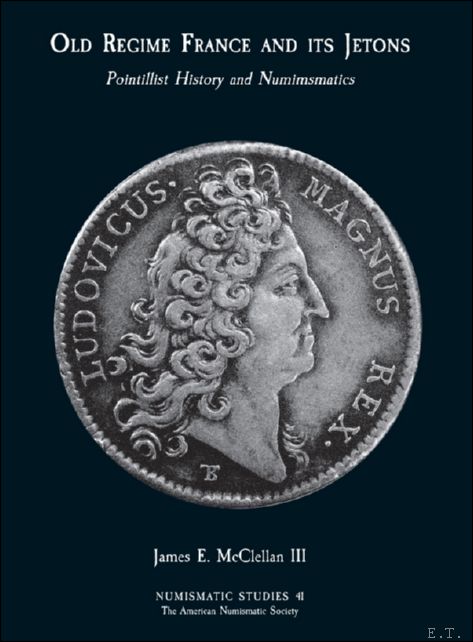
McLellan James E.
Old Regime France and its Jetons: Pointillist History and Numismatics
Brepols, 2020. Hardback, xiii + 268 pages, Size:216 x 280 mm, Illustrations:73 b/w, 4 tables b/w., Language: English. ISBN: 9780897223621
Summary Non-monetary tokens known as jetons originated as counters used on medieval counting tables. In certain parts of France, the Low Countries, and German lands, they continued as such into the nineteenth century. The historical and numismatic interest in jetons stems more from what else they became, particularly though the end of the eighteenth century under the Bourbon monarchs, as perks of office for office holders in the burgeoning nation state of France, New Year's Day presents exchanged among certain segments of society, and lagniappe handed out for attendance at meetings in town halls, regional estates, and learned societies. Jetons figured in the rites and rituals of the guilds and faculties; they were swag for general meetings of the clergy, and they served as calling cards for noble families. Decoding hidden messages became a parlor game for cognoscenti, and as "petit monuments" some jetons are miniature works of high art produced by the world's most talented artists/engravers at the world's preeminent mint. In this book jetons serve as microdots in a pointillist, longue durée account that paints a grand portrait of early modern and Old Regime France leading up to the French Revolution. Winner of the 2021 Numismatic Literary Guild Award for the best book on medals and tokens TABLE OF CONTENTS INTRODUCTION: HISTORIANS AND NUMISMATISTS 1. AN HISTORICAL OVERVIEW OF EARLY JETONS 2. OLD AND NEW IN THE OLD REGIME 3. GOVERNING BODIES 4. ASSIDUITY AND THE ACADEMIES 5. GUILDS AND YET OTHERS 6. AESTHETICS AND THE SPECIAL ROLE OF THE ACAD.MIE ROYALE DES INSCRIPTIONS ET BELLES-LETTRES 7. THE MONNAIE DES MEDAILLES CONCLUSIONS Glossary List of Figures and Tables Bibliography Index
Buchnummer: 65880 | Preis: EUR 102.00
Merle Eisenberg, Lee Mordechai, David Yoon (eds)
Coins and Money in the Middle Ages. Studies in Honor of Alan Stahl
American Numismatic Society, 2026. Hardback, Pages: viii + 406, Size:210 x 297 mm, Illustrations:157 b/w, 21 tables b/w., Language: English. ISBN: 9780897224406
Summary Alan Stahl's distinguished career in numismatics has ranged over numerous topics in the study of coins, monetary history, and medallic art, from antiquity through the Middle Ages and into the modern era. This volume brings together cutting-edge scholarship from three overlapping groups of scholars to honor him: former students from the American Numismatic Society Graduate Summer Seminar whom Stahl taught during the 1980s and 1990s, colleagues and former students at Princeton University where he has taught since 2005, and collaborators in the Framing the Late Antique and Early Medieval Economy research project he has directed since 2014. The broad scope of the articles reveals how widely Stahl has influenced numismatics and numismatists over the last five decades, through his research, teaching, and training of generations of students. Some articles focus on specific aspects of coinage, but far more show how thinking with coins, as a medium, transforms how scholars write the histories of the monetary world, economic life, and social relations. Like Stahl himself, the volume's contributors go beyond technical numismatic details and place coins and money in a broader framework that helps transform our understanding of how people lived in the premodern world. TABLE OF CONTENTS Acknowledgments Merle Eisenberg, Lee Mordechai, and David Yoon. Introduction 1. Victor Revilla and Alejandro G. Sinner. Peasant Economy in Late Roman Northeastern Spain: Diversification, Adaptation, and Recycling 2. David Yoon. The Beginning of the Merovingian Moneyer-Mint Coinage as Seen from Central Spain 3. Andrew Kurt. Forging a New Minting Apparatus under Leovigild and His Son Reccared 4. Paolo Squatriti. Stahlian "Stuffgeschichte," Carolingian Coins, and the Material Eucharist 5. Ildar Garipzanov. Minuscule Texts on Weights and Measures in Carolingian Manuscripts 6. Florin Curta and Lance Maulsby. Renaissance or Recycling? Roman Coins in the Early Middle Ages (Eighth and Early Ninth Centuries) 7. Razieh Taasob. Reassessing the Lifespan of the Heraios Coinage: Insights into the First Kushan Ruler's Enigmatic Tetradrachms 8. Jane Sancinito. 33, 12, 6, 3, and 1: Examining the Byzantine Bronze of Alexandria ad Aegyptum 9. Andrei Gandila. Army Pay or People's Money? The Propontic Mints and the Mediterranean Economy (Sixth and Seventh Centuries) 10. Aikaterini Peppa. Islets and the Shifting Economic Landscape from the Sixth to the Beginning of the Ninth Century 11. Kirstin Ohrt. Saving the Antioch Coin Record from the Margins: Dorothy Waagé's Epic Struggle 12. Pavla Gkantzios Drápelová. Comparative Analysis of the Weight of Byzantine Folles: Antioch vs. Constantinople (Sixth to Early Seventh Centuries) 13. Andrea U. De Giorgi and A. Asa Eger. Anazarbos: Transformations of a Late Antique Capital to an Early Islamic City 14. Tasha Vorderstrasse. Archaeology of Aksumite Coin Circulation in Ethiopia and Eritrea 15. Elena Baldi. A Hoard of Hyperpera of Manuel I from the John Max Wulfing Collection, Washington University in St. Louis 16. Ilia Calogero Curto Pelle. "Coinage and Money in the Latin Empire of Constantinople" Revisited: What Is a Coin in the Early Thirteenth-Century Balkans and Anatolia? 17. James J. Todesca. Striking Dissimilarities: The Gold Dinars of León and Portugal, ca. 1173-1272 18. Sarah M. Kampbell. The Imitation Andrea Dandolo Ducats in the Benjamin Bell Collection at Princeton University 19. William R. Day, Jr. Chequeens, Gubbers, Ibrahimis, and Moorish Ducats: Venetian Gold Ducats and Their Imitations in India, 1300-1800 20. Peter van Alfen. Brief Observations on Ships on Dutch and English Medals of the Seventeenth Century
Buchnummer: 70434 | Preis: EUR 165.00
N/A;
1000 ans de monnaies hongroises. 1000 jaar Hongaarse munten,
Turnhout, Brepols, 1999. Paperback, 210 x 295 mm. ISBN: 9782503509686
Propose une collection exceptionnelle de monnaies en or et argent ainsi que des medailles commemoratives conservees au Musee National Hongrois de Budapest, qui retrace l'histoire millenaire de la Hongrie. On y decouvre les monnaies sous une grande varation de formes: rectangulaire, octogonale, en forme de lune ou encore d'etoile, le livre presente egalement des cartes, des gravures et des photos. Languages : French,Dutch.
Buchnummer: 39835 | Preis: EUR 27.00
NASTER, PAUL/ BROUETTE, EMILE/ HACKENS, TONY/ JADOT, JEAN.
REVUE BELGE DE NUMISMATIQUE ET DE SIGILLOGRAPHIE.
Bruxelles, 1975. Broche, couverture d' editeur, 16x24,5cm, 215pp + 16 planches hors-texte n/b.
Tome CXXI. La 'Pietas' et le sentiment de l' enfance a Rome d' apres les monnaies. Gaucher de Chatillon and the imitation of sterlings in the name of Edward of England. De reisen der antwerpse munster en hun reglement voor de reisen naar Maastricht. Ect.
Buchnummer: 2858 | Preis: EUR 25.00
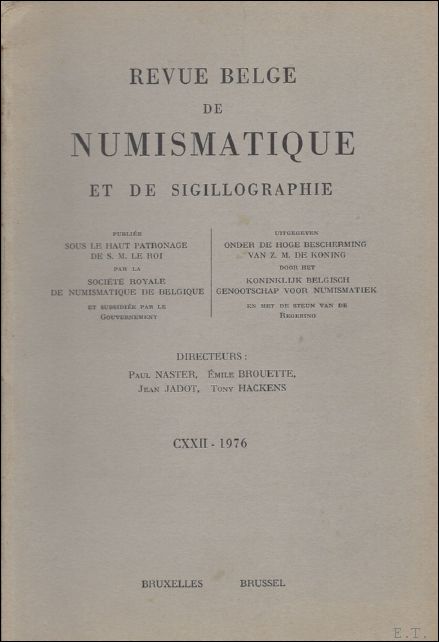
NASTER, PAUL/ BROUETTE/ HACKENS, TONY/ MARCHETTI, PATRICK.
REVUE BELGE DE NUMISMATIQUE ET DE SIGILLOGRAPHIE/ BELGISCH TIJDSCHRIFT VOOR NUMISTMATIEK EN ZEGELKUNDE.
Bruxelles, 1978. Broche, couverture d' editeur, 16x24,5cm, 277pp + 8 planches hors-texte n/b.
Tome CXXII. L' essai des monnaies dans l' Antiquite... Le cours du cyzicene au Ive siecle... Le temoignage de Pomponius et la date de creation des Triumviri...
Buchnummer: 11033 | Preis: EUR 25.00
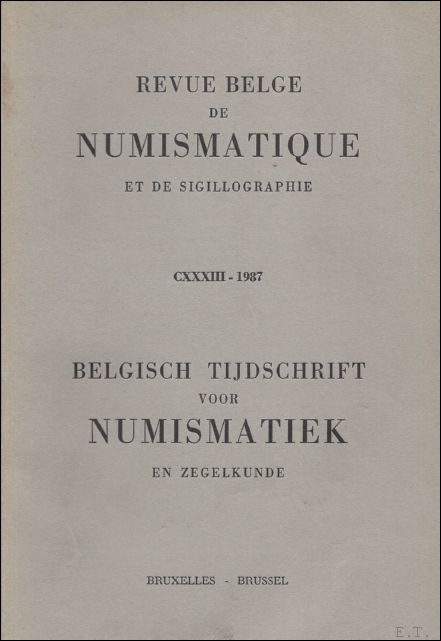
NASTER, PAUL/ COLAERT, MAURICE/ HACKENS, TONY/ MARCHETTI, PATRICK.
REVUE BELGE DE NUMISMATIQUE ET DE SIGILLOGRAPHIE/ BELGISCH TIJDSCHRIFT VOOR NUMISTMATIEK EN ZEGELKUNDE.
Bruxelles, 1978. Broche, couverture d' editeur, 16x24,5cm, 291pp + 25 planches hors-texte n/b. ISBN: 07745885
Tome CXXXIII.
Buchnummer: 1797 | Preis: EUR 20.00
Oliver D. Hoover
Let Us Have Peace
A Catalogue of Indian Peace Medals at the American Numismatic Society
BREPOLS, 2025. Pages: ix + 535 p.Size:216 x 280 mm Illustrations:600 col. Language:English. *NEW ISBN: 9780897223928
Summary Let Us Have Peace offers a detailed numismatic, art- and socio-historical discussion of 302 Indian peace medals and related objects that entered the cabinet of the American Numismatic Society between 1883 and 2013. The medals represent an important and often under-utilized resource for the history of relationships between the Native peoples of North America and the colonial powers of France, Great Britain, and Spain, as well as their successors, Canada and the United States of America. Despite being inanimate objects of silver and copper, the Indian peace medals in the ANS collection are incomparable storytellers, each offering its own tale of the past that give us insight into the remarkable lives of the medals? creators, distributors, and recipients. TABLE OF CONTENTS Dedication Acknowledgments Introduction Medals Distributed in French North America (ca. 1610?1760) King Louis XIV King Louis XV Medals Distributed in British North America (ca. 1610?1860) Lord Baltimore Queen Anne King George I King George II King George III Medals Distributed in the Province and Dominion of Canada (ca. 1840?1921) Queen Victoria Treaties 1 and 2 Treaty 3 Treaty 6 Assembly of Indian Tribes Treaty 9 Treaty 11 Medals Distributed in Spanish North America (ca. 1769?1806) King Carlos IV Medals Distributed in the United States of America (ca. 1788?1896) Commonwealth of Virginia Continental Congress George Washington John Adams Thomas Jefferson James Madison James Monroe John Quincy Adams Andrew Jackson Martin Van Buren William Henry Harrison John Tyler James K. Polk Zachary Taylor Millard Fillmore Franklin Pierce James Buchanan Abraham Lincoln Andrew Johnson Ulysses S. Grant Rutherford B. Hayes James A. Garfield Chester A. Arthur Grover Cleveland Benjamin Harrison Private and Fur Trade Medals distributed in the United States of America (ca. 1822?1900) Miss White?s Seminary for Select Ladies American Fur Company Pierre Chouteau, Jr. & Co. Union Fur Company George Washington Chief Bacon Rind Appendix A: U.S. Mint Miniature Presidential Medals Appendix B: U.S. Mint Presidential Medals Appendix C: Commemorative Indian Peace Medal Facsimiles Appendix D: Indian Peace Medal Facsimiles and Fantasies Bibliography Index
Buchnummer: 67754 | Preis: EUR 232.00
Paul Callewaert
Penninxckens van Brugghe : De historische waarde van loden penningen
Eigen Beheer, 2024. 1. Hardcover, 333 pagina's NL kleurendruk op glanzend papier, formaat 16,5 x 24 cm. rijkelijk
geïllustreerd met afbeeldingen in kleur. beperkte oplage van 300ex. ISBN: X De loden getuigenis van een ver verleden, de historische waarde en de rol van de loden penningen in het dagelijkse leven van Brugge. Een vernieuwde kijk op de gekende penningen, aangevuld met tal van nieuwe nog niet beschreven Brugse penningen en hun varianten. Meer dan 300 exemplaren die uitvoerig zijn beschreven. Buchnummer: 63025 | Preis: EUR 59.99
geïllustreerd met afbeeldingen in kleur. beperkte oplage van 300ex. ISBN: X De loden getuigenis van een ver verleden, de historische waarde en de rol van de loden penningen in het dagelijkse leven van Brugge. Een vernieuwde kijk op de gekende penningen, aangevuld met tal van nieuwe nog niet beschreven Brugse penningen en hun varianten. Meer dan 300 exemplaren die uitvoerig zijn beschreven. Buchnummer: 63025 | Preis: EUR 59.99
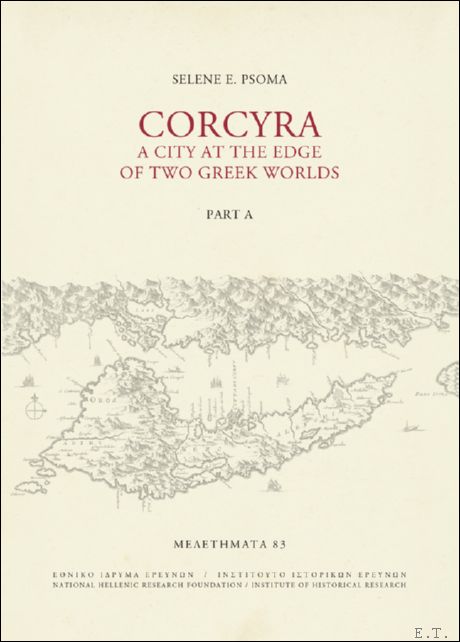
Selene E. Psoma
Corcyra. A City at the Edge of Two Greek Worlds
Brepols, 2022. Paperback, 2 vols, 747 pages, Size:170 x 240 mm, Language: English. ISBN: 9789607905970
Summary The current monograph on Corcyrean history has the aim of offering a synthesis on the history of the island from the time of the Liburnian tribe of the Kerkyres, after which the island was named, to the end of the ancient world and the destruction of the temples of the Greek gods by ????????, the local episkopos. For this reason, it takes into consideration all available evidence deriving from Greek and Latin literary sources, epigraphic documents, Corcyrean coinage and archaeological excavations on the island of Corcyra. All aspects of Corcyrean history are discussed: the geography of the island, the relations with Corinth, Athens, the kings of Epirus and, finally, the Romans, its position in the international politics, the numerous staseis, its institutions, the Corcyrean navy, the island's legendary background and religious life, its coinage and numismatic policy. Prosopography, onomastics and name-giving practices are also discussed as well as Corcyrean society. Finally, different readings of some significant events of Greek history involving Corcyra are discussed: Corcyrean power, the Corcyreans at the sea battle of Salamis, Corcyra and the network of Corinthian colonies in the North West, the beginning of the Peloponnesian War and the real causes of this war, Corcyra during the Peloponnesian War, insularity, geographic position and their impact on the history and shaping of identity of the city-island? The first volume analyzes its geographical location, history, economy and monetary policy (chs I-XII), institutions, legendary background, identity and religious life (chs XIII, XIV, XV). The second volume studies Corcyrean prosopography (XVI), onomastics (XVII) and society (XVIII). This volume also contains lists of names, three Appendices, bibliography and different indices, plates depicting coins of Corcyra, and a map of the island.
Buchnummer: 64559 | Preis: EUR 75.47
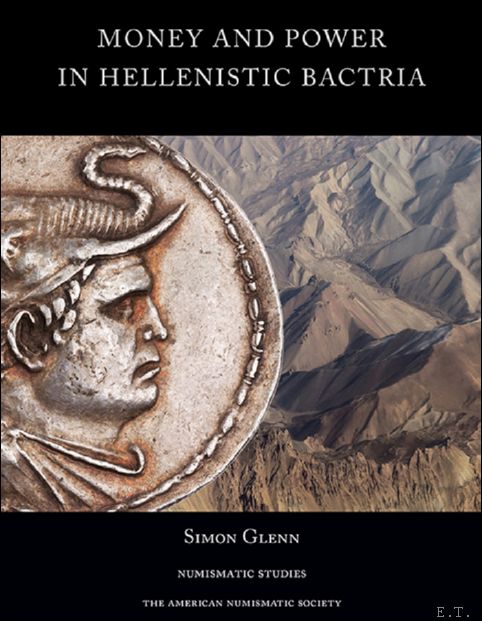
Simon Glenn
Money and Power in Hellenistic Bactria
Brepols, 2020. Hardback, xv + 386 pages, Size:216 x 280 mm, Illustrations:106 b/w, 75 tables b/w., Language: English. *new. ISBN: 9780897223614
Summary The coins produced by the kings of the Graeco-Bactrian kingdom of the third and second centuries BC are the best and, in some cases only, primary source of evidence for the history of the period. The lack of context has, however, often led to highly speculative uses of the numismatic evidence in previous historical reconstructions. Money and Power in Hellenistic Bactria returns the focus to the coins themselves and presents the results of a full die study of the issues of Euthydemus I, Demetrius I, Euthydemus II, Pantaleon, Agathocles, and Antimachus I. In doing so it proposes a new, soundly based history of the Graeco-Bactrian kingdom under these kings based on a thorough understanding and suggested reconstruction of these enigmatic coins. Winner of the 2021 Numismatic Literary Guild Award for Best Book on Ancient Coins (pre-1500). TABLE OF CONTENTS Introduction Chapter 1. Methodology Chapter 2. Types, Denominations, and Iconography Chapter 3. Find Evidence Chapter 4. Euthydemus I Chapter 5. Demetrius I Chapter 6. Euthydemus II Chapter 7. Pantaleon and Agathocles Chapter 8. Antimachus I Chapter 9. Monograms Chapter 10. History from Coins? Appendix A. Catalogue Appendix B. Forgeries Bibliography Plates
Buchnummer: 65878 | Preis: EUR 153.00
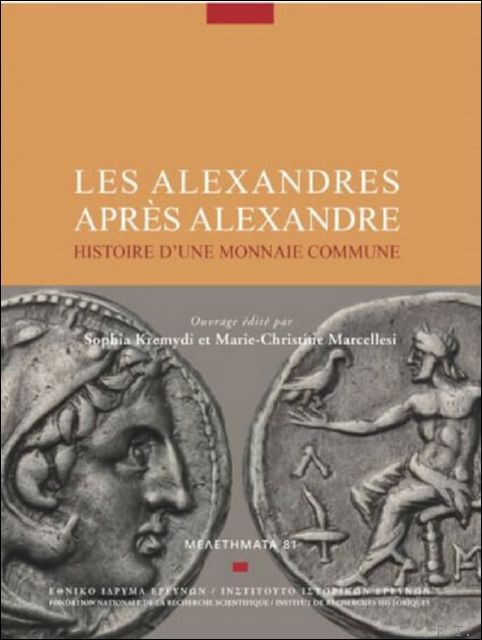
Sophia Kremydi, Marie-Christine Marcellesi (eds)
Les Alexandres après Alexandre. Histoire d'une monnaie commune
Brepols, 2019. Paperback, 464 pages, Size:210 x 280 mm, Language: French.*new ISBN: 9789609538961
Summary This collective volume discusses the coinages with the types of Alexander the Great that were produced by kings, cities and leagues -in parallel with their own local coin issues- for over two centuries after the king's death. The purpose of the book is to elaborate on the role of the 'Alexanders' as a common currency of the Hellenistic world. The topics examined include, among others, the circulation of the 'Alexanders' in specific geographical regions, a discussion of their use through the lens of regional history, the circulation of silver 'Alexanders' throughout the Hellenistic oecumene, the intensive but short-lived production of gold 'Alexanders', the epigraphic evidence for their use, their imitations in the Arabic peninsula, and, more generally, an evaluation of their much disputed role in the economic growth of the Hellenistic world.
Buchnummer: 66105 | Preis: EUR 56.60
Strada, Jacobus, 1507-1588
Epitome dv thresor des antiqvitez, c'est à dire, Pourtraits des vrayes medailles des empp. tant d'Orient que d'Occident
Lyon, I. de Strada, et T. Gverin, 1553. Hardcover, 23/ 394 pages, /30. Title with woodcut device of Guerin on recto and arms of the dedicatee, Johann Fugger, on verso, 3 woodcut initials, 487 medallions in text (text en Francais.
Epitome du thresor des antiquitez; Pourtraits des vrayes medailles des empp. tant d'Orient que d'Occident / Translate by Louveau, Jean, FIRST EDITION of this celebrated collection of portraits of portraits of emperors from Julius Caesar to Charles V. Jacques de Strada was one of the best-known antiquaries of his time.
Buchnummer: 57422 | Preis: EUR 425.00
Vredius, Olivarius [de Wree, Olivier]
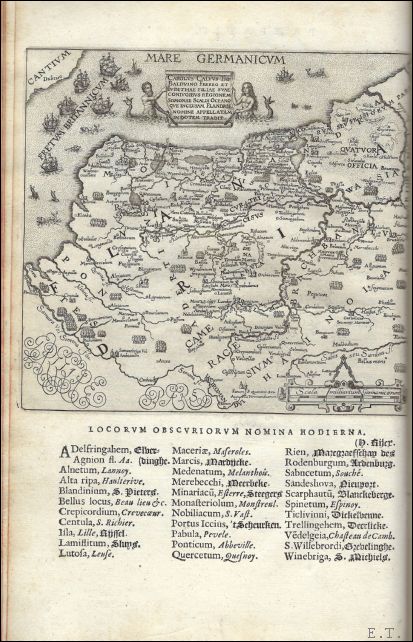
Sigilla comitum Flandriae et inscriptiones diplomatum ab iis editorum cum expositione historica
Brugis Flandrorum [Brugge], Joannem Baptistam Kerchovium [Kerchove, van den, Jan Baptist] , 1639. Rel. de L'epoque, 12-308-96 pages, .
Edition originale avec 300 sceaux des comtes de Flandre. Rare édition originale du recueil de sceaux des comtes de Flandre d'Olivier de Vrée (1596-1652), volume remarquable tant par sa rigueur antiquaire - l'ouvrage reste une référence incontournable en la matière - que par ses quelque 300 gravures sur cuivre répertoriant minutieusement l'évolution de sceaux depuis l'établissement de la Flandre en tant que pays au IXe siècle
Buchnummer: 58098 | Preis: EUR 2000.00
Seite 1