




Muziek
554 boeken gevonden









A. Bianco;
"Nach englischer und frantzosischer Art". Vie et oeuvre de Carlo Farina. Avec l'edition critique des cinq recueils,
Turnhout, Brepols, 2010. Paperback, 299 p., CD ROM, 160 x 240 mm. ISBN: 9782503533650
Le violoniste italien Carlo Farina est l'une des figures les plus representative de l'ecole instrumentale du debut du XVIIe siecle. Ne dans la Mantoue de la Renaissance tardive, il fut actif surtout dans les pays de langue germanique. Auteur de cinq recueils, il inscrit l'essentiel de sa production musicale dans le courant instrumental nord europeen defini par convention consort music ; repertoire ou la tradition de danse a la francaise et surtout a l'anglaise jouerent un role de tout premier plan. Les formes et les traits stylistiques de ces genres musicaux portent en effet l'empreinte de compositeurs tels que William Brade, Thomas Simpson ou John Dowland. Auteur du celebre Capriccio stravagante, Farina incarne ainsi de facon exemplaire le melange des idiomes et des styles qui caracterisent le langage instrumental allemand du debut du XVIIe siecle. Cette etude dedie au violoniste italien se compose de deux grandes parties : la premiere est consacree a sa vie et a l'ensemble de son oeuvre, la seconde est constituee de l'edition critique des ses cinq recueils. Languages : French.
Boeknummer: 38087 | Prijs: EUR 66.00
A. Bottegal, P. Zappala;
Il fondo musicale Albert Dunning,
Turnhout, Brepols, 2004. Paperback, XIV+118 p., 22 b/w ill., 17 x 24. ISBN: 9782503518022
The 'Fondo musicale Albert Dunning' was created when Professor Dunning generously donated his rich bibliographical musical collection to the Faculty of Musicology of Cremona. The corpus of materials, which is meticulously documented in the catalogue, is very varied in typology. It comprises musical editions, music treatises, opera librettos, publications on the theatre, autograph letters and even a musical manuscript. It ranges from works on Greek theory to epistolary evidence concerning early-20th-century Italian and French musicians, also taking in the late-Renaissance and 17th-century treatise literature. Equally broad is the musical repertoire, with editions dating from the 17th to the 20th century, also including certain important editiones principes and unica. In its organization the catalogue edited by Attilio Bottegal and Pietro Zappala follows the above subdivision of the materials, respecting the continuous numbering of the entries through its various sections, namely: printed music, music treatises, librettos, autograph letters (including a printed letter of Franz Joseph Haydn) an autograph of Ildebrando Pizzetti. Each entry contains a diplomatic transcription of the title-page, a collation, references to bibliographical works that offer further information either on their publishing history or on the collocation of equivalent copies. The catalographic entries are also enriched with illustrations of title-pages or significant pages. Languages : English.
Boeknummer: 40334 | Prijs: EUR 33.00
A. Bottegal, P. Zappala;
Il fondo musicale Albert Dunning,
Turnhout, Brepols, 2004. Paperback, XIV+118 p., 22 b/w ill., 17 x 24. ISBN: 9782503518022
The 'Fondo musicale Albert Dunning' was created when Professor Dunning generously donated his rich bibliographical musical collection to the Faculty of Musicology of Cremona. The corpus of materials, which is meticulously documented in the catalogue, is very varied in typology. It comprises musical editions, music treatises, opera librettos, publications on the theatre, autograph letters and even a musical manuscript. It ranges from works on Greek theory to epistolary evidence concerning early-20th-century Italian and French musicians, also taking in the late-Renaissance and 17th-century treatise literature. Equally broad is the musical repertoire, with editions dating from the 17th to the 20th century, also including certain important editiones principes and unica. In its organization the catalogue edited by Attilio Bottegal and Pietro Zappala follows the above subdivision of the materials, respecting the continuous numbering of the entries through its various sections, namely: printed music, music treatises, librettos, autograph letters (including a printed letter of Franz Joseph Haydn) an autograph of Ildebrando Pizzetti. Each entry contains a diplomatic transcription of the title-page, a collation, references to bibliographical works that offer further information either on their publishing history or on the collocation of equivalent copies. The catalographic entries are also enriched with illustrations of title-pages or significant pages. Languages : English.
Boeknummer: 40373 | Prijs: EUR 33.00
A. Clement, E. Jas (eds.);
Colinet de Lannoys. Mass and Songs,
Turnhout, Brepols, 2004. Paperback, 32 p., xxii + 32 p., 220 x 310 mm. ISBN: 9782252032152
Languages : English.
Boeknummer: 38083 | Prijs: EUR 16.50
A. Coeurdevey, P. Vendrix (eds.);
Jean Guyot de Chatelet, Chansons,
Turnhout, Brepols, 2001. Paperback, 108 p., 185 x 270 mm. ISBN: 9782869310995
Languages : French.
Boeknummer: 38073 | Prijs: EUR 25.00
A. Dunning (ed.);
Unico Wilhelm van Wassenaer, Sei Concerti armonici. Introduction, Edition and Critical Notes,
Turnhout, Brepols, 2003. Hardback, LXXX+166 p., 23 x 31. ISBN: 9782503514598
Languages : English.
Boeknummer: 40251 | Prijs: EUR 66.00
A. Nigito (ed.);
Bernardo Pasquini. Le Cantate,
Turnhout, Brepols, 2012. Hardback, CCLXXXI+764 p., 33 b/w ill., 23 x 31. ISBN: 9782503515199
This critical edition collects Bernardo Pasquini's sixty-plus unpublished cantatas. It not only enriches the field of studies on Roman vocal music during the last quarter of the 17th century, but also enhances our knowledge of this versatile composer. Although today Pasquini's name is still primarily associated with his keyboard works and his fame as a virtuoso, we must not forget that a substantial part of his output was devoted to vocal music. As was then customary, most of his cantatas are chamber works, for one voice only, and secular in content. To these, however, we must add the large festive cantatas, composed for important celebrations and scored for various voices and instruments, and the spiritual cantatas, which can be likened to small oratorios. Given that this repertory was transmitted exclusively in manuscripts (though in no case autograph manuscripts), a study has been carried out on the late-17th-century Roman and Modenese copyists responsible for the surviving sources. Careful examination of the poetic texts, all anonymous, has also led to the identification of the authors of a very small number of the works: they include Cardinal Benedetto Pamphili, Francesco Maria Paglia and Alessandro Guidi. Finally, recent archival research has brought to light new information on the composer's life. Languages : Italian.
Boeknummer: 40248 | Prijs: EUR 165.00
A. Roth, T. Schmidt-Beste (eds.);
Collectanea III. Der Fondo Cappella Sistina als musikgeschichtliche Quelle,
Turnhout, Brepols, 2001. Paperback, 172 p., 10 b/w ill., 170 x 240 mm. ISBN: 9782503510316
Peter Ackermann, Die papstliche Kapelle und die Genese des "Palestrinastils"; Mitchell P. Brauner, Have Mercy! Texting and Performing the Kyrie from Cappella Sistina Manuscripts ; Jean Lionnet, Les "Diari Sistini", sources importantes pour l'histoire de la Chapelle Pontificale ; Magda Marx-Weber, Die Entwicklung des Karwochenrepertoires der papstlichen Kapelle, insbesondere der Lamentationen ; Noel O'Regan, Evidence for Vocal Scoring in Late Sixteenth and Early Seventeenth-Century Polyphony from Cappella Sistina Musical and Non-Musical Documents ; Emilia Anna Talamo, Aspetti della produzione miniatoria per la Cappella Sistina nel secolo XVI. Languages: German.
Boeknummer: 35113 | Prijs: EUR 49.50
A.-E. Ceulemans;
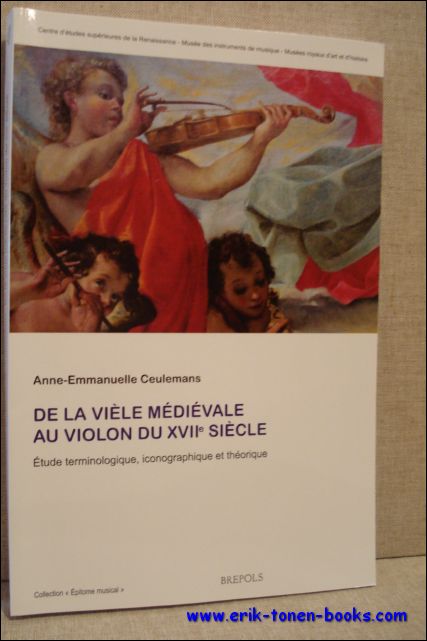
De la viele medievale au violon du XVIIe siecle. Etude terminologique, iconographique et theorique,
Turnhout, Brepols, 2011. Paperback, 267 p., 25 b/w ill. 75 colour ill., 190 x 290 mm. ISBN: 9782503535616
La genese du violon est a la fois complexe et controversee. Ou l'instrument est-il apparu ? Quelles sont ses caracteristiques constitutives ? A l'heure actuelle, ces questions n'ont recu aucune reponse definitive. L'ouvrage que voici a pour but de jeter un eclairage nouveau sur le probleme. Il s'articule en trois chapitres. Le premier consiste en une etude terminologique, indispensable a l'interpretation des sources ecrites. Le chapitre suivant retrace ce que l'on sait de l'evolution technique de la lutherie depuis le Moyen Age jusqu'au debut du xviie siecle. Le dernier chapitre est consacre aux ecrits theoriques qui eclairent l'histoire ancienne du violon. L'auteur s'efforce de repondre a plusieurs difficultes methodologiques qui doivent etre prises en considerations dans l'etude de l'emergence du violon. 1) La plupart des instruments a cordes anterieurs au xviie siecle conserves dans les musees presentent de serieux problemes d'authenticite. Generalement, ils ont fait l'objet d'importants remaniements et ne constituent pas des temoins fiables de la lutherie de l'epoque a laquelle ils sont attribues. Pour cette raison, dans la presente recherche, une place fondamentale est reservee a l'iconographie. 2) L'organologie du xxe siecle a eu tendance a se fonder sur des typologies relativement figees, dans lesquelles chaque instrument trouve sa place de maniere univoque. Neanmoins, l'iconographie de la Renaissance livre le temoignage de nombreux instruments difficiles a classer en ce qu'ils presentent des caracteristiques propres a differents types instrumentaux. La variabilite de la lutherie ancienne va de pair avec une grande instabilite terminologique. Entre les principales langues europeennes, on observe, pour un meme nom d'instrument, des glissements de sens plus ou moins importants. L'auteur demontre l'importance, dans le domaine de l'organologie, de distinguer les faits de langue de l'evolution morphologique des instruments eux-memes. 3) En raison de l'aura particuliere dont jouit le violon depuis le xixe siecle et des mythes qui se rattachent a son histoire, l'apparition de l'instrument est souvent analysee en partant de sa morphologie au xviie siecle, pour ensuite reculer dans le temps en quete de temoignages plus anciens. Cette attitude fait l'impasse sur de larges pans du cadre historique et organologique de l'avenement du violon, qui n'est au depart qu'un instrument de menetrier. L'auteur propose au contraire d'aborder l'histoire du violon en partant de l'instrumentarium medieval, afin de cerner l'evolution des instruments a archet dans leur ensemble, du xve siecle au debut du xviie siecle. Ce point de vue fait ressortir l'importance de l'histoire des techniques comme moteur de l'evolution de la lutherie. 4) Plusieurs traites theoriques entre la fin du xve siecle et le debut du xviie siecle offrent des informations interessantes sur l'histoire ancienne du violon. Cependant, ces documents, rediges dans differentes langues, sont souvent cites de seconde main, en dehors de tout contexte. Le dernier chapitre de la monographie tente de pallier ce probleme en offrant une vision d'ensemble de ces sources, traduites et analysees a la lumiere des informations fournies dans les deux premiers chapitres. Nouveau livre.
Boeknummer: 32421 | Prijs: EUR 94.00
A.-E. Ceulemans;
De la viele medievale au violon du XVIIe siecle. Etude terminologique, iconographique et theorique,
Turnhout, Brepols, 2011. Paperback, 267 p., 25 b/w ill. + 75 colour ill., 190 x 290 mm. ISBN: 9782503535616
La genese du violon est a la fois complexe et controversee. Ou l'instrument est-il apparu ? Quelles sont ses caracteristiques constitutives ? A l'heure actuelle, ces questions n'ont recu aucune reponse definitive. L'ouvrage que voici a pour but de jeter un eclairage nouveau sur le probleme. Il s'articule en trois chapitres. Le premier consiste en une etude terminologique, indispensable a l'interpretation des sources ecrites. Le chapitre suivant retrace ce que l'on sait de l'evolution technique de la lutherie depuis le Moyen Age jusqu'au debut du xviie siecle. Le dernier chapitre est consacre aux ecrits theoriques qui eclairent l'histoire ancienne du violon. L'auteur s'efforce de repondre a plusieurs difficultes methodologiques qui doivent etre prises en considerations dans l'etude de l'emergence du violon. Languages : French.
Boeknummer: 38078 | Prijs: EUR 93.50
Abeele, Baudouin v.d.
DISSERTATIONS MUSICALES.
Antwerpen, Le papegay, J.E.Buschmann, 1947. Broche, in-4?°, 81pp.
bon etat !!
Boeknummer: 2841 | Prijs: EUR 25.00
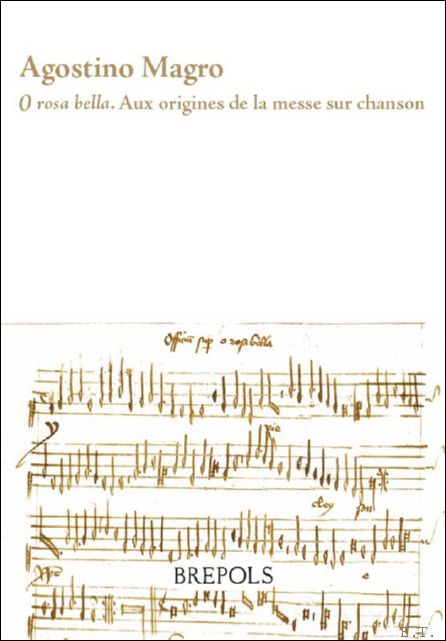
Agostino Magro
O rosa bella. Aux origines de la messe sur chanson
Brepols, 2024. Paperback, 276 pages, Size:178 x 254 mm, Illustrations:15 col., 14 tables b/w., Language: French. ISBN: 9782503610498
Summary Ce livre s'intéresse au corpus des premières messes sur chanson du XVe siècle proposant en particulier une étude sur la chanson O rosa bella et sur les trois messes anonymes basées sur ce modèle. O rosa bella a suscité, dans le passé comme dans le temps présent, un très grand intérêt : attribuée à John Bedyngham, compositeur anglais de la première moitié du siècle, cette pièce est à la source de nombreuses adaptations et de diverses émulations. Les différentes compositions dérivées de ce modèle se trouvent au c?ur de l'histoire des origines de la messe cyclique continentale sur chanson de la Renaissance. Dans sa première partie, le présent ouvrage offre un recensement du corpus connu à partir des messes les plus anciennes allant du début du XVe siècle jusqu'à l'époque de Josquin. Il s'agira ainsi de contextualiser la production anonyme et d'en illustrer quelques exemples parmi les plus notables. La deuxième partie se propose ensuite d'analyser la chanson O rosa bella et trois pièces anonymes composées sur le même texte. Une dernière partie s'intéresse enfin aux trois messes anonymes basées sur ce modèle, deux à 3 voix et une à 4 voix. L'analyse est accompagnée d'une nouvelle édition des deux messes à 3 voix, la Missa O rosa bella I du ms. Trento 88 et la Missa O rosa bella II du ms. Trento 90. Quant au chapitre consacré à la Missa O rosa bella III à 4 voix, il présente des remarques d'ordre philologique sur la transmission complexe de cette composition. TABLE OF CONTENTS Introduction 1. Les messes sur chanson et leurs modèles au XVe siècle - Les messes sur chanson et leurs modèles : un recensement commenté - Problématiques d'analyse du répertoire - Le traitement du matériau préexistant dans les premières messes sur chanson 2. La fortune de O rosa bella - La forme de O rosa bella - Authenticité du texte 3. A propos d'une approche méthodologique pour l'analyse mélodique : la division de l'octave modale 4. Analyse de O rosa bella et de trois pièces dérivées - Analyse de O rosa bella - La version Bd:1 - O rosa bella, Tr90 ff. 362v-363 - La version Bd:2 - O rosa bella, Tr90 f. 369v - La version C - O rosa bella, Strahov ff. 226v-227r 5. La Missa O rosa bella I (3 voix, Tr88) - La Missa O rosa bella I - Aspects d'analyse descriptive - Quelques remarques sur le contratenor de la Missa O rosa bella I 6. La Missa O rosa bella II (3 voix, Tr90) - La Missa O rosa bella II - Aspects d'analyse descriptive 7. La Missa O rosa bella III (4 voix, Tr89) - Problèmes de transmission dans les deux contratenores - Problèmes de transmission dans le Sanctus - Problèmes de transmission dans l'Agnus Dei - Le motet O Pater eterne/O rosa bella - L'Agnus Dei de Modène ?.M.1.13 8. Excursus - Le serviteur de Dufay est-il de Dufay ? EDITIONS 1 - John Bedyngham, O rosa bella 2 - Anonyme, O rosa bella - Tr90 ff. 362v-363 (Catalogue Fallows Bd :1) 3 - Anonyme, O rosa bella - Tr90 f. 369v (Catalogue Fallows Bd :2) 4 - Anonyme, [O] rosa bella - Stahov ff. 226v-227 (Catalogue Fallows C) 5 - Missa O rosa bella I - Tr88 - Apparat critique - Analyse descriptive - Edition critique 6 - Missa O rosa bella II - Tr90 - Apparat critique - Analyse descriptive - Edition critique
Boeknummer: 64292 | Prijs: EUR 95.00
Agostino Magro
O rosa bella. Aux origines de la messe sur chanson
Brepols, 2024. Paperback, 276 pages, Size:178 x 254 mm, Illustrations:15 col., 14 tables b/w., Language: French. ISBN: 9782503610498
Summary Ce livre s'intéresse au corpus des premières messes sur chanson du XVe siècle proposant en particulier une étude sur la chanson O rosa bella et sur les trois messes anonymes basées sur ce modèle. O rosa bella a suscité, dans le passé comme dans le temps présent, un très grand intérêt : attribuée à John Bedyngham, compositeur anglais de la première moitié du siècle, cette pièce est à la source de nombreuses adaptations et de diverses émulations. Les différentes compositions dérivées de ce modèle se trouvent au c?ur de l'histoire des origines de la messe cyclique continentale sur chanson de la Renaissance. Dans sa première partie, le présent ouvrage offre un recensement du corpus connu à partir des messes les plus anciennes allant du début du XVe siècle jusqu'à l'époque de Josquin. Il s'agira ainsi de contextualiser la production anonyme et d'en illustrer quelques exemples parmi les plus notables. La deuxième partie se propose ensuite d'analyser la chanson O rosa bella et trois pièces anonymes composées sur le même texte. Une dernière partie s'intéresse enfin aux trois messes anonymes basées sur ce modèle, deux à 3 voix et une à 4 voix. L'analyse est accompagnée d'une nouvelle édition des deux messes à 3 voix, la Missa O rosa bella I du ms. Trento 88 et la Missa O rosa bella II du ms. Trento 90. Quant au chapitre consacré à la Missa O rosa bella III à 4 voix, il présente des remarques d'ordre philologique sur la transmission complexe de cette composition. TABLE OF CONTENTS Introduction 1. Les messes sur chanson et leurs modèles au XVe siècle - Les messes sur chanson et leurs modèles : un recensement commenté - Problématiques d'analyse du répertoire - Le traitement du matériau préexistant dans les premières messes sur chanson 2. La fortune de O rosa bella - La forme de O rosa bella - Authenticité du texte 3. A propos d'une approche méthodologique pour l'analyse mélodique : la division de l'octave modale 4. Analyse de O rosa bella et de trois pièces dérivées - Analyse de O rosa bella - La version Bd:1 - O rosa bella, Tr90 ff. 362v-363 - La version Bd:2 - O rosa bella, Tr90 f. 369v - La version C - O rosa bella, Strahov ff. 226v-227r 5. La Missa O rosa bella I (3 voix, Tr88) - La Missa O rosa bella I - Aspects d'analyse descriptive - Quelques remarques sur le contratenor de la Missa O rosa bella I 6. La Missa O rosa bella II (3 voix, Tr90) - La Missa O rosa bella II - Aspects d'analyse descriptive 7. La Missa O rosa bella III (4 voix, Tr89) - Problèmes de transmission dans les deux contratenores - Problèmes de transmission dans le Sanctus - Problèmes de transmission dans l'Agnus Dei - Le motet O Pater eterne/O rosa bella - L'Agnus Dei de Modène ?.M.1.13 8. Excursus - Le serviteur de Dufay est-il de Dufay ? EDITIONS 1 - John Bedyngham, O rosa bella 2 - Anonyme, O rosa bella - Tr90 ff. 362v-363 (Catalogue Fallows Bd :1) 3 - Anonyme, O rosa bella - Tr90 f. 369v (Catalogue Fallows Bd :2) 4 - Anonyme, [O] rosa bella - Stahov ff. 226v-227 (Catalogue Fallows C) 5 - Missa O rosa bella I - Tr88 - Apparat critique - Analyse descriptive - Edition critique 6 - Missa O rosa bella II - Tr90 - Apparat critique - Analyse descriptive - Edition critique
Boeknummer: 64292 | Prijs: EUR 95.00
Akakios Chalkeopulos, Gerda Wolfram (ed), Christian Troelsgard (ed)
Der Traktat des Akakios Chalkeopulos zum Byzantinischen Kirchengesang
Brepols, 2021. Paperback, 98 pages, Size:178 x 254 mm, Illustrations:40 b/w, Languages:German, Greek. ISBN: 9782503589701
Summary Die musiktheoretische Schrift des Akakios Chalkeopulos stellt ein von allen bis jetzt im Rahmen des Corpus Scriptorum de Re Musica edierten Theorien unabhängiges Werk dar. Es entstand Anfang des 16. Jahrhunderts in Kreta, im venezianischen Einflussbereich. In dem Autographon, Athen, Hs. EBE 917, versuchte Akakios den Sonnen- und Mondzyklus mit der Berechnung des Paschalion aufzuzeigen, und eine Verbindung zur Kirchenmusik herzustellen. Neben diesen theoretischen Berechnungen weist eine große Zahl von Musikbeispielen darauf hin, dass für Akakios die Unterweisung der Sänger in der musikalischen Praxis Kretas ein großes Anliegen war. Besonders die Aufführungspraxis hatte die Aufmerksamkeit des Akakios auf sich gezogen, und seine Abhandlung ist das früheste Dokument, in dem der Begriff "Exegese" im Kontext des byzantinischen Gesangs verwendet wird. Da sowohl die Musiktheorie als auch das angeschlossene Anastasimatarion, das Hymnar des Akakios, ein Unikat darstellen, ist zu vermuten, dass mit den aufgezeichneten Melodien eine orale kretische Tradition zum Ausdruck kommt, die von Akakios weiterentwickelt wurde.
Boeknummer: 65465 | Prijs: EUR 45.00
Akakios Chalkeopulos, Gerda Wolfram (ed), Christian Troelsgard (ed)
Der Traktat des Akakios Chalkeopulos zum Byzantinischen Kirchengesang
Brepols, 2021. Paperback, 98 pages, Size:178 x 254 mm, Illustrations:40 b/w, Languages:German, Greek. ISBN: 9782503589701
Summary Die musiktheoretische Schrift des Akakios Chalkeopulos stellt ein von allen bis jetzt im Rahmen des Corpus Scriptorum de Re Musica edierten Theorien unabhängiges Werk dar. Es entstand Anfang des 16. Jahrhunderts in Kreta, im venezianischen Einflussbereich. In dem Autographon, Athen, Hs. EBE 917, versuchte Akakios den Sonnen- und Mondzyklus mit der Berechnung des Paschalion aufzuzeigen, und eine Verbindung zur Kirchenmusik herzustellen. Neben diesen theoretischen Berechnungen weist eine große Zahl von Musikbeispielen darauf hin, dass für Akakios die Unterweisung der Sänger in der musikalischen Praxis Kretas ein großes Anliegen war. Besonders die Aufführungspraxis hatte die Aufmerksamkeit des Akakios auf sich gezogen, und seine Abhandlung ist das früheste Dokument, in dem der Begriff "Exegese" im Kontext des byzantinischen Gesangs verwendet wird. Da sowohl die Musiktheorie als auch das angeschlossene Anastasimatarion, das Hymnar des Akakios, ein Unikat darstellen, ist zu vermuten, dass mit den aufgezeichneten Melodien eine orale kretische Tradition zum Ausdruck kommt, die von Akakios weiterentwickelt wurde.
Boeknummer: 65465 | Prijs: EUR 45.00
Andrea Lindmayr-Brandl, Paul Kolb (eds)
Gaspar van Weerbeke. New Perspectives on his Life and Music
Brepols, 2019. Paperback, 332 pages, Size:190 x 290 mm, Illustrations:6 b/w, 14 col., 18 tables b/w., 39 music examples, Language: English. ISBN: 9782503584546
Summary In memoriam Gerhard Croll (1927-2019) Gaspar van Weerbeke was one of the most successful Franco-Flemish musicians of the second half of the fifteenth century, holding prestigious positions in the Sforza court in Milan, the Burgundian court chapel, and the papal chapel in Rome. His compositions were widely transmitted in manuscript and print sources throughout Europe, and he was one of the best represented composers in the early Italian music prints of Ottaviano Petrucci. Despite the high esteem of his contemporaries, Gaspar has up to now played only a peripheral role in Renaissance music historiography. This book is the first collection of research articles dedicated exclusively to the life and works of Gaspar. While the basic facts of Gaspar's life have long been known, the book fleshes out the details, presenting a more differentiated and complex picture of his biography. Analysis of a wide range of Gaspar's compositional output leads to new interpretations of his approach to different genres: masses, motets, and motet cycles. His relatively small quantity of songs is revisited in light of the confusion-both then and now-over the meaning and validity of their attributions. This book seeks to promote further research on this composer and place him in his appropriate place in music history. TABLE OF CONTENTS Andrea Lindmayr-Brandl & Paul Kolb, Introduction Part I. Biographical aspects Klaus Pietschmann, Seven Reasons for Italy: Gaspar van Weerbeke's Career between Flanders, Milan, and Rome Paul A. Merkley, Weerbeke in Milan: Court and Colleagues Sean Gallagher, Belle promesse e facti nulla: A Letter to Weerbeke and the Treatment of Singers in Florence and Milan Laurence Fagnart, Gaspar Depicted? Leonardo's Portrait of a Musician Grantley McDonald, Gaspar van Weerbeke as a Member of the Burgundian Chapel Jeannette DiBernardo Jones, Gaspar van Weerbeke and France: The Poetic Witness of Guillaume Crétin Part II. Masses and Motets Fabrice Fitch, 'Under the Radar' or 'Caught in the Crossfire'? The Music of Gaspar van Weerbeke and its Reception History Agnese Pavanello, Weerbeke's Stylistic Repertoire: New Insights from the Marian Motets Fabrice Fitch, The Cycle as Modular Composition: The Motetti missales of Gaspar van Weerbeke Wolfgang Fuhrmann, Another 'Most laudable competition'? Gaspar, Josquin, Regis, and the Virgin in Distress Paul Kolb, A New Mass and its Implications for Gaspar's Late Mass Style Andrea Lindmayr-Brandl, Petrucci's Gaspar: Sources, Editing, and Reception Part III. Secular Music David Fallows, Gaspar and Japart: The Secular Works, with Particular Reference to Basevi 2442 and a Word about Fridolin Sicher Carlo Bosi, Caught in the Web of Texts: The Chanson Family Bon vin/Bon temps and the Disputed Identity Eric Jas, La stangetta Reconsidered: Weerbeke, Isaac, and the Late Fifteenth-Century Tricinium Bibliography, General Index, Index of Works
Boeknummer: 65904 | Prijs: EUR 55.00
Andrea Lindmayr-Brandl, Paul Kolb (eds)
Gaspar van Weerbeke. New Perspectives on his Life and Music
Brepols, 2019. Paperback, 332 pages, Size:190 x 290 mm, Illustrations:6 b/w, 14 col., 18 tables b/w., 39 music examples, Language: English. ISBN: 9782503584546
Summary In memoriam Gerhard Croll (1927-2019) Gaspar van Weerbeke was one of the most successful Franco-Flemish musicians of the second half of the fifteenth century, holding prestigious positions in the Sforza court in Milan, the Burgundian court chapel, and the papal chapel in Rome. His compositions were widely transmitted in manuscript and print sources throughout Europe, and he was one of the best represented composers in the early Italian music prints of Ottaviano Petrucci. Despite the high esteem of his contemporaries, Gaspar has up to now played only a peripheral role in Renaissance music historiography. This book is the first collection of research articles dedicated exclusively to the life and works of Gaspar. While the basic facts of Gaspar's life have long been known, the book fleshes out the details, presenting a more differentiated and complex picture of his biography. Analysis of a wide range of Gaspar's compositional output leads to new interpretations of his approach to different genres: masses, motets, and motet cycles. His relatively small quantity of songs is revisited in light of the confusion-both then and now-over the meaning and validity of their attributions. This book seeks to promote further research on this composer and place him in his appropriate place in music history. TABLE OF CONTENTS Andrea Lindmayr-Brandl & Paul Kolb, Introduction Part I. Biographical aspects Klaus Pietschmann, Seven Reasons for Italy: Gaspar van Weerbeke's Career between Flanders, Milan, and Rome Paul A. Merkley, Weerbeke in Milan: Court and Colleagues Sean Gallagher, Belle promesse e facti nulla: A Letter to Weerbeke and the Treatment of Singers in Florence and Milan Laurence Fagnart, Gaspar Depicted? Leonardo's Portrait of a Musician Grantley McDonald, Gaspar van Weerbeke as a Member of the Burgundian Chapel Jeannette DiBernardo Jones, Gaspar van Weerbeke and France: The Poetic Witness of Guillaume Crétin Part II. Masses and Motets Fabrice Fitch, 'Under the Radar' or 'Caught in the Crossfire'? The Music of Gaspar van Weerbeke and its Reception History Agnese Pavanello, Weerbeke's Stylistic Repertoire: New Insights from the Marian Motets Fabrice Fitch, The Cycle as Modular Composition: The Motetti missales of Gaspar van Weerbeke Wolfgang Fuhrmann, Another 'Most laudable competition'? Gaspar, Josquin, Regis, and the Virgin in Distress Paul Kolb, A New Mass and its Implications for Gaspar's Late Mass Style Andrea Lindmayr-Brandl, Petrucci's Gaspar: Sources, Editing, and Reception Part III. Secular Music David Fallows, Gaspar and Japart: The Secular Works, with Particular Reference to Basevi 2442 and a Word about Fridolin Sicher Carlo Bosi, Caught in the Web of Texts: The Chanson Family Bon vin/Bon temps and the Disputed Identity Eric Jas, La stangetta Reconsidered: Weerbeke, Isaac, and the Late Fifteenth-Century Tricinium Bibliography, General Index, Index of Works
Boeknummer: 65904 | Prijs: EUR 55.00
Andy Lim ; Anton Somers
Anton Somers 22 Instruments 2012-2021 / Anton Somers vioolbouwer te Antwerpen 22 instruments of the Violin family.
Darling publ., 2022. 1. Hardcover, 35x33cm, 107 pages ( 200gr silky paper) with full color illustrations. NL/ENG text ISBN: 9783945525814
The sensation of turning the beautiful printed pages, sensing the smooth resistance of the 200gr silky paper as well as experiencing the today rarely seen art of bookbinding manufacture in your hands, should be understood by those genuinely interested in exquisite built violins and cellos from spruce and maple, made by talented luthier hands and played with sensitive and reactive pernambuco bows. And the ears to be touched by vibrations of beauty, created with competence and some luck of a matching player, instrument and bow. For that experience even ordering this really nice book will even not be adequate. Best suggestion is to try to get an instrument by Anton in your hands and play it! --- Anton Somers. Born in 1986, Borgerhout, Belgium. Ever since childhood he was very passionate about woodworking. At the age of 15 he made his first instrument, the next year he started studying at the violin making school of Antwerp. Directly after his studies in 2006 he worked in a local workshop in Brussels till 2011. Anton then decided to take the leap and started his own business opening his workshop in his hometown Melsele where he grew up and is strongly connected to the cultural life. From 2013 till 2015 Anton Somers and his former employer tried to work together again, but now as chef d'atelier, in the workshop premises of Anton in Melsele. where he worked meanwhile on his own account. One can see finally an output of high quality instruments under his own name, with his own models and with his own varnish, which lead to a boost in his career. In September 2016 Anton also took on the challenge to work as a teacher in the violin making school of Antwerp ILSA. Sharing his knowledge for 5 years, he stopped teaching at the end of 2021 to be able to fully focus on his career. In December 2016 Anton received a Coup du Coeur in the violin making competition ?Violoncellenseine? in Paris which was dedicated to the cello. The cello was specially awarded for his tonality qualities by renowned cellist Damian Martinez Marco. In 2020 Anton was selected by Andy Lim personally to serve as one of the five supervisors for the 3-year string sextet project, where 24 last year student/ recently graduated violinmakers will make 2 violins, 2 violas and 2 cellos. Anton has the honour and the challenge to supervice the making of 2 cellos. In 2021 Anton made a string quartet containing completely CITES certified whalebone purflings. This quartet is shown in the book published by Darling Publications "Anton Somers Vioolbouwer te Antwerpen ~ 22 instruments of the violin family 2012-2021 which was launched in Brussels, June 2021. Anton?s instruments are appreciated by the most demanding musicians as also by investors who keep them in their private collection.
Boeknummer: 57753 | Prijs: EUR 99.99
Andy Lim ; Anton Somers
Anton Somers 22 Instruments 2012-2021 / Anton Somers vioolbouwer te Antwerpen 22 instruments of the Violin family.
Darling publ., 2022. 1. Hardcover, 35x33cm, 107 pages ( 200gr silky paper) with full color illustrations. NL/ENG text ISBN: 9783945525814
The sensation of turning the beautiful printed pages, sensing the smooth resistance of the 200gr silky paper as well as experiencing the today rarely seen art of bookbinding manufacture in your hands, should be understood by those genuinely interested in exquisite built violins and cellos from spruce and maple, made by talented luthier hands and played with sensitive and reactive pernambuco bows. And the ears to be touched by vibrations of beauty, created with competence and some luck of a matching player, instrument and bow. For that experience even ordering this really nice book will even not be adequate. Best suggestion is to try to get an instrument by Anton in your hands and play it! --- Anton Somers. Born in 1986, Borgerhout, Belgium. Ever since childhood he was very passionate about woodworking. At the age of 15 he made his first instrument, the next year he started studying at the violin making school of Antwerp. Directly after his studies in 2006 he worked in a local workshop in Brussels till 2011. Anton then decided to take the leap and started his own business opening his workshop in his hometown Melsele where he grew up and is strongly connected to the cultural life. From 2013 till 2015 Anton Somers and his former employer tried to work together again, but now as chef d'atelier, in the workshop premises of Anton in Melsele. where he worked meanwhile on his own account. One can see finally an output of high quality instruments under his own name, with his own models and with his own varnish, which lead to a boost in his career. In September 2016 Anton also took on the challenge to work as a teacher in the violin making school of Antwerp ILSA. Sharing his knowledge for 5 years, he stopped teaching at the end of 2021 to be able to fully focus on his career. In December 2016 Anton received a Coup du Coeur in the violin making competition ?Violoncellenseine? in Paris which was dedicated to the cello. The cello was specially awarded for his tonality qualities by renowned cellist Damian Martinez Marco. In 2020 Anton was selected by Andy Lim personally to serve as one of the five supervisors for the 3-year string sextet project, where 24 last year student/ recently graduated violinmakers will make 2 violins, 2 violas and 2 cellos. Anton has the honour and the challenge to supervice the making of 2 cellos. In 2021 Anton made a string quartet containing completely CITES certified whalebone purflings. This quartet is shown in the book published by Darling Publications "Anton Somers Vioolbouwer te Antwerpen ~ 22 instruments of the violin family 2012-2021 which was launched in Brussels, June 2021. Anton?s instruments are appreciated by the most demanding musicians as also by investors who keep them in their private collection.
Boeknummer: 57753 | Prijs: EUR 99.99
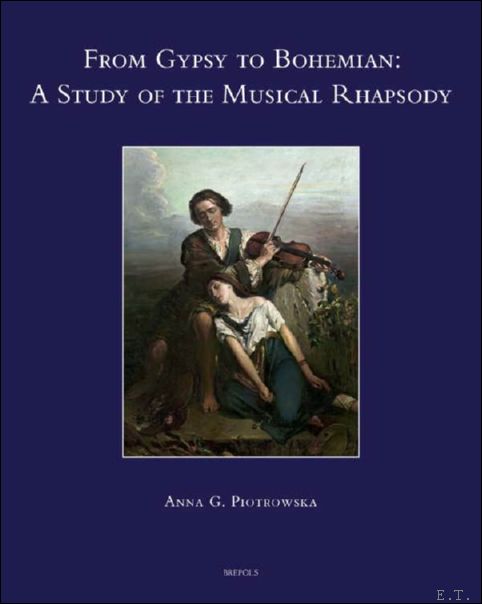
Anna G. Piotrowska
From Gypsy to Bohemian: A Study of the Musical Rhapsody
Brepols, 2021. Hardback, xxii + 247 pages, Size:210 x 270 mm, Illustrations:15 b/w, 13 musical examples, Language: English. ISBN: 9782503594873
Summary This volume examines the concept of rhapsody through a broad lens. Beginning with a discussion of the meaning(s) of the term itself, it then traces the history and reception of the genre and its significance in European culture. It argues for a close relationship between the idea of rhapsody and the concept of Gypsiness by demonstrating that 'rhapsody' and 'Gypsiness' can be seen as manifestations of the same types of influence and preferences for certain aesthetic categories. The book pays special attention to the seminal role of Franz Liszt in its discussion of the instrumental rhapsody. Ultimately, it reveals the consequences of historiographical representations of the rhapsody (e.g. the ossification of the image of the European Gypsy musician as a bard/rhapsode, the fossilization of presumptions concerning the nature of so-called 'Gypsies') as well as unexpected similarities and differences between the rhapsody and the ballad as romantic genres with national implications. TABLE OF CONTENTS Acknowledgements Prolegomenon Chapter One Gypsy Musicians as Rhapsodes of the Nineteenth Century Chapter Two Gypsy Improvisation and the Idea of Rhapsody Chapter Three The Gypsy Character of Musical Rhapsody Chapter Fourth Gypsy, Hungarian, Romanian ? The National Element in Rhapsodies Chapter Five Between Rhapsody and Ballad Postscript: Continuations and Reactivations Bibliography Index of Names
Boeknummer: 65399 | Prijs: EUR 99.00
Anna G. Piotrowska
From Gypsy to Bohemian: A Study of the Musical Rhapsody
Brepols, 2021. Hardback, xxii + 247 pages, Size:210 x 270 mm, Illustrations:15 b/w, 13 musical examples, Language: English. ISBN: 9782503594873
Summary This volume examines the concept of rhapsody through a broad lens. Beginning with a discussion of the meaning(s) of the term itself, it then traces the history and reception of the genre and its significance in European culture. It argues for a close relationship between the idea of rhapsody and the concept of Gypsiness by demonstrating that 'rhapsody' and 'Gypsiness' can be seen as manifestations of the same types of influence and preferences for certain aesthetic categories. The book pays special attention to the seminal role of Franz Liszt in its discussion of the instrumental rhapsody. Ultimately, it reveals the consequences of historiographical representations of the rhapsody (e.g. the ossification of the image of the European Gypsy musician as a bard/rhapsode, the fossilization of presumptions concerning the nature of so-called 'Gypsies') as well as unexpected similarities and differences between the rhapsody and the ballad as romantic genres with national implications. TABLE OF CONTENTS Acknowledgements Prolegomenon Chapter One Gypsy Musicians as Rhapsodes of the Nineteenth Century Chapter Two Gypsy Improvisation and the Idea of Rhapsody Chapter Three The Gypsy Character of Musical Rhapsody Chapter Fourth Gypsy, Hungarian, Romanian ? The National Element in Rhapsodies Chapter Five Between Rhapsody and Ballad Postscript: Continuations and Reactivations Bibliography Index of Names
Boeknummer: 65399 | Prijs: EUR 99.00
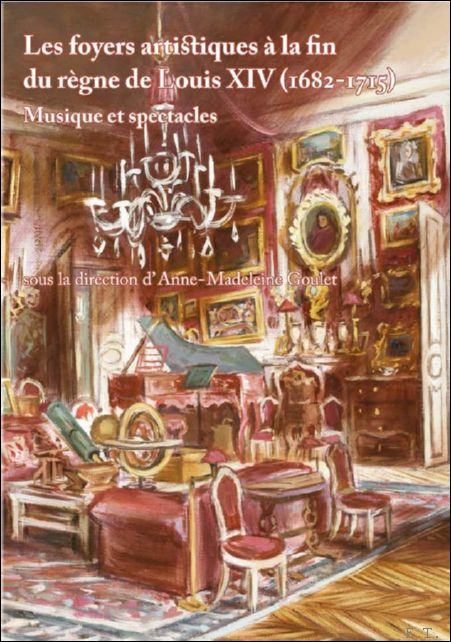
Anne-Madeleine Goulet, Rémy Campos, Mathieu da Vinha, Jean Duron (eds)
Les foyers artistiques à la fin du règne de Louis XIV (1682-1715). Musique et spectacles
Brepols, 2019. Paperback, 446 pages, Size:178 x 254 mm, Illustrations:24 b/w, 7 col., Languages: French, English. ISBN: 9782503586199
Summary Les demeures aristocratiques de Paris et d'Île-de-France ont généralement été perçues comme des lieux périphériques, pâles reflets de la cour de Versailles. En réalité,?les hôtels particuliers du Marais, où dominaient les sociabilités féminines, la résidence de Philippe d'Orléans au Palais-Royal, celle de la princesse de Conti à Versailles, les pavillons de plaisance bâtis entre Versailles et Paris,?les demeures?du duc et de la duchesse du Maine à Sceaux ou?encore?du roi d'Angleterre en exil à Saint-Germain-en-Laye, s'imposaient comme autant de foyers artistiques fort dynamiques, ouverts au théâtre et à la musique.? Le présent ouvrage,?qui prend en considération ces différents lieux d'activité artistique comme un ensemble à la fois complémentaire et concurrent,?enquête sur leur hiérarchie, leur fonctionnement concret ainsi que sur les?relations qu'ils entretenaient avec la cour.?Il?met en lumière la tension entre le modèle versaillais, toujours prompt à imposer une norme artistique, et le développement?d'autres espaces de création entre 1682 et 1715. En illustrant?la faculté des musiciens provinciaux à s'insérer dans les milieux artistiques de la capitale, en cernant l'identité de ceux qui façonnaient les goûts de leur époque et en considérant aussi les stratégies discursives et politiques qui visaient à constituer en foyers certains lieux de production et de performance alternatifs à la Cour, il?propose une image plus complète de la vie musicale et spectaculaire de la France?à?la fin du règne de Louis XIV. TABLE OF CONTENTS Rémy Campos et Anne-Madeleine Goulet - De la pertinence de la notion de foyer pour l'étude de la musique et des formes spectaculaires à Paris et à Versailles (1682-1715) La Cour, les cours David Hennebelle - « La grande dépense et le fracas ». Recherches sur l'économie matérielle des patronages artistiques de l'aristocratie au tournant des XVIIe et XVIIIe siècles Don Fader - Monsieur and Philippe II d'Orléans : A Cultural Influence Beyond their Residences Tarek Berrada - La musique dans les appartements : Mlle de Guise, le roi et les princes de Condé Thomas Vernet - Musique et théâtre dans la « maison de ville » de Marie-Anne de Bourbon Conti à Versailles Catherine Cessac - Les Nuits de Sceaux : derniers feux du Grand Siècle ? Laurent Lemarchand - Les arts entre Paris et Versailles : le Palais-Royal de Philippe II d'Orléans ou l'absolutisme rénové Des musiciens en partage Jean Duron - Composer pour les nouveaux foyers : la « fureur » des musiciens d'église au crépuscule du Grand Siècle Marie Demeilliez - Les collèges, des foyers pour la musique et la danse de théâtre Thomas Leconte - De la cour à la ville : les musiciens du roi face à l'émergence de nouveaux foyers cuturels Catherine Massip - Amateurs, professionnels : foyers et professionnalisation progressive des artistes (1680-1715) Un esprit nouveau Christian Biet - Foyers, chaufooirs, chaleur et hétérogénéité des publics au theatre. La séance comme contre-pouvoir ? Thierry Favier - Foyers et dynamique des genres musicaux à la fin du règne de Louis XIV Nathalie Berton - Le Mercure galant, un révélateur et un passeur de répertoire : l'exemple du petit opéra Guy Spielmann - Le « théâtre de société », foyer de création ( ?) Louis Delpech - « Abends zu einer Concert de Musique eingeladen » : aspects musicaux du séjour parisien de Friedrich August II de Saxe (1714-1715) Foyers réels, foyers imaginaires Mathieu da Vinha - Fêtes privées entre Versailles et Paris : éléments pour une typologie Anne Piéjus - Une galanterie très politique : l'image des foyers artistiques dans le Mercure galant Laura Naudeix - Foyers et territoire : l'espace de la musique dans la Comparaison de la musique italienne et de la musique française de Le Cerf de la Viéville Barbara Nestola - L'art d'assembler, le choix de partager : la collection de musique italienne des Stuart en France (1689-1718) Tatiana Senkevitch - The Making of Taste: Rembrandt and French Painting in the End of the Reign of Louis XIV Rebekah Ahrendt - L'activité des foyers musicaux et théâtraux en Europe vers 1700. Une enquête en coulisses Perspectives Jean Boutier - Pour continuer l'enquête Index des noms propres
Boeknummer: 65900 | Prijs: EUR 70.00
Anne-Madeleine Goulet, Rémy Campos, Mathieu da Vinha, Jean Duron (eds)
Les foyers artistiques à la fin du règne de Louis XIV (1682-1715). Musique et spectacles
Brepols, 2019. Paperback, 446 pages, Size:178 x 254 mm, Illustrations:24 b/w, 7 col., Languages: French, English. ISBN: 9782503586199
Summary Les demeures aristocratiques de Paris et d'Île-de-France ont généralement été perçues comme des lieux périphériques, pâles reflets de la cour de Versailles. En réalité,?les hôtels particuliers du Marais, où dominaient les sociabilités féminines, la résidence de Philippe d'Orléans au Palais-Royal, celle de la princesse de Conti à Versailles, les pavillons de plaisance bâtis entre Versailles et Paris,?les demeures?du duc et de la duchesse du Maine à Sceaux ou?encore?du roi d'Angleterre en exil à Saint-Germain-en-Laye, s'imposaient comme autant de foyers artistiques fort dynamiques, ouverts au théâtre et à la musique.? Le présent ouvrage,?qui prend en considération ces différents lieux d'activité artistique comme un ensemble à la fois complémentaire et concurrent,?enquête sur leur hiérarchie, leur fonctionnement concret ainsi que sur les?relations qu'ils entretenaient avec la cour.?Il?met en lumière la tension entre le modèle versaillais, toujours prompt à imposer une norme artistique, et le développement?d'autres espaces de création entre 1682 et 1715. En illustrant?la faculté des musiciens provinciaux à s'insérer dans les milieux artistiques de la capitale, en cernant l'identité de ceux qui façonnaient les goûts de leur époque et en considérant aussi les stratégies discursives et politiques qui visaient à constituer en foyers certains lieux de production et de performance alternatifs à la Cour, il?propose une image plus complète de la vie musicale et spectaculaire de la France?à?la fin du règne de Louis XIV. TABLE OF CONTENTS Rémy Campos et Anne-Madeleine Goulet - De la pertinence de la notion de foyer pour l'étude de la musique et des formes spectaculaires à Paris et à Versailles (1682-1715) La Cour, les cours David Hennebelle - « La grande dépense et le fracas ». Recherches sur l'économie matérielle des patronages artistiques de l'aristocratie au tournant des XVIIe et XVIIIe siècles Don Fader - Monsieur and Philippe II d'Orléans : A Cultural Influence Beyond their Residences Tarek Berrada - La musique dans les appartements : Mlle de Guise, le roi et les princes de Condé Thomas Vernet - Musique et théâtre dans la « maison de ville » de Marie-Anne de Bourbon Conti à Versailles Catherine Cessac - Les Nuits de Sceaux : derniers feux du Grand Siècle ? Laurent Lemarchand - Les arts entre Paris et Versailles : le Palais-Royal de Philippe II d'Orléans ou l'absolutisme rénové Des musiciens en partage Jean Duron - Composer pour les nouveaux foyers : la « fureur » des musiciens d'église au crépuscule du Grand Siècle Marie Demeilliez - Les collèges, des foyers pour la musique et la danse de théâtre Thomas Leconte - De la cour à la ville : les musiciens du roi face à l'émergence de nouveaux foyers cuturels Catherine Massip - Amateurs, professionnels : foyers et professionnalisation progressive des artistes (1680-1715) Un esprit nouveau Christian Biet - Foyers, chaufooirs, chaleur et hétérogénéité des publics au theatre. La séance comme contre-pouvoir ? Thierry Favier - Foyers et dynamique des genres musicaux à la fin du règne de Louis XIV Nathalie Berton - Le Mercure galant, un révélateur et un passeur de répertoire : l'exemple du petit opéra Guy Spielmann - Le « théâtre de société », foyer de création ( ?) Louis Delpech - « Abends zu einer Concert de Musique eingeladen » : aspects musicaux du séjour parisien de Friedrich August II de Saxe (1714-1715) Foyers réels, foyers imaginaires Mathieu da Vinha - Fêtes privées entre Versailles et Paris : éléments pour une typologie Anne Piéjus - Une galanterie très politique : l'image des foyers artistiques dans le Mercure galant Laura Naudeix - Foyers et territoire : l'espace de la musique dans la Comparaison de la musique italienne et de la musique française de Le Cerf de la Viéville Barbara Nestola - L'art d'assembler, le choix de partager : la collection de musique italienne des Stuart en France (1689-1718) Tatiana Senkevitch - The Making of Taste: Rembrandt and French Painting in the End of the Reign of Louis XIV Rebekah Ahrendt - L'activité des foyers musicaux et théâtraux en Europe vers 1700. Une enquête en coulisses Perspectives Jean Boutier - Pour continuer l'enquête Index des noms propres
Boeknummer: 65900 | Prijs: EUR 70.00
Anonyme (LEGMAN G. pref
Les chansons de salle de garde
Cercle du livre précieux, Paris, 1962, 1962. 1962. relié. Bon état. Cercle du livre précieux, Paris, 1962. In-4 oblong (27 x 13 cm) reliure en soie de couleurs pastels sous rhodoïde, triple filets dorés sur les plats, titre doré sur le dos, quelques illustrations en noir, 439 p.
Les chansons de salle de garde
Boeknummer: 57323 | Prijs: EUR 23.00
Anonyme (LEGMAN G. pref
Les chansons de salle de garde
Cercle du livre précieux, Paris, 1962, 1962. 1962. relié. Bon état. Cercle du livre précieux, Paris, 1962. In-4 oblong (27 x 13 cm) reliure en soie de couleurs pastels sous rhodoïde, triple filets dorés sur les plats, titre doré sur le dos, quelques illustrations en noir, 439 p.
Les chansons de salle de garde
Boeknummer: 57323 | Prijs: EUR 23.00
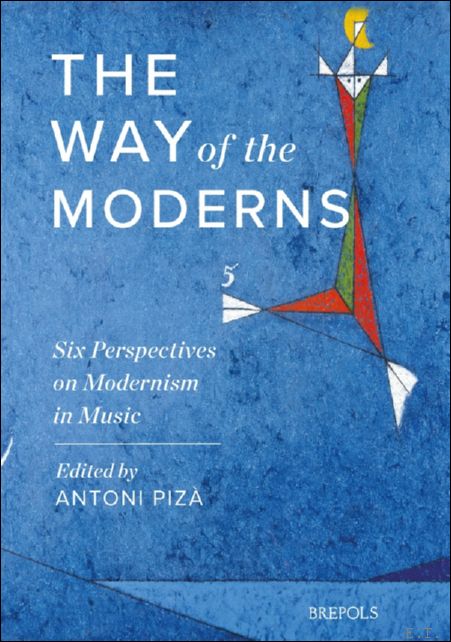
Antoni Piza (ed)
The Way of the Moderns. Six Perspectives on Modernism in Music
Brepols, 2022. Hardback, 172 pages, Size:190 x 290 mm, Illustrations:16 b/w, Language: English. ISBN: 9782503597737
Summary Exploring the concept of musical modernism from many different perspectives?including the audience's often initial rejection; the dominance of popular genres; the blurring of musical genres and categories; the alleged incapacity of modernism to express feelings and its intellectual aloofness; the struggle for an audience in times of a distracting attention economy; the transition from modernist to postmodernist aesthetics; the multicultural and collaborative aspects of many recent musical creations; and the need for questioning the ethics of musical works?they present a non-systematic and yet insightful assessment of some of the crucial issues around contemporary music. The texts address the changing consumption, creation, contexts, and valuations of today's concert music and, at the same time, highlight the agency of its practitioners?composers, performers, scholars, critics, and the audience?who pursue ?the way of the moderns.? TABLE OF CONTENTS Contents Acknowledgements List of Figures Introduction: Modernism, A Permanent Achievement, by Antoni Pizà ACT I: The Challenges of Modernistic Music, by Charles Rosen A Conversation with Daniel J. Wakin Audience Q&A ACT II: We Are What We Hear, by Paul Griffiths A Conversation with Jeffrey Milarsky Entr'Acte I: The Creative Pulse of Collaborative Aesthetics, by Philip Glass and Claire Chase Audience Q&A ACT III: Walking Among Noise: Tonality, Atonality, and Where We Go from Here, by Roger Scruton A Conversation with Greil Marcus Audience Q&A ENTR'ACTE II: Strings Attached, by David Harrington and Brook Gladstone Audience Q&A Act IV: The Many Dangers of Music, by Richard Taruskin A Conversation with Scott Burnham Audience Q&A Index
Boeknummer: 64698 | Prijs: EUR 80.00
Antoni Piza (ed)
The Way of the Moderns. Six Perspectives on Modernism in Music
Brepols, 2022. Hardback, 172 pages, Size:190 x 290 mm, Illustrations:16 b/w, Language: English. ISBN: 9782503597737
Summary Exploring the concept of musical modernism from many different perspectives?including the audience's often initial rejection; the dominance of popular genres; the blurring of musical genres and categories; the alleged incapacity of modernism to express feelings and its intellectual aloofness; the struggle for an audience in times of a distracting attention economy; the transition from modernist to postmodernist aesthetics; the multicultural and collaborative aspects of many recent musical creations; and the need for questioning the ethics of musical works?they present a non-systematic and yet insightful assessment of some of the crucial issues around contemporary music. The texts address the changing consumption, creation, contexts, and valuations of today's concert music and, at the same time, highlight the agency of its practitioners?composers, performers, scholars, critics, and the audience?who pursue ?the way of the moderns.? TABLE OF CONTENTS Contents Acknowledgements List of Figures Introduction: Modernism, A Permanent Achievement, by Antoni Pizà ACT I: The Challenges of Modernistic Music, by Charles Rosen A Conversation with Daniel J. Wakin Audience Q&A ACT II: We Are What We Hear, by Paul Griffiths A Conversation with Jeffrey Milarsky Entr'Acte I: The Creative Pulse of Collaborative Aesthetics, by Philip Glass and Claire Chase Audience Q&A ACT III: Walking Among Noise: Tonality, Atonality, and Where We Go from Here, by Roger Scruton A Conversation with Greil Marcus Audience Q&A ENTR'ACTE II: Strings Attached, by David Harrington and Brook Gladstone Audience Q&A Act IV: The Many Dangers of Music, by Richard Taruskin A Conversation with Scott Burnham Audience Q&A Index
Boeknummer: 64698 | Prijs: EUR 80.00
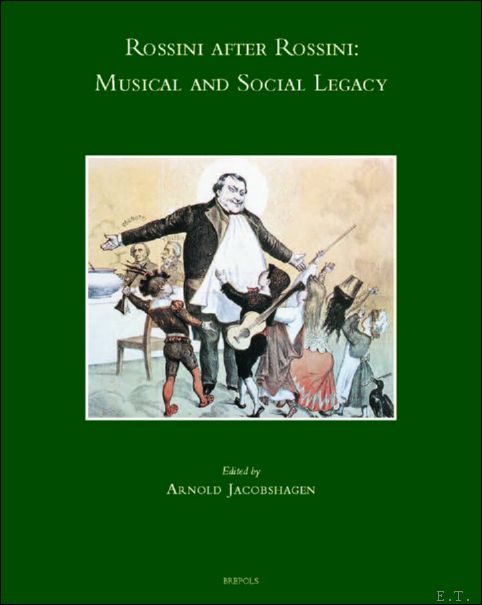
Arnold Jacobshagen (ed)
Rossini after Rossini. Musical and Social Legacy
Brepols, 2020. Hardback, 436 pages, Size:210 x 260 mm, Illustrations:30 b/w, Languages: English, Italian, French. ISBN: 9782503588209
Summary This volume reflects on Gioachino Rossini (1792-1868) and the international reception of his work 150 years after his death. Rossini was the most influential opera composer of the first half of the 19th century. His exceptional position in contemporary cultural life and the international success of his works meant that monuments were erected during his lifetime and biographies, novels and plays about him appeared. The volume explores his literary reception and the dissemination of his operas in the 19th and 20th centuries in various countries, focusing in particular on stylistic and compositional legacy, the theory and practice of operatic singing, treatises and biographical memoires, and Rossini's position in politics, society and public opinion. Translations and adaptations of Rossini's libretti are analyzed with regard to their functions within in the performances in different cultures and languages. Several chapters address the influence of Rossini and his music on other composers such as Giacomo Meyerbeer, Ottorino Respighi and Ferruccio Busoni. The fame that once surrounded Rossini, however, has been lost in the course of time, and many of his works fell into oblivion. The last section of the volume sheds new light on the so-called 'Rossini Renaissance', the revival of his works in the second half of the 20th and the beginning of the 21st centuries. TABLE OF CONTENTS Arnold Jacobshagen, Preface Rossini's literary reception Jehoash Hirshberg, The Appreciation of Rossini: Two Phases Arnold Jacobshagen, Final Curtain: Commemorating Gioachino Rossini Matthieu Cailliez, Ricezione di Rossini nella stampa musicale internazionale tra il 1868 e il 1918 Renato Ricco, «Dominio del genio» versus «agilità dell'estro»: Giuseppe Rovani di fronte a Gioachino Rossini Stéphane Lelièvre, «Rossini» de René Fauchois (1920), ou quand le compositeur monte sur scène Rossini on the International Stage Paolo Fabbri, «Zelmira», un'opera da esportazione? Marco Beghelli, Singing Bodies: The Visual Metamorphosis of Rossini's Arnold from «Canto di grazia» to «Belting» Vesa Kurkela - Markus Mantere, Rossini in the Grand Duchy of Finland: A Review of Public Reception in the 19th Century Agnieszka Muszy?ska-Andrejczyk, Rossini and Poland: Libretto Translations and Presence in Polish Theatres in the Past and Today Vjera Katalinic, Rossini on the Musical Stage in Zagreb (1850-1880): Repertoire and Reception Miguel Angel Ríos Mun?oz, Rossini en español, la transformación de ópera en zarzuela Víctor Sánchez Sánchez, «Resilience» rossiniana nel furore wagneriano a Madrid (1875-1910) Rossinian Influence on Other Musicians Tom Me?barki, Rossini: un (post)moderno? Dal classicismo al neoclassicismo. Il potenziale rossiniano nell'estetica musicale neoclassica: il potenziale neoclassico nell'opera buffa rossiniana Maria Birbili, Rossini in Meyerbeer Federico Gon, «Oh! It's a Great Thing to be Rossini»: Verdi from the «Sinfonia in Do» to «Un giorno di regno» John Lam Chun-fai, «Gamme chinoise» as Rossinian Notion Roberto Scoccimarro, «Hovering Above Profundity with Smiling Lightness»: Lines of Affinity between the Aesthetics of Ferruccio Busoni and the Comic Theatre of Rossini Rossini Renaissance Zoila Martínez Beltrán, «Rossini's Rosina Resists the Test of Time»: A 20th-century Spanish Soprano Generation Focused on «Il barbiere di Siviglia» Olga Jesurum, La riscoperta del «Turco in Italia». Dal Teatro Eliseo al Teatro alla Scala Marco Pollaci, The Revival of Rossini and His Critical Reception in Italy between 1950 and 1960 Reto Müller, «Il viaggio a Reims»: The Cult Opera of the Rossini Renaissance Arnold Jacobshagen, Beyond the Renaissance: Rossini Today
Boeknummer: 65691 | Prijs: EUR 120.00
Arnold Jacobshagen (ed)
Rossini after Rossini. Musical and Social Legacy
Brepols, 2020. Hardback, 436 pages, Size:210 x 260 mm, Illustrations:30 b/w, Languages: English, Italian, French. ISBN: 9782503588209
Summary This volume reflects on Gioachino Rossini (1792-1868) and the international reception of his work 150 years after his death. Rossini was the most influential opera composer of the first half of the 19th century. His exceptional position in contemporary cultural life and the international success of his works meant that monuments were erected during his lifetime and biographies, novels and plays about him appeared. The volume explores his literary reception and the dissemination of his operas in the 19th and 20th centuries in various countries, focusing in particular on stylistic and compositional legacy, the theory and practice of operatic singing, treatises and biographical memoires, and Rossini's position in politics, society and public opinion. Translations and adaptations of Rossini's libretti are analyzed with regard to their functions within in the performances in different cultures and languages. Several chapters address the influence of Rossini and his music on other composers such as Giacomo Meyerbeer, Ottorino Respighi and Ferruccio Busoni. The fame that once surrounded Rossini, however, has been lost in the course of time, and many of his works fell into oblivion. The last section of the volume sheds new light on the so-called 'Rossini Renaissance', the revival of his works in the second half of the 20th and the beginning of the 21st centuries. TABLE OF CONTENTS Arnold Jacobshagen, Preface Rossini's literary reception Jehoash Hirshberg, The Appreciation of Rossini: Two Phases Arnold Jacobshagen, Final Curtain: Commemorating Gioachino Rossini Matthieu Cailliez, Ricezione di Rossini nella stampa musicale internazionale tra il 1868 e il 1918 Renato Ricco, «Dominio del genio» versus «agilità dell'estro»: Giuseppe Rovani di fronte a Gioachino Rossini Stéphane Lelièvre, «Rossini» de René Fauchois (1920), ou quand le compositeur monte sur scène Rossini on the International Stage Paolo Fabbri, «Zelmira», un'opera da esportazione? Marco Beghelli, Singing Bodies: The Visual Metamorphosis of Rossini's Arnold from «Canto di grazia» to «Belting» Vesa Kurkela - Markus Mantere, Rossini in the Grand Duchy of Finland: A Review of Public Reception in the 19th Century Agnieszka Muszy?ska-Andrejczyk, Rossini and Poland: Libretto Translations and Presence in Polish Theatres in the Past and Today Vjera Katalinic, Rossini on the Musical Stage in Zagreb (1850-1880): Repertoire and Reception Miguel Angel Ríos Mun?oz, Rossini en español, la transformación de ópera en zarzuela Víctor Sánchez Sánchez, «Resilience» rossiniana nel furore wagneriano a Madrid (1875-1910) Rossinian Influence on Other Musicians Tom Me?barki, Rossini: un (post)moderno? Dal classicismo al neoclassicismo. Il potenziale rossiniano nell'estetica musicale neoclassica: il potenziale neoclassico nell'opera buffa rossiniana Maria Birbili, Rossini in Meyerbeer Federico Gon, «Oh! It's a Great Thing to be Rossini»: Verdi from the «Sinfonia in Do» to «Un giorno di regno» John Lam Chun-fai, «Gamme chinoise» as Rossinian Notion Roberto Scoccimarro, «Hovering Above Profundity with Smiling Lightness»: Lines of Affinity between the Aesthetics of Ferruccio Busoni and the Comic Theatre of Rossini Rossini Renaissance Zoila Martínez Beltrán, «Rossini's Rosina Resists the Test of Time»: A 20th-century Spanish Soprano Generation Focused on «Il barbiere di Siviglia» Olga Jesurum, La riscoperta del «Turco in Italia». Dal Teatro Eliseo al Teatro alla Scala Marco Pollaci, The Revival of Rossini and His Critical Reception in Italy between 1950 and 1960 Reto Müller, «Il viaggio a Reims»: The Cult Opera of the Rossini Renaissance Arnold Jacobshagen, Beyond the Renaissance: Rossini Today
Boeknummer: 65691 | Prijs: EUR 120.00
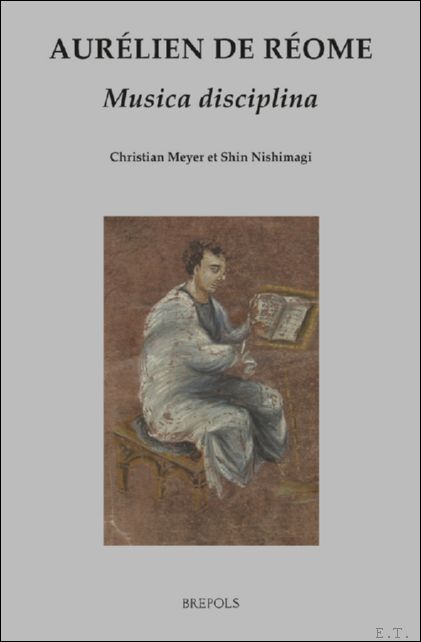
Aurelianus Reomensis, Christian Meyer (ed), Shin Nishimagi (ed)
Aurélien de Réome, Musica disciplina
Brepols, 2021. Paperback, 354 pages, Size:178 x 254 mm, Illustrations:1 col., nombreux exemples musicaux, Language: French. ISBN: 9782503596631
Summary La Musica disciplina d'Aurélien de Réome est le plus ancien traité de musique de l'Occident médiéval. Sa rédaction, vers 849/850, survient au cours des années qui suivent le partage de l'Empire carolingien entre les fils de Louis le Pieux et s'inscrit dans un temps de consolidation de la réforme de la liturgie et du chant romano-franc. Le traité a pour objet principal la description des catégories tonales du chant liturgique de la messe et de l'office, des principes de la psalmodie et surtout de l'articulation des tons, en particulier ceux des versets des répons. Il témoigne enfin d'une réception précoce de la Musique de Boèce. Si le traité semble avoir connu une certaine fortune au cours du dernier tiers du ixe siècle, comme en témoigne le manuscrit de Valenciennes (Valenciennes, Bibl. Mun., Ms. 148), l'évolution de la théorie musicale et des modes de représentation graphique des mélodies autour de 900 par les auteurs de l'Alia musica, de la Musica Enchiriadis, ou par Hucbald de Saint-Amand, enfin l'essor des notations musicales ont progressivement plongé le traité d'Aurélien et ses diverses recensions dans l'oubli. Édition du texte d'après l'ensemble de la tradition manuscrite (Shin Nishimagi). Traduction en français. Introduction et notes critiques et explicatives (Christian Meyer). Index des chants cités. TABLE OF CONTENTS Introduction Sigles et références bibliographiques Conspectus siglorum Table des manuscrits cités Tableaux synoptiques Édition du texte et traduction Notes critiques et explicatives Annexes 1. De octo tonis (Mc2 - Esc RB T W3 W4) 2. Prefatio supra octo tonos (S Q2) 3. Argumentatio de musica (Ces) 4. De tonis (Tr) 5. De nominibus octo tonorum (P11) 6. De revelatione in basilica Albani martyris... (Paris, BnF, Lat. 13757) Index Citations bibliques Chants cités
Boeknummer: 65314 | Prijs: EUR 55.00
Aurelianus Reomensis, Christian Meyer (ed), Shin Nishimagi (ed)
Aurélien de Réome, Musica disciplina
Brepols, 2021. Paperback, 354 pages, Size:178 x 254 mm, Illustrations:1 col., nombreux exemples musicaux, Language: French. ISBN: 9782503596631
Summary La Musica disciplina d'Aurélien de Réome est le plus ancien traité de musique de l'Occident médiéval. Sa rédaction, vers 849/850, survient au cours des années qui suivent le partage de l'Empire carolingien entre les fils de Louis le Pieux et s'inscrit dans un temps de consolidation de la réforme de la liturgie et du chant romano-franc. Le traité a pour objet principal la description des catégories tonales du chant liturgique de la messe et de l'office, des principes de la psalmodie et surtout de l'articulation des tons, en particulier ceux des versets des répons. Il témoigne enfin d'une réception précoce de la Musique de Boèce. Si le traité semble avoir connu une certaine fortune au cours du dernier tiers du ixe siècle, comme en témoigne le manuscrit de Valenciennes (Valenciennes, Bibl. Mun., Ms. 148), l'évolution de la théorie musicale et des modes de représentation graphique des mélodies autour de 900 par les auteurs de l'Alia musica, de la Musica Enchiriadis, ou par Hucbald de Saint-Amand, enfin l'essor des notations musicales ont progressivement plongé le traité d'Aurélien et ses diverses recensions dans l'oubli. Édition du texte d'après l'ensemble de la tradition manuscrite (Shin Nishimagi). Traduction en français. Introduction et notes critiques et explicatives (Christian Meyer). Index des chants cités. TABLE OF CONTENTS Introduction Sigles et références bibliographiques Conspectus siglorum Table des manuscrits cités Tableaux synoptiques Édition du texte et traduction Notes critiques et explicatives Annexes 1. De octo tonis (Mc2 - Esc RB T W3 W4) 2. Prefatio supra octo tonos (S Q2) 3. Argumentatio de musica (Ces) 4. De tonis (Tr) 5. De nominibus octo tonorum (P11) 6. De revelatione in basilica Albani martyris... (Paris, BnF, Lat. 13757) Index Citations bibliques Chants cités
Boeknummer: 65314 | Prijs: EUR 55.00
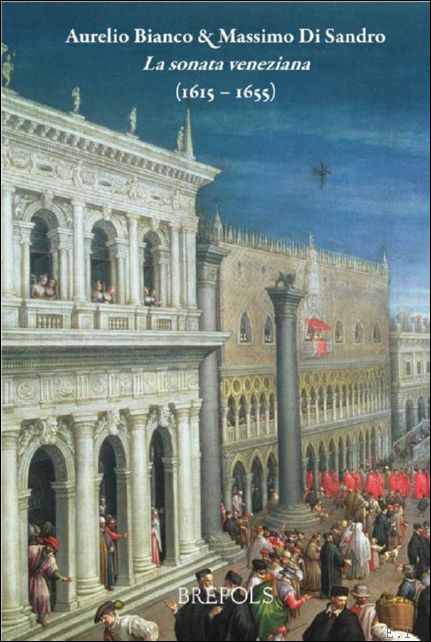
Aurelio Bianco, Massimo Di Sandro
La sonata veneziana (1615-1655)
Brepols, 2020. Paperback, 295 pages, Size:178 x 254 mm, Illustrations:8 b/w, 16 musical examples, Language: Italian. ISBN: 9782503590332
Summary Il volume si propone di ripercorrere lo sviluppo della sonata nel contesto musicale veneziano di primo Seicento. Con un profilo agile ma allo stesso tempo il più esauriente possibile, vengono presi in esame i massimi rappresentanti della floridissima tradizione strumentale veneziana intesa qui nella sua accezione più larga. L'indagine viene infatti compiuta non solo sugli autori strettamente attivi in Laguna (Biagio Marini, Dario Castello, Giovanni Rovetta, Massimiliano Neri, Francesco Cavalli) ma anche su quelli operanti in altri centri della Serenissima (Giovanni Battista Fontana, Francesco Turini, Gaspare Filippi) o inseriti nel venezianissimo milieu musicale viennese del tempo (Giovanni Valentini, Giovanni Giacomo Arrigoni, Antonio Bertali). Una particolare attenzione è accordata ai sopracitati Fontana, Marini e Castello. La loro produzione sonatistica incarna infatti in maniera esemplare non solo l'eredità lasciata da Giovanni Gabrieli ma anche un nuovo modo di intendere lo strumentista-compositore. Il libro è arricchito da un'antologia ragionata dei brani trattati nel saggio nonché da un'ampia e aggiornata bibliografia. TABLE OF CONTENTS Introduzione 1. Agli albori della sonata concertata - Tra storia e storiografia - Scuole regionali - Mantova - Venezia - Brescia 2. L'ombra di Gabrieli - Sonata e canzona - Nuovi idiomi strumentali 3. Forma e discorso nelle sonate di Marini, Castello e Fontana - L'unità della forma: principio, mezzo e fine - Le prime raccolte di Biagio Marini: Op. I (1617) e Op. II (1618) - L'Op. VIII di Biagio Marini (1629) - Il primo libro di Dario Castello (1621) - Il secondo libro di Dario Castello (1629) - La raccolta postuma di Giovanni Battista Fontana (1641) 4. Continuatori ed epigoni - Un panorama musicale in trasformazione - Giovanni Rovetta - Giuseppe Scarani - Francesco Turini - Massimiliano Neri - Gaspare Filippi - Francesco Cavalli - Tra Venezia e Vienna - Giovanni Valentini - Marco Antonio Ferro - Giovanni Giacomo Arrigoni e Giovanni Antonio Bertoli - Antonio Bertali - Fine di un ciclo: l'ultimo Marini 5. Antologia musicale - Giovanni Paolo Cima: Sonata a tre (1610) - Giovanni Paolo Cima: Beata es Virgo Maria (1610) - Salomone Rossi: Sinfonia quarta (1613) - Salomone Rossi: Sonata prima La Moderna (1613) - Gabriele Usper (Sponga): Sinfonia (1614) - Biagio Marini: Sonata a tre con il tremolo La Foscarina (1617) - Biagio Marini: Sonata a tre La Aguzzona (1617) - Biagio Marini: Sinfonia a due La Malipiera (1618) - Dario Castello: Sonata undicesima a tre (1621) - Giovanni Rovetta: Canzon seconda a tre (1626) - Biagio Marini: Sonata quarta a due (1629) - Dario Castello: Sonata quattordicesima a quattro (1629) - Giovanni Battista Fontana: Sonata undicesima a due (1641) - Massimiliano Neri: Sonata prima a tre (1651) - Biagio Marini: Sonata a due (1655) - Francesco Cavalli: Canzon a tre (1656) 6. Bibliografia - Fonti - Letteratura 7. Indice dei nomi
Boeknummer: 65521 | Prijs: EUR 60.00
Aurelio Bianco, Massimo Di Sandro
La sonata veneziana (1615-1655)
Brepols, 2020. Paperback, 295 pages, Size:178 x 254 mm, Illustrations:8 b/w, 16 musical examples, Language: Italian. ISBN: 9782503590332
Summary Il volume si propone di ripercorrere lo sviluppo della sonata nel contesto musicale veneziano di primo Seicento. Con un profilo agile ma allo stesso tempo il più esauriente possibile, vengono presi in esame i massimi rappresentanti della floridissima tradizione strumentale veneziana intesa qui nella sua accezione più larga. L'indagine viene infatti compiuta non solo sugli autori strettamente attivi in Laguna (Biagio Marini, Dario Castello, Giovanni Rovetta, Massimiliano Neri, Francesco Cavalli) ma anche su quelli operanti in altri centri della Serenissima (Giovanni Battista Fontana, Francesco Turini, Gaspare Filippi) o inseriti nel venezianissimo milieu musicale viennese del tempo (Giovanni Valentini, Giovanni Giacomo Arrigoni, Antonio Bertali). Una particolare attenzione è accordata ai sopracitati Fontana, Marini e Castello. La loro produzione sonatistica incarna infatti in maniera esemplare non solo l'eredità lasciata da Giovanni Gabrieli ma anche un nuovo modo di intendere lo strumentista-compositore. Il libro è arricchito da un'antologia ragionata dei brani trattati nel saggio nonché da un'ampia e aggiornata bibliografia. TABLE OF CONTENTS Introduzione 1. Agli albori della sonata concertata - Tra storia e storiografia - Scuole regionali - Mantova - Venezia - Brescia 2. L'ombra di Gabrieli - Sonata e canzona - Nuovi idiomi strumentali 3. Forma e discorso nelle sonate di Marini, Castello e Fontana - L'unità della forma: principio, mezzo e fine - Le prime raccolte di Biagio Marini: Op. I (1617) e Op. II (1618) - L'Op. VIII di Biagio Marini (1629) - Il primo libro di Dario Castello (1621) - Il secondo libro di Dario Castello (1629) - La raccolta postuma di Giovanni Battista Fontana (1641) 4. Continuatori ed epigoni - Un panorama musicale in trasformazione - Giovanni Rovetta - Giuseppe Scarani - Francesco Turini - Massimiliano Neri - Gaspare Filippi - Francesco Cavalli - Tra Venezia e Vienna - Giovanni Valentini - Marco Antonio Ferro - Giovanni Giacomo Arrigoni e Giovanni Antonio Bertoli - Antonio Bertali - Fine di un ciclo: l'ultimo Marini 5. Antologia musicale - Giovanni Paolo Cima: Sonata a tre (1610) - Giovanni Paolo Cima: Beata es Virgo Maria (1610) - Salomone Rossi: Sinfonia quarta (1613) - Salomone Rossi: Sonata prima La Moderna (1613) - Gabriele Usper (Sponga): Sinfonia (1614) - Biagio Marini: Sonata a tre con il tremolo La Foscarina (1617) - Biagio Marini: Sonata a tre La Aguzzona (1617) - Biagio Marini: Sinfonia a due La Malipiera (1618) - Dario Castello: Sonata undicesima a tre (1621) - Giovanni Rovetta: Canzon seconda a tre (1626) - Biagio Marini: Sonata quarta a due (1629) - Dario Castello: Sonata quattordicesima a quattro (1629) - Giovanni Battista Fontana: Sonata undicesima a due (1641) - Massimiliano Neri: Sonata prima a tre (1651) - Biagio Marini: Sonata a due (1655) - Francesco Cavalli: Canzon a tre (1656) 6. Bibliografia - Fonti - Letteratura 7. Indice dei nomi
Boeknummer: 65521 | Prijs: EUR 60.00
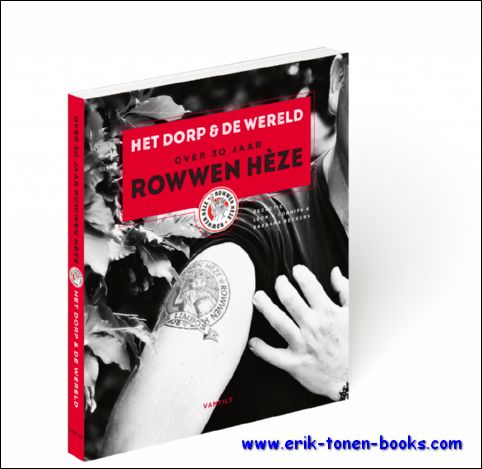
Auteur(s): Leonie Cornips, Barbara Beckers (red.)
Het dorp en de wereld Over dertig jaar Rowwen Heze - Rowwen Heze 30 joar.
vantilt uitgeverij, 2015. paperback, 19 x 22,5 cm, geillustreerd in kleur, 264 pagina?s, nieuw !. ISBN: 9789460042027
Vanaf 22 mei 2015 is in het Limburgs Museum in Venlo een tentoonstelling te zien over dertig jaar Rowwen Heze. In Rowwen Heze 30 joar wordt de bezoeker chronologisch en thematisch door de geschiedenis van de band gevoerd. Als op een festivalterrein lopen bezoekers van het ene naar de andere paviljoentent, waarbij in een theater doorlopend videoclips en concertregistraties te zien zijn. Dankzij bijzondere objecten en zeldzaam beeldmateriaal is de expositie een feest van herkenning en een must-see voor fans. Voor liefhebbers van (pop)muziek toont de expositie welke plek Rowwen Heze inneemt in de Limburgse en nationale cultuurgeschiedenis. Bezoekers zien hoe de opkomst en doorbraak van de band zijn beinvloed door maatschappelijke fenomenen als streektaal, identiteit, en regionalisme versus globalisering.
Boeknummer: 47129 | Prijs: EUR 19.95
B. Haggh (ed.);
Essays on Music and Culture in Honor of Herbert Kellman,
Turnhout, Brepols, 2001. Paperback, 578 p., 170 x 245 mm. ISBN: 9782869310971
Language : English.
Boeknummer: 38101 | Prijs: EUR 121.00
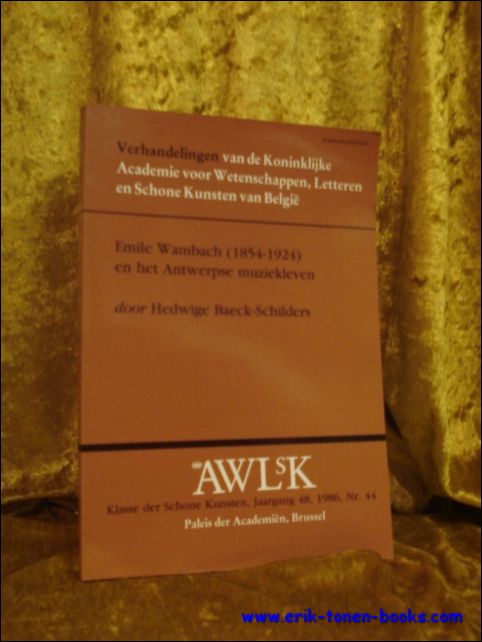
BAECK - SCHILDERS, Hedwige;
EMILE WAMBACH (1854 - 1924 ) EN HET ANTWERPSE MUZIEKLEVEN,
Brussel, Paleis der Academien, 1986. softcover originele uitgeversomslag, 26x18cm, 156pp. ISBN: 9065693769
Verhandelingen van de Koninklijke Vlaamse Academie voor Wetenschappen, Letteren en Schone Kunsten. Klasse der Schone Kunsten, Jaargang 48 Nr 44. In perfecte staat.
Boeknummer: 2668 | Prijs: EUR 18.00
Barbara Haggh
Essays on Music and Culture in Honor of Herbert Kellman
Turnhout, Brepols, 2001. Softcover, 578 pages, 170 x 244 mm, english text. *Fine copy. ISBN: 9782869310971
Figure marquante de la musicologie de la Renaissance, Herbert Kellman est principalement connu pour ses travaux sur le 'Codex Chigi' et pour son édition du Census Catalogue of Manuscript Sources of Polyphonic Music, 1400-1550. Il enseigne l'Histoire de la musique à l'Université d'Illinois, Urbana-Champaign (USA), de 1966 à 2000. Ce livre est un hommage rendu au professeur, au collègue par ses étudiants et amis à l'occasion de son soixante-dixième anniversaire. Contributions de: Alma Colk Santosuosso, Elizabeth Aubrey, Barbara Haggh, Richard Wexler, Edward F. Houghton, Bruno Bouckaert, Eugeen Schreurs, Bonnie J. Blackburn, Lewis L. Lockwood, William F. Prizer, Roberta Freund Schwartz, Jeremy Noble, Richard Sherr, David Fallows, Stefano Mengozzi, Honey Meconi, Craig J. Westendorf, Jessie Ann Owens, Stacey Jocoy, Jennifer Thomas, Mary Tiffany Ferer, Jeffrey Kurtzman, Jonathan Glixon, Darrell M. Berg, Rita Steblin, Alice Hanson, Judith Radell, H. Colin Slim, Allan W. Atlas, Ted Solis et Marcello Sorce-Keller.
Boeknummer: 67236 | Prijs: EUR 100.00
Barbara Haggh
Essays on Music and Culture in Honor of Herbert Kellman
Turnhout, Brepols, 2001. Softcover, 578 pages, 170 x 244 mm, english text. *Fine copy. ISBN: 9782869310971
Figure marquante de la musicologie de la Renaissance, Herbert Kellman est principalement connu pour ses travaux sur le 'Codex Chigi' et pour son édition du Census Catalogue of Manuscript Sources of Polyphonic Music, 1400-1550. Il enseigne l'Histoire de la musique à l'Université d'Illinois, Urbana-Champaign (USA), de 1966 à 2000. Ce livre est un hommage rendu au professeur, au collègue par ses étudiants et amis à l'occasion de son soixante-dixième anniversaire. Contributions de: Alma Colk Santosuosso, Elizabeth Aubrey, Barbara Haggh, Richard Wexler, Edward F. Houghton, Bruno Bouckaert, Eugeen Schreurs, Bonnie J. Blackburn, Lewis L. Lockwood, William F. Prizer, Roberta Freund Schwartz, Jeremy Noble, Richard Sherr, David Fallows, Stefano Mengozzi, Honey Meconi, Craig J. Westendorf, Jessie Ann Owens, Stacey Jocoy, Jennifer Thomas, Mary Tiffany Ferer, Jeffrey Kurtzman, Jonathan Glixon, Darrell M. Berg, Rita Steblin, Alice Hanson, Judith Radell, H. Colin Slim, Allan W. Atlas, Ted Solis et Marcello Sorce-Keller.
Boeknummer: 67236 | Prijs: EUR 100.00
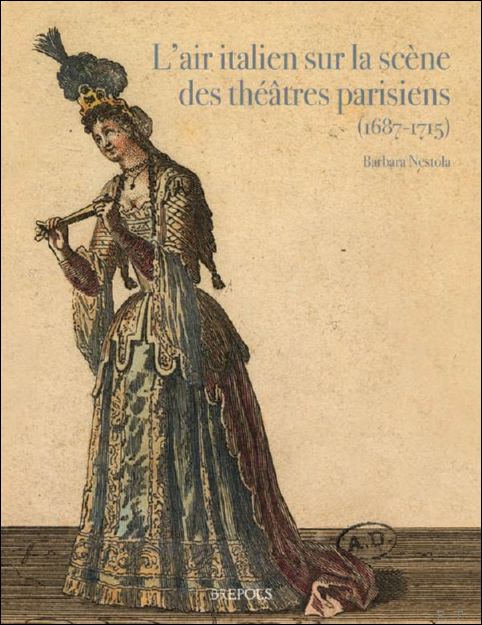
Barbara Nestola
L'air italien sur la scène des théâtres parisiens (1687-1715)
Brepols, 2021. Paperback, 484 pages, Size:216 x 280 mm, Illustrations:7 col., 24 tables b/w., 26 musical examples, Language: French. ISBN: 9782503583631
Summary Au cours du XVIIe et du XVIIIe siècle, l'opéra italien a voyagé partout en Europe, du Portugal jusqu'à la lointaine Russie, son acclimatation passant par un renouveau des pratiques théâtrales préexistantes. Dans un espace européen qui chantait en italien, la France a été considérée comme un cas d'exception. Le mythe d'un Lully créateur de la tragédie lyrique, redoublant ses efforts pour conjurer la réception de l'opéra italien, a longtemps habité les récits des livres d'histoire. Effectivement, l'opéra italien en tant que macrostructure n'a pas existé sur la scène française entre la fin du XVIIe siècle et le milieu du XVIIIe siècle. En revanche, peut-on affirmer la même chose de l'une de ses composantes majeures, l'air ? Par l'étude de la circulation de l'air italien, de son appropriation par les interprètes professionnels français et de sa pratique dans les théâtres parisiens entre 1687 et 1715, cet ouvrage se propose d'approfondir la connaissance du phénomène, lui rendant une visibilité dans le contexte de l'italianisme musical de la fin de règne de Louis XIV. TABLE OF CONTENTS Introduction PREMIÈRE PARTIE : OBJETS I. De Versailles à Paris : l'émergence des milieux musicaux italianisants II. L'air italien en France à la fin du XVIIe siècle III. Le répertoire et sa transmission IV. Recueils, séries et collections : la logique de l'ordonnancement SECONDE PARTIE : PRATIQUES V. Perméabilité des mondes théâtraux VI. La Comédie-Italienne VII. La Comédie-Française VIII. L'Académie royale de musique IX. Les airs italiens composés à Paris : textes, musique, effectifs X. Les interprètes français des airs italiens et leurs carrières Conclusion Annexes CATALOGUE Introduction Sigles des bibliothèques Recueils OEuvres Table des compositeurs Bibliographie Table des illustrations Index des noms Index des oeuvres théâtrales citées Index des airs, cantates et ensembles cités
Boeknummer: 65499 | Prijs: EUR 75.00
Barbara Nestola
L'air italien sur la scène des théâtres parisiens (1687-1715)
Brepols, 2021. Paperback, 484 pages, Size:216 x 280 mm, Illustrations:7 col., 24 tables b/w., 26 musical examples, Language: French. ISBN: 9782503583631
Summary Au cours du XVIIe et du XVIIIe siècle, l'opéra italien a voyagé partout en Europe, du Portugal jusqu'à la lointaine Russie, son acclimatation passant par un renouveau des pratiques théâtrales préexistantes. Dans un espace européen qui chantait en italien, la France a été considérée comme un cas d'exception. Le mythe d'un Lully créateur de la tragédie lyrique, redoublant ses efforts pour conjurer la réception de l'opéra italien, a longtemps habité les récits des livres d'histoire. Effectivement, l'opéra italien en tant que macrostructure n'a pas existé sur la scène française entre la fin du XVIIe siècle et le milieu du XVIIIe siècle. En revanche, peut-on affirmer la même chose de l'une de ses composantes majeures, l'air ? Par l'étude de la circulation de l'air italien, de son appropriation par les interprètes professionnels français et de sa pratique dans les théâtres parisiens entre 1687 et 1715, cet ouvrage se propose d'approfondir la connaissance du phénomène, lui rendant une visibilité dans le contexte de l'italianisme musical de la fin de règne de Louis XIV. TABLE OF CONTENTS Introduction PREMIÈRE PARTIE : OBJETS I. De Versailles à Paris : l'émergence des milieux musicaux italianisants II. L'air italien en France à la fin du XVIIe siècle III. Le répertoire et sa transmission IV. Recueils, séries et collections : la logique de l'ordonnancement SECONDE PARTIE : PRATIQUES V. Perméabilité des mondes théâtraux VI. La Comédie-Italienne VII. La Comédie-Française VIII. L'Académie royale de musique IX. Les airs italiens composés à Paris : textes, musique, effectifs X. Les interprètes français des airs italiens et leurs carrières Conclusion Annexes CATALOGUE Introduction Sigles des bibliothèques Recueils OEuvres Table des compositeurs Bibliographie Table des illustrations Index des noms Index des oeuvres théâtrales citées Index des airs, cantates et ensembles cités
Boeknummer: 65499 | Prijs: EUR 75.00