




Kunst wetenschappen
357 boeken gevonden



--
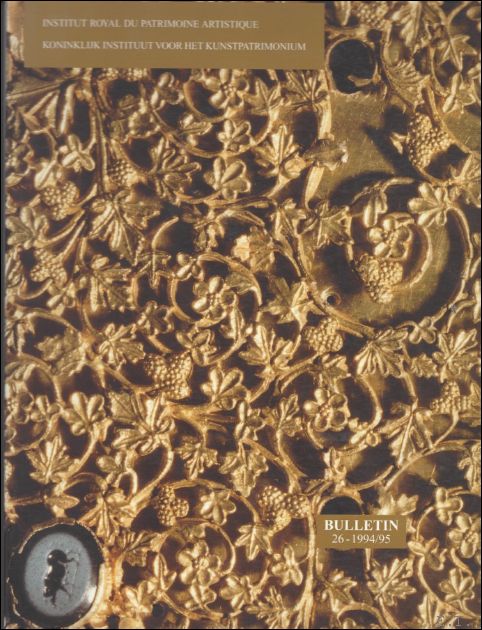
Bulletin van het Koninklijk Instituut voor het Kunstpatrimonium 26: 1994/1995 / Le Bulletin de l'Institut royal du Patrimoine artistique
1994/1995. softcover, 253 pages NL/FR.
Boeknummer: 50911 | Prijs: EUR 25.00
--
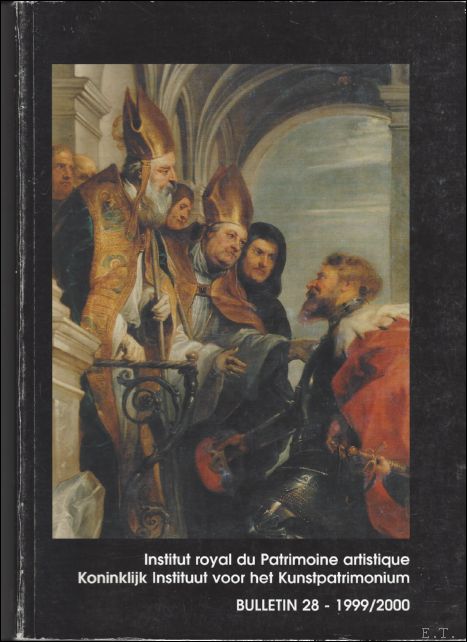
BULLETIN. KONINKLIJK INSTITUUT VOOR HET KUNSTPATRIMONIUM/ INSTITUT ROYAL DU PATRIMOINE ARISTIQUE. 28 / 1999/2000
2002. softcover, 299 pages illustre.
Bulletin 28 - 1999/2000 L. Masschelein-Kleiner, Editorial / Ten geleide 5 R. Donceel, L. Wouters, A. Aerts, K. Janssens, F. Adams, Ch. Fontaine-Hodiamont, Antique Glass from Khirbet Qumran. Archaeological Context and Chemical Determination 9 D. De Jonghe, Merkwaardig Textiel : de pontifikaalhandschoenen van de H. Germanus van Parijs en een linnen fragment met griffioenen : een technologisch onderzoek / Des tissus remarquables : les gants pontificaux de saint Germain de Paris et un fragment de toile de lin decore de griffons : etude technologique 41 D. Otjacques-Dustin, L. Reper (?), J. Sanyova, M. Serck-Dewaide, La Vierge a l'Enfant de la basilique Notre-Dame de Tongres / Madonna met Kind van de Onze-Lieve-Vrouwbasiliek van Tongeren 63 I. Leirens, B. Reynders, Les sculptures du portail occidental de la collegiale des Saints-Pierre-et-Guidon d'Anderlecht. Apport de l'etude technique et materielle / De beelden van het westelijke portaal van de collegiale Sint-Pieter- en Guidokerk van Anderlecht. Bijdrage van het materieel en technisch onderzoek 85 J. Jansen, Maarten Van Calster "beldesnyder tot Mechelen" (?° ca.1574 - ? 1628) / Maarten Van Calster, tailleur d'images de Malines (?° ca.1574 - ? 1628) 97 De Bekering van Sint-Bavo door Pieter Paul Rubens. Studie, onderzoek en behandeling / La Conversion de saint Bavon de Pierre-Paul Rubens. Etude, examen et traitement 123 L. Robijns, Kunsthistorische beschouwingen / Le point de vue de l'histoire de l'art 123 L. Collin, De lotgevallen van het schilderij tot vandaag / Les tribulations du tableau jusqu'a nos jours 141 D. Verloo, Traitement de l'?uvre et technique picturale / Behandeling van het werk en picturale techniek 162 J. Wouters, Laboratoriumanalysen van bindmiddelen / Les liants au laboratoire 183 H. Coenen, Henri Evenepoel en het Belgisch orientalisme van de 19de eeuw / Henri Evenepoel et l'orientalisme belge du XIXe siecle 191 Recherches de laboratoire / Laboratoriumonderzoeken J. Vynckier, Dendrochronologisch onderzoek van enkele panelen uit van Eyck's retabel van het Lam Gods / Analyse dendrochronologique de quelques panneaux du retable de l'Agneau mystique de Van Eyck 237 Selection des activites recentes / Selectie uit recente werkzaamheden I. Geelen et W. Wailliez, Ensemble sculpte et Apotres du triforium, vers 1400-1409, Hal, ch?ur de l'eglise Saint-Martin / Triforiumensemble met apostelbeelden, ca. 1400-1409, Halle, koor van de Sint-Martinuskerk 243 L. Depuydt-Elbaum, R. Ghys, Antoine Van Dyck (1599-1641), Golgotha, 1630, Gand, eglise Saint-Michel / Antoon Van Dyck (1599-1641), Golgotha, 1630, Gent, Sint-Michielskerk 251 G. Dewanckel, Chef reliquaire et chasse de saint Vincent, XIIIe, XVIIIe, XIXe siecles, Soignies, collegiale Saint-Vincent / Reliekhoofd en schrijn van Sint-Vincentius, 13de, 18de, 19de eeuw, Zinnik, collegiale Sint-Vincentius. 255 K. Housiaux, Tunique copte en lin ecru, Egypte (Akhmim), Ve-VIe siecle, Bruxelles, Musees royaux d'Art et d'Histoire / Koptische tuniek in ecru linnen, Egypte (Akhmim), 5de-6de eeuw, Brussel, Koninklijke Musea voor Kunst en Geschiedenis 259 V. Vereecken, Antependium " Abraham ", 17de eeuw, Antwerpen, Sint-Carolus Borromeuskerk / Antependium " Abraham ", XVIIe s., Anvers, eglise Saint-Charles-Borromee 263 Ch. Fontaine-Hodiamont, H. Wouters, Ensemble de sept verres gallo-romains provenant de tombes diverses, Liege, Musee d'Archeologie et d'Arts decoratifs (Musee Curtius) / Ensemble van zeven gallo-romeinse glazen uit verschillende graven, Luik, Musee d'Archeologie et d'Arts decoratifs (Musee Curtius) 267 Ch. Fontaine-Hodiamont, Calice elance a tige creuse, fin du XIVe -debut du XVe siecle, Liege, Musee d'Art religieux et d'Art mosan / Slanke kelk met hol voetstuk, einde 14de-begin 15de eeuw, Luik, Musee d'Art religieux et d'Art mosan 273 Ch. Fontaine-Hodiamont, Blason en vitrail aux armes de Bourgogne, dernier tiers du XIVe - premier tiers du XVe siecle (blason) et troisieme quart du XVIe siecle (plombs), Coxyde, Musee de l'abbaye des Dunes / Wapenschild in glasraam met de wapens van Bourgondie, laatste derde van de 14de - eerste derde van de 15de eeuw (blazoen) en midden 16de eeuw (lood), Koksijde, Museum van de Duinenabdij 277 Ch. Fontaine-Hodiamont, Masque precolombien mixteque, postclassique recent, 1200-1521, Bruxelles, Musees royaux d'Art et d'Histoire / Pre-Columbiaans masker, Mixteekse cultuur, recente postklassieke periode, 1200-1521, Brussel, Koninklijke Musea voor Kunst en Geschiedenis 285 Bibliographie du personnel et des collaborateurs de l'Institut 1999/ 2000 - Bibliografie van het personeel en van de medewerkers van het Instituut 1999/2000 291
Boeknummer: 50913 | Prijs: EUR 25.00
--
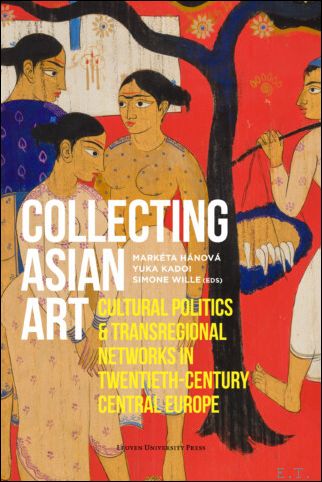
Collecting Asian Art. Cultural Politics and Transregional Networks in Twentieth-Century Central Europe
Leuven, UPL - KU Leuven, 2024. Paperback, 272 pages, 234 x 156 x 13 mm,Illustrations and other content description: 32 pp. in colour. English text. ISBN: 9789462703780
Museum collections of Asian art in Central Europe. Rather than centering on the well-known collections in Western European and North American museums, Collecting Asian Art turns to museum collections of Asian art in Central Europe which emerged from the late 19th century onwards. Highlighting the dimensions of Central European connectedness, this volume explores how these collections evolved and changed under changing cultural and political conditions from the pre-World War I to the post-World War II periods. With a primary focus on collections of East Asian, South Asian, and West Asian art in Vienna, Prague, Berlin, Warsaw, Kraków, Budapest, and Ljubljana, it outlines the transregional connections and networks that gradually developed. Collecting Asian Art locates Asian art across the twentieth-century in Central Europe via discourse and ideology, and discusses key collections and the way individual collectors built their networks. It thus explores transregional connections that developed through collecting activities and strategies in the prewar, interwar and postwar eras. Contributors also examine the personal connections between a group of Indologists from postwar Prague and modernist Indian artists from the early 1950s to the 1980s and also discuss the systematic archiving of East Asian art collections in Slovenia. A concluding conversation looks at colonisation and decolonisation from a broader perspective by approaching it through recent art historical discussions on the global dimensions of modernism. By defining the region through its external relationships and its entanglements with regions across Asia rather than as a self-contained unit, the contributions in this volume outline how these transregional connections and networks evolved and changed over time, thus highlighting their singularity in comparison to developments in Western Europe. Based on recent research, Collecting Asian Art reveals neglected sources while reinterpreting well-known ones. Contributors: Zdenka Klimtová (National Gallery in Prague); Agnieszka Kluczewska-Wójcik (Polish Institute of World Art Studies); Partha Mitter (University of Sussex); Michaela Pej?ochová (National Gallery in Prague); Uta Rahman Steinert (Staatliche Museen zu Berlin); Iván Szántó (Eötvös Loránd University); Nata?a Vampelj Suhadolnik (University of Ljubljana); Johannes Wieninger (MAK ? Museum of Applied Arts); Tomá? Winter (Czech Academy of Sciences).
Boeknummer: 63934 | Prijs: EUR 59.75
--
Collecting Asian Art. Cultural Politics and Transregional Networks in Twentieth-Century Central Europe
Leuven, UPL - KU Leuven, 2024. Paperback, 272 pages, 234 x 156 x 13 mm,Illustrations and other content description: 32 pp. in colour. English text. ISBN: 9789462703780
Museum collections of Asian art in Central Europe. Rather than centering on the well-known collections in Western European and North American museums, Collecting Asian Art turns to museum collections of Asian art in Central Europe which emerged from the late 19th century onwards. Highlighting the dimensions of Central European connectedness, this volume explores how these collections evolved and changed under changing cultural and political conditions from the pre-World War I to the post-World War II periods. With a primary focus on collections of East Asian, South Asian, and West Asian art in Vienna, Prague, Berlin, Warsaw, Kraków, Budapest, and Ljubljana, it outlines the transregional connections and networks that gradually developed. Collecting Asian Art locates Asian art across the twentieth-century in Central Europe via discourse and ideology, and discusses key collections and the way individual collectors built their networks. It thus explores transregional connections that developed through collecting activities and strategies in the prewar, interwar and postwar eras. Contributors also examine the personal connections between a group of Indologists from postwar Prague and modernist Indian artists from the early 1950s to the 1980s and also discuss the systematic archiving of East Asian art collections in Slovenia. A concluding conversation looks at colonisation and decolonisation from a broader perspective by approaching it through recent art historical discussions on the global dimensions of modernism. By defining the region through its external relationships and its entanglements with regions across Asia rather than as a self-contained unit, the contributions in this volume outline how these transregional connections and networks evolved and changed over time, thus highlighting their singularity in comparison to developments in Western Europe. Based on recent research, Collecting Asian Art reveals neglected sources while reinterpreting well-known ones. Contributors: Zdenka Klimtová (National Gallery in Prague); Agnieszka Kluczewska-Wójcik (Polish Institute of World Art Studies); Partha Mitter (University of Sussex); Michaela Pej?ochová (National Gallery in Prague); Uta Rahman Steinert (Staatliche Museen zu Berlin); Iván Szántó (Eötvös Loránd University); Nata?a Vampelj Suhadolnik (University of Ljubljana); Johannes Wieninger (MAK ? Museum of Applied Arts); Tomá? Winter (Czech Academy of Sciences).
Boeknummer: 63934 | Prijs: EUR 59.75
A. Massing;
Painting Restoration Before the Restauration. The Origins of the Profession in France,
Turnhout, Brepols, 2012. Hardback, 320 p., 204 b/w ill., 240 x 280 mm. ISBN: 9781905375349
The art of painting restoration is almost as old as the art of painting itself. Accidents and time inevitably alter the appearance of a painting, and these changes begin as soon as it leaves the artist's easel. Purposeful alterations due to changes in taste have also contributed to transformations that paintings often underwent. Clearly the type of restoration procedures considered ethically acceptable have changed over the centuries. From the Renaissance until the end of the nineteenth century, European paintings were considered as two-dimensional illusions of a three-dimensional space, and any disruption to this illusion was considered as damage requiring repair. There was no acknowledgement of painting supports as an integral part of a picture; only the paint layer and the subject represented were appreciated. As a result, panels were often thinned and cradled in order to flatten the painted surface so that the image depicted could be viewed with less distraction. Supports were even considered replaceable. Total transfer of a painted surface onto a new surface was an acceptable procedure in the eighteenth century - even until the mid-twentieth century. Invisible retouching was used with the intent of returning the illusion of the painted surface to its 'original state'; the history of the work was not important. Until recent times, it was even acceptable to alter the format of a work of art to fit a frame or a space on the wall. Traditionally, if a painting was accidentally damaged or if 'adjustment' were required, a painter was entrusted with this task. In the past, the professions of painter and painting restorer overlapped, and both were trained as apprentices. Gradually the professional painting restorer appeared in Europe, and by the mid-eighteenth century, the profession was established. Earlier examples of professional restorers, especially in Italy, have been recorded while in other European countries, such as Britain, the career of the professional painting restorer began much later. During the later part of the eighteenth century in France, the painting restorers of the French Royal Collection became celebrated throughout Europe for their achievements. The political situation had an important influence on the development of the profession in France. The reigns of Francois I (1515-47), Louis XIV (1643-1715), Louis XVI (1774-93), and then the coup d'etat by Napoleon Bonaparte and the First Napoleonic Empire (1804-14) led to an increasing centralisation of the French Empire. The arts were meant to reflect the power of the state; thus Louis XIV and his political advisor and Surintendent from 1661 to 1685, Jean-Baptiste Colbert (1619-83), became the patrons of the French Academie de Peinture et Sculpture founded in 1648. A revision of the Academy's statutes in 1665 required students to submit annually drawings that focused on the heroic actions of the king. Paintings conferred status on their owner - in this instance the king and the French nation. It then became a necessity to have the paintings on display looking their best, and the skill of the French painting restorers was even used as a justification for Napoleon's policy of confiscation of works of art from all over Europe. The relationship between the French government's administration, firstly under the Ancien Regime, then under the new Republic, and the painting restorers they employed and supervised is related in this book. The manner in which changes occurred involves colourful personalities whose stories are often amusing and sometimes poignant, but above all they help us to understand the present-day situation. For during the turbulent years of the French Revolution new patterns emerged, which to a large extent remained in place in France for over two centuries. New book.
Boeknummer: 32442 | Prijs: EUR 137.00
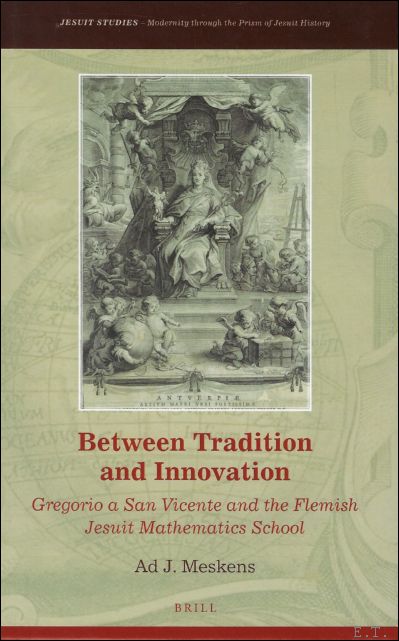
Ad J. Meskens
Between Tradition and Innovation
Gregorio a San Vicente and the Flemish Jesuit Mathematics School
Brill, 2021. Hardcover, 294 pages Illustrated. ISBN: 9789004414990
In Between Tradition and Innovation, Ad Meskens traces the profound influence of a group of Flemish Jesuits on the course of mathematics in the seventeenth century. Using manuscript evidence, this book argues that one of the Flemish mathematics school?s professors, Gregorio a San Vicente (1584?1667), had developed a logically sound integration method more than a decade before the Italian mathematician Bonaventura Cavalieri. Although San Vincente?s superiors refused to grant him permission to publish his results, his methods went on to influence numerous other mathematicians through his students, many of whom became famous mathematicians in their own right. By carefully tracing their careers and outlining their biographies, Meskens convincingly shows that they made a number of ground-breaking contributions to fields ranging from mathematics and mechanics to optics and architecture.
Boeknummer: 61994 | Prijs: EUR 149.90
Ad J. Meskens
Between Tradition and Innovation
Gregorio a San Vicente and the Flemish Jesuit Mathematics School
Brill, 2021. Hardcover, 294 pages Illustrated. ISBN: 9789004414990
In Between Tradition and Innovation, Ad Meskens traces the profound influence of a group of Flemish Jesuits on the course of mathematics in the seventeenth century. Using manuscript evidence, this book argues that one of the Flemish mathematics school?s professors, Gregorio a San Vicente (1584?1667), had developed a logically sound integration method more than a decade before the Italian mathematician Bonaventura Cavalieri. Although San Vincente?s superiors refused to grant him permission to publish his results, his methods went on to influence numerous other mathematicians through his students, many of whom became famous mathematicians in their own right. By carefully tracing their careers and outlining their biographies, Meskens convincingly shows that they made a number of ground-breaking contributions to fields ranging from mathematics and mechanics to optics and architecture.
Boeknummer: 61994 | Prijs: EUR 149.90
Albert Roskam
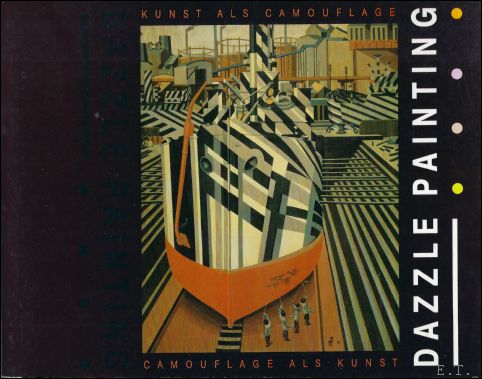
Dazzle painting: kunst als camouflage, camouflage als kunst.
Rotterdam, Kunstprojecten, 1987. softcover, 80 pagina's, met illustraties, goed exemplaar. ISBN: 9071893022
Camouflage is in de Eerste Wereldoorlog voor het eerst systematisch toegepast. Het beschilderen van schepen met grillige patronen en kleuren - Dazzle Painting - had als doel de periscoopwaarneming te bemoeilijken door verwarring te stichten omtrent afstand, koers en snelheid van het waargenomen schip. Behandeld wordt ook de relatie tussen de Dazzle-ontwerpen, de Vorticisten, het Britse Cubisme en de Futuristen.
Boeknummer: 58132 | Prijs: EUR 95.00
Albert Roskam
Dazzle painting: kunst als camouflage, camouflage als kunst.
Rotterdam, Kunstprojecten, 1987. softcover, 80 pagina's, met illustraties, goed exemplaar. ISBN: 9071893022
Camouflage is in de Eerste Wereldoorlog voor het eerst systematisch toegepast. Het beschilderen van schepen met grillige patronen en kleuren - Dazzle Painting - had als doel de periscoopwaarneming te bemoeilijken door verwarring te stichten omtrent afstand, koers en snelheid van het waargenomen schip. Behandeld wordt ook de relatie tussen de Dazzle-ontwerpen, de Vorticisten, het Britse Cubisme en de Futuristen.
Boeknummer: 58132 | Prijs: EUR 95.00
Alexandra Hoare
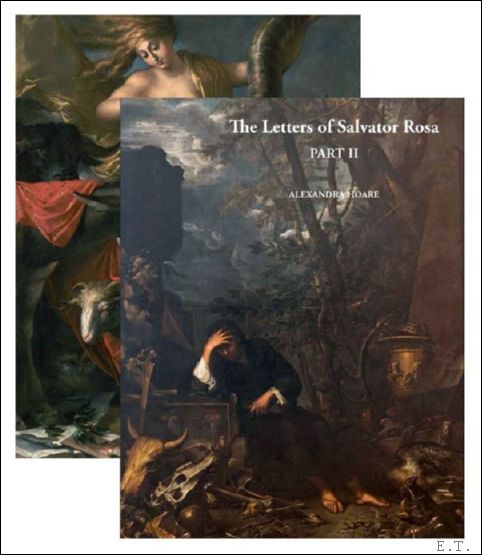
The Letters of Salvator Rosa (1615-1673). An Italian Transcription, English Translation and Critical Edition
Brepols - Harvey Miller, 2019. Hardback, 2 vols, vi + 1104 pages, Size:225 x 300 mm, Illustrations:4 b/w, 47 col., Languages: English, Italian. ISBN: 9781905375882
Summary These two volumes comprise the first English translation and critical edition of the extant letters of the Neapolitan painter and satirist Salvator Rosa (1615-1673). Presented in a revised Italian transcription and a complete English translation, the letters are accompanied by extensive historical notes, a philological apparatus, a comprehensive index, appendices, and photographs of the manuscripts. A number of previously unpublished letters also appear here for the first time. Unique among early modern primary documents for their quantity and exceptional for their candour, Rosa's letters are not only a fascinating and intimate chronicle of the artist himself but also an invaluable record of the activities and aspirations of his contemporaries,?offering useful insights into historical persons, ideas and events. An indispensable early modern primary source, comparable in significance to the letters of Michelangelo, Nicolas Poussin or Peter Paul Rubens, Rosa's letters here receive a long-overdue analysis and an English translation that seeks to make more accessible their contents, frequently impenetrable to even native Italian speakers.
Boeknummer: 66036 | Prijs: EUR 250.00
Alexandra Hoare
The Letters of Salvator Rosa (1615-1673). An Italian Transcription, English Translation and Critical Edition
Brepols - Harvey Miller, 2019. Hardback, 2 vols, vi + 1104 pages, Size:225 x 300 mm, Illustrations:4 b/w, 47 col., Languages: English, Italian. ISBN: 9781905375882
Summary These two volumes comprise the first English translation and critical edition of the extant letters of the Neapolitan painter and satirist Salvator Rosa (1615-1673). Presented in a revised Italian transcription and a complete English translation, the letters are accompanied by extensive historical notes, a philological apparatus, a comprehensive index, appendices, and photographs of the manuscripts. A number of previously unpublished letters also appear here for the first time. Unique among early modern primary documents for their quantity and exceptional for their candour, Rosa's letters are not only a fascinating and intimate chronicle of the artist himself but also an invaluable record of the activities and aspirations of his contemporaries,?offering useful insights into historical persons, ideas and events. An indispensable early modern primary source, comparable in significance to the letters of Michelangelo, Nicolas Poussin or Peter Paul Rubens, Rosa's letters here receive a long-overdue analysis and an English translation that seeks to make more accessible their contents, frequently impenetrable to even native Italian speakers.
Boeknummer: 66036 | Prijs: EUR 250.00
ALEXANDRESCU, S., PARRET, H. en QUIK, T.( red.).
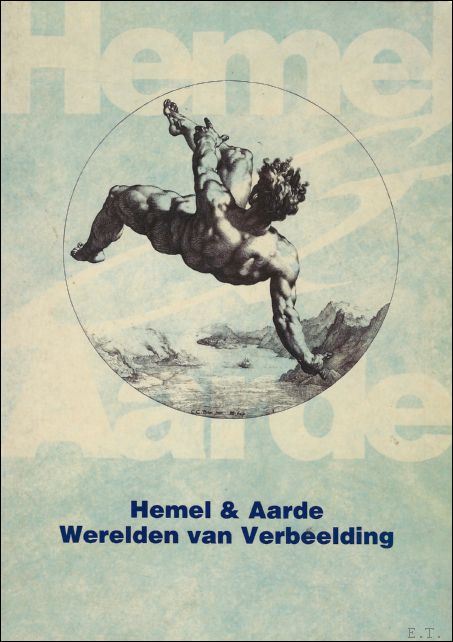
HEMEL EN AARDE. WERELDEN VAN VERBEELDING.
Amsterdam, Uitgeverij John Benjamins, 1994. Geillustreerde cover, frontispice, 17x24 cm., 280 pp. en XLIX kleurenillustraties. ISBN: 9027220891
Begeleidend boek bij de gelijknamige tentoonstelling in het Bonnefantenmuseum te Maastricht ( 23 november 1991 - 23 februari 1992 ).
Boeknummer: 1249 | Prijs: EUR 10.00
Amanda Luyster (ed)
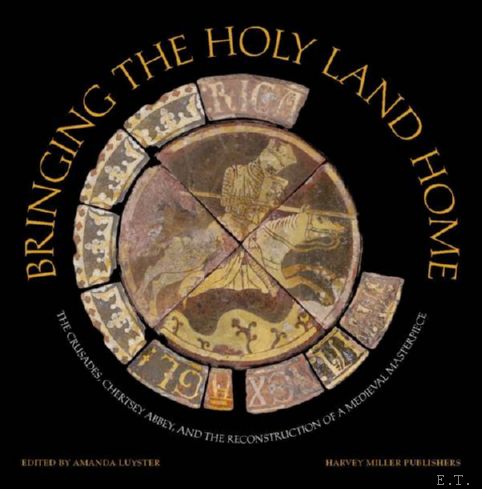
Bringing the Holy Land Home. The Crusades, Chertsey Abbey, and the Reconstruction of a Medieval Masterpiece
Brepols - Harvey Miller, 2022. Hardback, 376 pages, Size:240 x 240 mm, Illustrations:136 col., Language: English. ISBN: 9781912554942
Summary A carefully-integrated group of studies begins with the so-called ?Chertsey? ceramic tiles, depicting combat between King Richard the Lionheart and Saladin. Found at Chertsey Abbey not far outside London and admired since the nineteenth century, we present here a new reconstruction of both the tiles and their previously-undeciphered Latin texts. The reconstruction demonstrates not only that the theme of the entire mosaic is the Crusades, but also that the overall appearance of the tiles, when laid as a floor, draws from the composition and iconography of imported Islamic and Byzantine silks. Essays illuminate specific material contexts that similarly witness western Europe's, and particularly England's, engagement with the material culture of the eastern Mediterranean, including ceramics, textiles, relics and reliquaries, metalwork, coins, sculpture, and ivories. TABLE OF CONTENTS CONTRIBUTORS FOREWORD by Michael Wood DIRECTOR'S FOREWORD by Meredith Fluke PREFACE by Amanda Luyster We who were Occidentals have now become Orientals CATALOGUE ESSAYS Amanda Luyster The Chertsey Tiles: Reassembling Fragments of Meaning Suleiman A. Mourad A Clash of Civilizations? Diverse Motivations, Multiple Actors, and the Hidden Richness of Muslim Historical Sources David Nicolle The Crusades: A Short History Euan Roger So Much National Magnificence and National History: The Foundation, Structure, and Fall of Chertsey Abbey Richard A. Leson Epic Sensibilities in French Art of the Crusader Period Cynthia Hahn Re-creating the Holy Land at Home: Relics from the East in England Elizabeth Dosp?l Williams The Mobility of Fabric: Textiles in and around Medieval Eurasia Eva R. HoFFman Crusaders in Jerusalem: Frankish Encounters with Idols, Holy Monuments, and Portable Objects Sarah M. Guérin Oliphants and Elephants: African Ivory in England Scott Redford A Cupbearer Crosses Cultures: Figural Ceramic Traditions of the Eastern Mediterranean Paroma Chatterjee Citizens and Invaders: Encounters with Sculpture in Constantinople during the Fourth Crusaded OBJECTS IN FOCUS Andrea Myers Achi Black Fighters on a Late Antique Textile Sean Gilsdorf St. Menas Pilgrim Flask Nina Masin-Moyer Brooch/Amulet with Inscribed Arabic Seal Nina Masin-Moyer Enkolpion Reliquary Cross Nina Masin-Moyer Chess Piece with King or Vizier Alicia Walker So-called Crusader's Bowl A. L. McClanan Architectural Fragment with Griffin Nina Masin-Moyer Amphora with Confronted Hybrid Figures Meredith Fluke Section of a Cassone Panel with Beasts in Roundels Grace P. Morrissey Lusterware Bowl with Figure Eurydice S. Georganteli Gold Penny of Henry III Nina Masin-Moyer Gemellion with the Arms of the Latin Kingdom of Jerusalem Students From Boston College The Morgan Picture Bible WORKS CITED INDEX
Boeknummer: 64565 | Prijs: EUR 100.00
Amanda Luyster (ed)
Bringing the Holy Land Home. The Crusades, Chertsey Abbey, and the Reconstruction of a Medieval Masterpiece
Brepols - Harvey Miller, 2022. Hardback, 376 pages, Size:240 x 240 mm, Illustrations:136 col., Language: English. ISBN: 9781912554942
Summary A carefully-integrated group of studies begins with the so-called ?Chertsey? ceramic tiles, depicting combat between King Richard the Lionheart and Saladin. Found at Chertsey Abbey not far outside London and admired since the nineteenth century, we present here a new reconstruction of both the tiles and their previously-undeciphered Latin texts. The reconstruction demonstrates not only that the theme of the entire mosaic is the Crusades, but also that the overall appearance of the tiles, when laid as a floor, draws from the composition and iconography of imported Islamic and Byzantine silks. Essays illuminate specific material contexts that similarly witness western Europe's, and particularly England's, engagement with the material culture of the eastern Mediterranean, including ceramics, textiles, relics and reliquaries, metalwork, coins, sculpture, and ivories. TABLE OF CONTENTS CONTRIBUTORS FOREWORD by Michael Wood DIRECTOR'S FOREWORD by Meredith Fluke PREFACE by Amanda Luyster We who were Occidentals have now become Orientals CATALOGUE ESSAYS Amanda Luyster The Chertsey Tiles: Reassembling Fragments of Meaning Suleiman A. Mourad A Clash of Civilizations? Diverse Motivations, Multiple Actors, and the Hidden Richness of Muslim Historical Sources David Nicolle The Crusades: A Short History Euan Roger So Much National Magnificence and National History: The Foundation, Structure, and Fall of Chertsey Abbey Richard A. Leson Epic Sensibilities in French Art of the Crusader Period Cynthia Hahn Re-creating the Holy Land at Home: Relics from the East in England Elizabeth Dosp?l Williams The Mobility of Fabric: Textiles in and around Medieval Eurasia Eva R. HoFFman Crusaders in Jerusalem: Frankish Encounters with Idols, Holy Monuments, and Portable Objects Sarah M. Guérin Oliphants and Elephants: African Ivory in England Scott Redford A Cupbearer Crosses Cultures: Figural Ceramic Traditions of the Eastern Mediterranean Paroma Chatterjee Citizens and Invaders: Encounters with Sculpture in Constantinople during the Fourth Crusaded OBJECTS IN FOCUS Andrea Myers Achi Black Fighters on a Late Antique Textile Sean Gilsdorf St. Menas Pilgrim Flask Nina Masin-Moyer Brooch/Amulet with Inscribed Arabic Seal Nina Masin-Moyer Enkolpion Reliquary Cross Nina Masin-Moyer Chess Piece with King or Vizier Alicia Walker So-called Crusader's Bowl A. L. McClanan Architectural Fragment with Griffin Nina Masin-Moyer Amphora with Confronted Hybrid Figures Meredith Fluke Section of a Cassone Panel with Beasts in Roundels Grace P. Morrissey Lusterware Bowl with Figure Eurydice S. Georganteli Gold Penny of Henry III Nina Masin-Moyer Gemellion with the Arms of the Latin Kingdom of Jerusalem Students From Boston College The Morgan Picture Bible WORKS CITED INDEX
Boeknummer: 64565 | Prijs: EUR 100.00
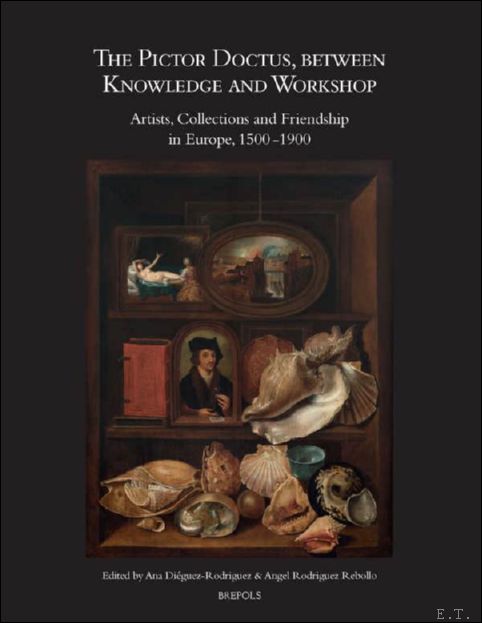
Ana Diéguez, Angel Rodriguez Rebollo (eds)
The Pictor Doctus, between Knowledge and Workshop. Artists, Collections and Friendship in Europe, 1500-1900
Brepols, 2022. Paperback, 279 pages, Size:216 x 280 mm, Illustrations:11 b/w, 70 col., Language(s):English, Spanish. ISBN: 9782503589084
Summary Recent research on the collections treasured by artists during their lifetime, or those collections they had access to, has contributed significantly to the understanding of their own compositions. Traditional historiography has favoured the study of the royal and aristocratic collections that could have inspired artists rather than of the artists' own collections. Only those of the 'great' artists, such as Rubens, Bernini, Velázquez or Mengs, have been comprehensively examined. In the eighteenth century, the notion of collecting itself was transformed. An aesthetic taste was fostered and developed through the gathering of objects, and the personal collection of an artist could therefore provide the key to a more thorough understanding of their production. The nineteenth century witnessed artists bequeathing their collections to different institutions, sometimes even creating their own institutional collection. Architects, painters, sculptors and goldsmiths assembled some of the most important artistic collections of their time in their workshops. TABLE OF CONTENTS Introduction. The Pictor Doctus and the Artists' Collections: From Taste to a Training Resource ? Ana Diéguez-Rodríguez & Ángel Rodríguez Rebollo I. Learning from the Artistic Collections, Libraries and Workshops Pablo de Céspedes, arte y humanismo en su biblioteca. Una nueva propuesta de interpretación en torno a su colección bibliográfica ? Alejandro Jaquero-Esparcia Bernardino Poccetti as Collector ? Alexander Röstel & Grant Lewis ?Ha muerto Rubens?. El eco de su colección en el rey de España ? Matías Díaz Padrón Francisco de Solís, Collector of Drawings ? Ángel Rodríguez Rebollo & Isabel García-Toraño II. Coteries: The Role of the Friendship and the Academies Vicente Carducho's Modelling of Artistic Practice and Connoisseurship ? Tiarna Doherty Between Guild and Academy: Collections of Central European Painters as a Source of Artistic Progress or a Steady Livelihood? ? Tomá? Vale? French Barbizon Landscapes Collected by Pre-Raphaelite and Aesthetic Movement Artists in the second half of the Nineteenth Century ? Sarah Herring Women Painters and Academicians: Models and Collections ? Mariángeles Pérez-Martín III. Artists at the Court: Experience and Erudition Court Institutions and their Impact on Artworks by the valet de chambre Artists Serving at the Valois-Burgundian Court during the Fifteenth Century ? Oskar Rojewski Velázquez and the Royal Collection. Opening the Pandora's Box ? Miguel Hermoso Cuest Index of Names
Boeknummer: 64806 | Prijs: EUR 125.00
Ana Diéguez, Angel Rodriguez Rebollo (eds)
The Pictor Doctus, between Knowledge and Workshop. Artists, Collections and Friendship in Europe, 1500-1900
Brepols, 2022. Paperback, 279 pages, Size:216 x 280 mm, Illustrations:11 b/w, 70 col., Language(s):English, Spanish. ISBN: 9782503589084
Summary Recent research on the collections treasured by artists during their lifetime, or those collections they had access to, has contributed significantly to the understanding of their own compositions. Traditional historiography has favoured the study of the royal and aristocratic collections that could have inspired artists rather than of the artists' own collections. Only those of the 'great' artists, such as Rubens, Bernini, Velázquez or Mengs, have been comprehensively examined. In the eighteenth century, the notion of collecting itself was transformed. An aesthetic taste was fostered and developed through the gathering of objects, and the personal collection of an artist could therefore provide the key to a more thorough understanding of their production. The nineteenth century witnessed artists bequeathing their collections to different institutions, sometimes even creating their own institutional collection. Architects, painters, sculptors and goldsmiths assembled some of the most important artistic collections of their time in their workshops. TABLE OF CONTENTS Introduction. The Pictor Doctus and the Artists' Collections: From Taste to a Training Resource ? Ana Diéguez-Rodríguez & Ángel Rodríguez Rebollo I. Learning from the Artistic Collections, Libraries and Workshops Pablo de Céspedes, arte y humanismo en su biblioteca. Una nueva propuesta de interpretación en torno a su colección bibliográfica ? Alejandro Jaquero-Esparcia Bernardino Poccetti as Collector ? Alexander Röstel & Grant Lewis ?Ha muerto Rubens?. El eco de su colección en el rey de España ? Matías Díaz Padrón Francisco de Solís, Collector of Drawings ? Ángel Rodríguez Rebollo & Isabel García-Toraño II. Coteries: The Role of the Friendship and the Academies Vicente Carducho's Modelling of Artistic Practice and Connoisseurship ? Tiarna Doherty Between Guild and Academy: Collections of Central European Painters as a Source of Artistic Progress or a Steady Livelihood? ? Tomá? Vale? French Barbizon Landscapes Collected by Pre-Raphaelite and Aesthetic Movement Artists in the second half of the Nineteenth Century ? Sarah Herring Women Painters and Academicians: Models and Collections ? Mariángeles Pérez-Martín III. Artists at the Court: Experience and Erudition Court Institutions and their Impact on Artworks by the valet de chambre Artists Serving at the Valois-Burgundian Court during the Fifteenth Century ? Oskar Rojewski Velázquez and the Royal Collection. Opening the Pandora's Box ? Miguel Hermoso Cuest Index of Names
Boeknummer: 64806 | Prijs: EUR 125.00
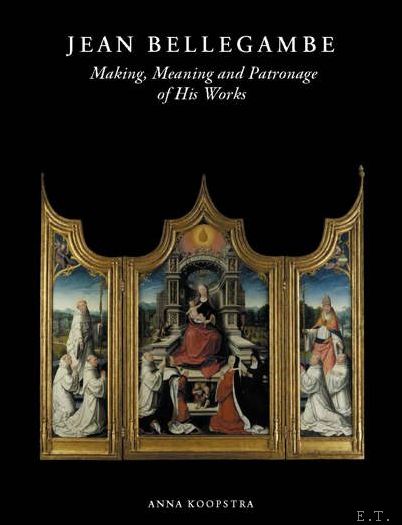
Anna Koopstra
Jean Bellegambe (c. 1470-1535/36)
Making, Meaning and Patronage of his Works
Brepols - Harvey Miller, 2023. Hardback,Pages: 160 pages, Size:210 x 297 mm Illustrations:10 b/w, 105 col.Language(s):English. ISBN: 9782503574370
The book by Anna Koopstra about Jean Bellegambe adds an extremely careful, thorough, and beautifully produced study to the monographs on early Dutch painters. (...) More traditional art historical research?iconographic, stylistic, archival, and historiographic?is combined with modern technical research and a keen eye for drawings and graphics as visual sources for the artist. (?) The beautifully produced and clearly written book represents excellent and versatile art historical research that, through in-depth analysis of a small group of characteristic artworks, offers a new perspective on an important artist, his work and methods, as well as the impact of that distinctive body of work." Drs. Lidewij de Koekkoek (VNK, Frans Hals Museum) - Jury President - 2023 Karel van Manderprijs BIO Anna Koopstra (1980) studied art history at the University of Groningen (MA, 2004) and obtained her doctorate from the Courtauld Institute of Art (PhD, 2016). She has held curatorial positions and research fellowships at the Suermondt-Ludwig Museum (2005-08), The Metropolitan Museum of Art (Slifka interdisciplinary Fellow, 2008-10), The National Gallery (2015-17), and the Courtauld (Associate Caroline Villers Research Fellow, 2016/17). Her research focuses on the technical investigation of paintings, and in particular on the making and meaning of early Netherlandish paintings. SUMMARY Jean Bellegambe (c. 1470- 1535/36), whose career as far as we know spanned the first three decades of the sixteenth century, was a successful painter. His patrons included some of the most high-ranking clerics in the Habsburg-Burgundian Netherlands as well as members of the ruling class of Douai, the town where he lived and worked all his life. This is the first study to appear since Dehaisnes' 1890 monograph that is exclusively devoted to the artist. By reassessing primary evidence - archival documents and material evidence from the works of art themselves - it aims to highlight Bellegambe's artistic achievements. Close scrutiny of his paintings and investigation of the artist's working methods will show that Bellegambe visualised the concerns of his patrons by closely linking the physical characteristics of his works to their original imagery, function and use. This volume presents a series of five case studies of his works that were made for a monastic community, two individual clerics, a town hall and a bourgeois layman, thus providing rich evidence of patronage and audiences. The objective here is to examine how Bellegambe met the challenges posed by these commissions, and to gain further insight into the practice of a skilled artist who - rooted in a long line of craftsmanship and artistic tradition and in close collaboration with his colleagues and patrons - produced a body of highly original works. TABLE OF CONTENTS INTRODUCTION CHAPTER I The Artist?s Life and Career Life Works Posthumous legacy CHAPTER II Oeuvre and Patrons The Anchin Polyptych Similar patrons, similar commissions Other works CHAPTER III Preliminary Observations on Materials and Working Methods Panels and frames Underdrawing and painting technique Technical evidence and questions of attribution Workshop CHAPTER IV Jean Bellegambe and the Convent of Flines: Reconsidering The Cellier Altarpiece Monastic reform and the convent of Flines The evolution of the composition Interpreting the iconographic program Location, audience, date CHAPTER V Clerical Devotion and the Monastic Milieu: The Diptych of the Virgin and Child with Saint Bernard and an Unidentified Cistercian Monk The Virgin and child as an object of clerical devotion The abbess as exemplar CHAPTER VI Self-Representation and Piety for the Here and the Hereafter: Abbot William of Brussels and the Triptych of the Annunciation William of Brussels as a patron Function and location CHAPTER VII Painting as a Moral Compass: Triptych of the Last Judgment The Last Judgment, the Four Last Things, and visions of heaven and hell Function and audience CHAPTER VIII Civic Duty, Charitable Giving, and the Wish to Be Commemorated: The Pottier Triptych and the Pottier Family Reviewing the archival evidence Iconography and meaning Scenes of the life of Saint Anne, demi-grisaille, and the reality of giving CONCLUSION Bibliography
Boeknummer: 62968 | Prijs: EUR 100.00
Anna Koopstra
Jean Bellegambe (c. 1470-1535/36)
Making, Meaning and Patronage of his Works
Brepols - Harvey Miller, 2023. Hardback,Pages: 160 pages, Size:210 x 297 mm Illustrations:10 b/w, 105 col.Language(s):English. ISBN: 9782503574370
The book by Anna Koopstra about Jean Bellegambe adds an extremely careful, thorough, and beautifully produced study to the monographs on early Dutch painters. (...) More traditional art historical research?iconographic, stylistic, archival, and historiographic?is combined with modern technical research and a keen eye for drawings and graphics as visual sources for the artist. (?) The beautifully produced and clearly written book represents excellent and versatile art historical research that, through in-depth analysis of a small group of characteristic artworks, offers a new perspective on an important artist, his work and methods, as well as the impact of that distinctive body of work." Drs. Lidewij de Koekkoek (VNK, Frans Hals Museum) - Jury President - 2023 Karel van Manderprijs BIO Anna Koopstra (1980) studied art history at the University of Groningen (MA, 2004) and obtained her doctorate from the Courtauld Institute of Art (PhD, 2016). She has held curatorial positions and research fellowships at the Suermondt-Ludwig Museum (2005-08), The Metropolitan Museum of Art (Slifka interdisciplinary Fellow, 2008-10), The National Gallery (2015-17), and the Courtauld (Associate Caroline Villers Research Fellow, 2016/17). Her research focuses on the technical investigation of paintings, and in particular on the making and meaning of early Netherlandish paintings. SUMMARY Jean Bellegambe (c. 1470- 1535/36), whose career as far as we know spanned the first three decades of the sixteenth century, was a successful painter. His patrons included some of the most high-ranking clerics in the Habsburg-Burgundian Netherlands as well as members of the ruling class of Douai, the town where he lived and worked all his life. This is the first study to appear since Dehaisnes' 1890 monograph that is exclusively devoted to the artist. By reassessing primary evidence - archival documents and material evidence from the works of art themselves - it aims to highlight Bellegambe's artistic achievements. Close scrutiny of his paintings and investigation of the artist's working methods will show that Bellegambe visualised the concerns of his patrons by closely linking the physical characteristics of his works to their original imagery, function and use. This volume presents a series of five case studies of his works that were made for a monastic community, two individual clerics, a town hall and a bourgeois layman, thus providing rich evidence of patronage and audiences. The objective here is to examine how Bellegambe met the challenges posed by these commissions, and to gain further insight into the practice of a skilled artist who - rooted in a long line of craftsmanship and artistic tradition and in close collaboration with his colleagues and patrons - produced a body of highly original works. TABLE OF CONTENTS INTRODUCTION CHAPTER I The Artist?s Life and Career Life Works Posthumous legacy CHAPTER II Oeuvre and Patrons The Anchin Polyptych Similar patrons, similar commissions Other works CHAPTER III Preliminary Observations on Materials and Working Methods Panels and frames Underdrawing and painting technique Technical evidence and questions of attribution Workshop CHAPTER IV Jean Bellegambe and the Convent of Flines: Reconsidering The Cellier Altarpiece Monastic reform and the convent of Flines The evolution of the composition Interpreting the iconographic program Location, audience, date CHAPTER V Clerical Devotion and the Monastic Milieu: The Diptych of the Virgin and Child with Saint Bernard and an Unidentified Cistercian Monk The Virgin and child as an object of clerical devotion The abbess as exemplar CHAPTER VI Self-Representation and Piety for the Here and the Hereafter: Abbot William of Brussels and the Triptych of the Annunciation William of Brussels as a patron Function and location CHAPTER VII Painting as a Moral Compass: Triptych of the Last Judgment The Last Judgment, the Four Last Things, and visions of heaven and hell Function and audience CHAPTER VIII Civic Duty, Charitable Giving, and the Wish to Be Commemorated: The Pottier Triptych and the Pottier Family Reviewing the archival evidence Iconography and meaning Scenes of the life of Saint Anne, demi-grisaille, and the reality of giving CONCLUSION Bibliography
Boeknummer: 62968 | Prijs: EUR 100.00
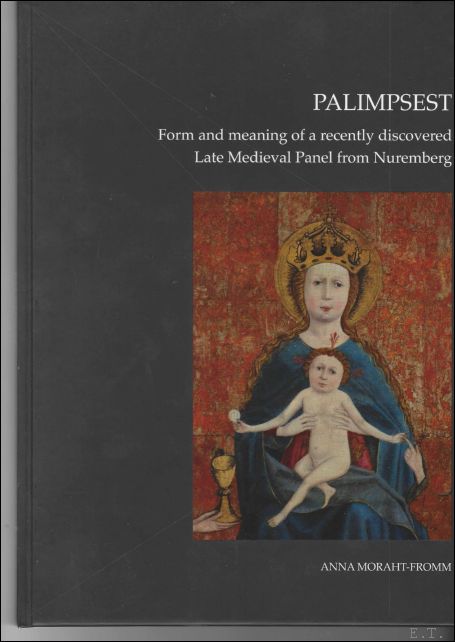
Anna Moraht -Fromm
PALIMPSEST form and meaning of a recently discovered late medieval panel from Nuremberg.
BE -, De Backker medieval art. Hardcover 57 PAGES Color illustrations .
PALIMPSEST form and meaning of a recently discovered late medieval panel from Nuremberg.
Boeknummer: 64385 | Prijs: EUR 22.50
Anna Moraht -Fromm
PALIMPSEST form and meaning of a recently discovered late medieval panel from Nuremberg.
BE -, De Backker medieval art. Hardcover 57 PAGES Color illustrations .
PALIMPSEST form and meaning of a recently discovered late medieval panel from Nuremberg.
Boeknummer: 64385 | Prijs: EUR 22.50
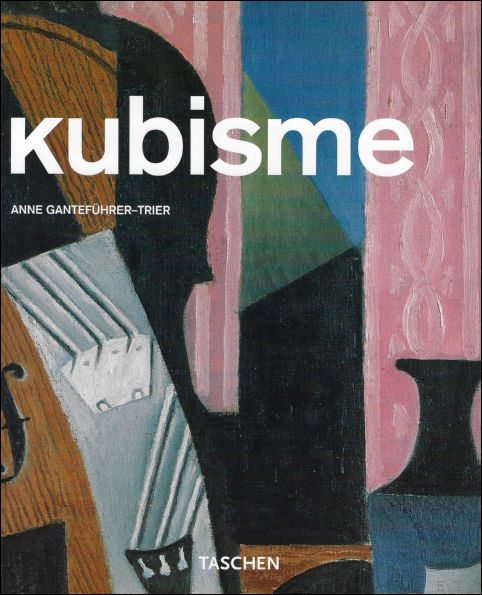
Anne Ganteführer-Trier, Uta Grosenick, Sabine Blessmann, Nannie Nieland-Weits, Aafke Boerma
Kubisme
Taschen, 2005. 1. Softcover, 96 pagina's, NL, 230 x 185 mm, met illustraties in kleur, over de meesters in het kubisme. ISBN: 9783822842362
Het kubisme is een stroming binnen de moderne kunst van het begin van de 20e eeuw. Het is een van de vier grote schilderstijlen in de Europese schilderkunst van de 20e eeuw. Het kubisme vierde zijn hoogtijdagen als avant-gardekunststroming in de periode van 1906 tot circa 1920
Boeknummer: 59854 | Prijs: EUR 29.95
Anne Ganteführer-Trier, Uta Grosenick, Sabine Blessmann, Nannie Nieland-Weits, Aafke Boerma
Kubisme
Taschen, 2005. 1. Softcover, 96 pagina's, NL, 230 x 185 mm, met illustraties in kleur, over de meesters in het kubisme. ISBN: 9783822842362
Het kubisme is een stroming binnen de moderne kunst van het begin van de 20e eeuw. Het is een van de vier grote schilderstijlen in de Europese schilderkunst van de 20e eeuw. Het kubisme vierde zijn hoogtijdagen als avant-gardekunststroming in de periode van 1906 tot circa 1920
Boeknummer: 59854 | Prijs: EUR 29.95
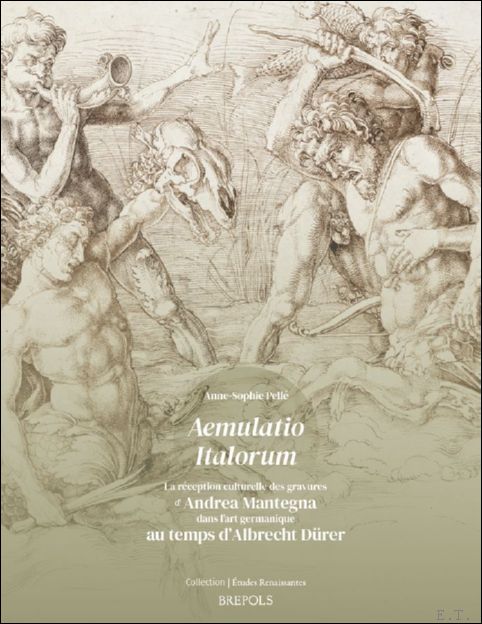
Anne-Sophie Pellé
Aemulatio Italorum. La réception culturelle des gravures de Mantegna dans l?art germanique au temps d?Albrecht Dürer
Brepols, 2023. Paperback, 336 pages, Size:210 x 270 mm, Illustrations:0 b/w, 151 col., Language: French. ISBN: 9782503604985
Summary À la Renaissance, si le medium de la gravure permet désormais aux artistes de rivaliser entre eux à distance, dès la fin du xve siècle, la diffusion des modèles gravés par l'atelier du prestigieux peintre de cour des marquis de Mantoue, Andrea Mantegna, a suscité sur le territoire germanique une véritable émulation d'ordre culturelle, dans laquelle la question du rapport à l'identité occupe une place fondamentale. Dès lors, dans les images, deux paradigmes se dessinent : d'une part le Welsch, qui désigne ce qui est romain, de style à l'antique, et, plus généralement, italien ; d'autre part le Deutsch, qui renvoie à une tradition artistique et aux coutumes typiquement germaniques. Inscrite dans la problématique des transferts culturels, cette étude analyse, dans une approche résolument pluridisciplinaire, les différentes transformations iconographiques, formelles et stylistiques dont les motifs empruntés aux estampes de Mantegna ont fait l'objet ainsi que l'appareil rhétorique qui accompagne ces transformations pour mieux leur donner du sens (comparaison, parodie, dissimulation, etc.). De Dürer à Peter Vischer le Jeune à Nuremberg, de l'atelier de Daniel Hopfer à celui de Jörg Breu l'Ancien à Augsbourg, d'Hans Baldung Grien à Matthias Grünewald dans la région rhénane et en Alsace, d'Urs Graf à Hans Holbein le Jeune à Bâle, de l'atelier d'Altdorfer implanté à Ratisbonne à celui de Wolf Huber, situé à Passau : tous les centres artistiques et humanistes de la Renaissance germanique sont abordés. TABLE OF CONTENTS Introduction I. Des milieux de cour en interaction I.1. Ambition politique et préjugés culturels I.2. Mobilités artistiques et transferts des savoirs II. Une stratégie du secret III. Des gravures en dialogue avec la culture humaniste III.1. De l'héritage de Vittorino da Feltre au De pictura d'Alberti III.2. Dans le sillage d'Homère, de Virgile et de Politien IV. Mantegna dans les collections d'estampes germaniques IV.1. Les marchands germaniques, entre Venise et l'Empire IV.2. Les humanistes IV.3. Les modèles gravés dans les ateliers d'artistes. V. Un idéal hybride V.1. Peindre, dessiner, écrire V.2. Le Deutsch et le Welsch: une construction germanique V.3. Germania vetus, Germania nova : le primitif et le civilisé V.4. L'hybridité en crise chez Peter Flötner VI. La réflexion anthropologique d'Albrecht Dürer VI.1. L'expérience philosophique de la frontière VI.2. « Woster serfitor, Alberto Dürer » VI.3. Comparatio. La Nurembergeoise et la Vénitienne VI.4. L' ambiguitas du Welsch VII. Dürer versus Mantegna : le topos germanique de la compétition artistique VII.1. Un exercice de traduction VII.2. La réminiscence d'Apelle VII.3. Une compétition pour la postérité VIII. Émulation et « nouvel art de peindre » VIII.1. Les gravures religieuses de Mantegna et la diffusion des principes d'Alberti VIII.2. Compléter le manifeste : la Mise au tombeau conservée à Klosterneuburg VIII.3. Un « nouveau Mantegna » : la Descente de croix de Hans Mielich VIII.4. Les modèles mantégnesques et la construction perspective dans l'art germanique VIII.5. La génèse d'Adam : Dürer, Peter Vischer le Jeune et le Bacchus de Mantegna IX. De la transgression à la démesure: l'émulation jusqu'à l'excès IX.1. Le raccourci comme expérience formelle et spirituelle chez Altdorfer IX.2. Motus animi : les effets dramatiques extrêmes IX.3. Au-delà de toute mesure: l'invention du corps extrême X. Explorer les confins de l'âme : les gravures mythologiques de Mantegna et le thème de l'imagination X.1. Le Combat des dieux marins, les Bacchanales et la problématique du fingere X.2. Le thème du songe dans La Bacchanale à la cuve X.3. Mantegna affabulateur: le principe de l'illusion perceptive XI. La réception des estampes mythologiques de Mantegna et la diffusion du Néoplatonisme à Nuremberg XI.1. Transférer la lyre d'Apollon au nord des Alpes : le cercle humaniste de la Poetenschule XI.2. La gravure du Monstre marin d'Albrecht Dürer : une illustration de la théorie de la vacance de l'âme ? XI.3. « Technè phantastikè » : Dürer et l'approche sophistique de l'imitation XI.4. « Phantasia furens »: débordement poétique et enfer imaginal XII. Pour une réception iconoclaste des estampes mythologiques de Mantegna XII.1. Mutiler XII.2. Dissimuler XII.3. Renverser Bibliographie Textes sources Littérature secondaire Index des noms propres
Boeknummer: 64326 | Prijs: EUR 90.00
Anne-Sophie Pellé
Aemulatio Italorum. La réception culturelle des gravures de Mantegna dans l?art germanique au temps d?Albrecht Dürer
Brepols, 2023. Paperback, 336 pages, Size:210 x 270 mm, Illustrations:0 b/w, 151 col., Language: French. ISBN: 9782503604985
Summary À la Renaissance, si le medium de la gravure permet désormais aux artistes de rivaliser entre eux à distance, dès la fin du xve siècle, la diffusion des modèles gravés par l'atelier du prestigieux peintre de cour des marquis de Mantoue, Andrea Mantegna, a suscité sur le territoire germanique une véritable émulation d'ordre culturelle, dans laquelle la question du rapport à l'identité occupe une place fondamentale. Dès lors, dans les images, deux paradigmes se dessinent : d'une part le Welsch, qui désigne ce qui est romain, de style à l'antique, et, plus généralement, italien ; d'autre part le Deutsch, qui renvoie à une tradition artistique et aux coutumes typiquement germaniques. Inscrite dans la problématique des transferts culturels, cette étude analyse, dans une approche résolument pluridisciplinaire, les différentes transformations iconographiques, formelles et stylistiques dont les motifs empruntés aux estampes de Mantegna ont fait l'objet ainsi que l'appareil rhétorique qui accompagne ces transformations pour mieux leur donner du sens (comparaison, parodie, dissimulation, etc.). De Dürer à Peter Vischer le Jeune à Nuremberg, de l'atelier de Daniel Hopfer à celui de Jörg Breu l'Ancien à Augsbourg, d'Hans Baldung Grien à Matthias Grünewald dans la région rhénane et en Alsace, d'Urs Graf à Hans Holbein le Jeune à Bâle, de l'atelier d'Altdorfer implanté à Ratisbonne à celui de Wolf Huber, situé à Passau : tous les centres artistiques et humanistes de la Renaissance germanique sont abordés. TABLE OF CONTENTS Introduction I. Des milieux de cour en interaction I.1. Ambition politique et préjugés culturels I.2. Mobilités artistiques et transferts des savoirs II. Une stratégie du secret III. Des gravures en dialogue avec la culture humaniste III.1. De l'héritage de Vittorino da Feltre au De pictura d'Alberti III.2. Dans le sillage d'Homère, de Virgile et de Politien IV. Mantegna dans les collections d'estampes germaniques IV.1. Les marchands germaniques, entre Venise et l'Empire IV.2. Les humanistes IV.3. Les modèles gravés dans les ateliers d'artistes. V. Un idéal hybride V.1. Peindre, dessiner, écrire V.2. Le Deutsch et le Welsch: une construction germanique V.3. Germania vetus, Germania nova : le primitif et le civilisé V.4. L'hybridité en crise chez Peter Flötner VI. La réflexion anthropologique d'Albrecht Dürer VI.1. L'expérience philosophique de la frontière VI.2. « Woster serfitor, Alberto Dürer » VI.3. Comparatio. La Nurembergeoise et la Vénitienne VI.4. L' ambiguitas du Welsch VII. Dürer versus Mantegna : le topos germanique de la compétition artistique VII.1. Un exercice de traduction VII.2. La réminiscence d'Apelle VII.3. Une compétition pour la postérité VIII. Émulation et « nouvel art de peindre » VIII.1. Les gravures religieuses de Mantegna et la diffusion des principes d'Alberti VIII.2. Compléter le manifeste : la Mise au tombeau conservée à Klosterneuburg VIII.3. Un « nouveau Mantegna » : la Descente de croix de Hans Mielich VIII.4. Les modèles mantégnesques et la construction perspective dans l'art germanique VIII.5. La génèse d'Adam : Dürer, Peter Vischer le Jeune et le Bacchus de Mantegna IX. De la transgression à la démesure: l'émulation jusqu'à l'excès IX.1. Le raccourci comme expérience formelle et spirituelle chez Altdorfer IX.2. Motus animi : les effets dramatiques extrêmes IX.3. Au-delà de toute mesure: l'invention du corps extrême X. Explorer les confins de l'âme : les gravures mythologiques de Mantegna et le thème de l'imagination X.1. Le Combat des dieux marins, les Bacchanales et la problématique du fingere X.2. Le thème du songe dans La Bacchanale à la cuve X.3. Mantegna affabulateur: le principe de l'illusion perceptive XI. La réception des estampes mythologiques de Mantegna et la diffusion du Néoplatonisme à Nuremberg XI.1. Transférer la lyre d'Apollon au nord des Alpes : le cercle humaniste de la Poetenschule XI.2. La gravure du Monstre marin d'Albrecht Dürer : une illustration de la théorie de la vacance de l'âme ? XI.3. « Technè phantastikè » : Dürer et l'approche sophistique de l'imitation XI.4. « Phantasia furens »: débordement poétique et enfer imaginal XII. Pour une réception iconoclaste des estampes mythologiques de Mantegna XII.1. Mutiler XII.2. Dissimuler XII.3. Renverser Bibliographie Textes sources Littérature secondaire Index des noms propres
Boeknummer: 64326 | Prijs: EUR 90.00
ARNAU, Frank;
L'ART DES FAUSSAIRES ET LES FAUSSAIRES D'ART,
Paris, Laffont, 1960. Relie, toile vert, 140 x 225mm., page de titre au vignette, 342pp.
Traduit de l'allemand par Edith Vincent. Bon etat.
Boeknummer: 24749 | Prijs: EUR 30.00
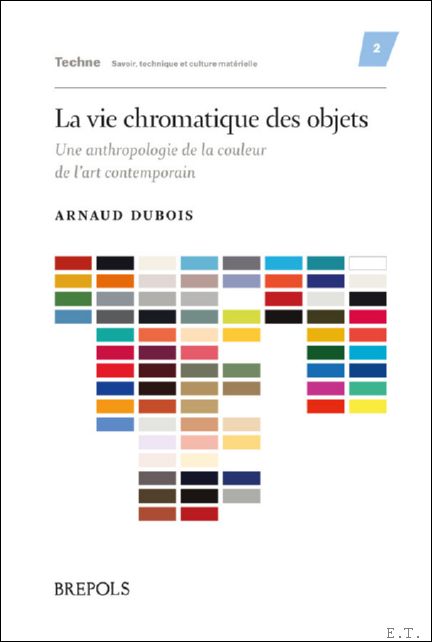
Arnaud Dubois
La La vie chromatique des objets. Une anthropologie de la couleur de l'art contemporain
Brepols, 2019. Hardback, 260 pages, Size:156 x 234 mm, Illustrations:10 b/w, 38 col., Language: French. ISBN: 9782503583211
Summary What are the relationships between color techniques and art practices? Should we study the materiality of color in order to highlight its fundamental social dimension? Is an anthropological study of contemporary colorist art a way to understand the links between technics, aesthetics and society? These are some of the questions addressed in this book that aims to offer a journey through industrial color production, based on case studies of French contemporary colorist art works. In this monograph, Arnaud Dubois develops a new theoretical framework to study color: "color acts"; along with "agglutination processes" and "actions upon chromatic matter." To think about color as an act consists in observing colorization practices and describing the work situations where these acts are performed. To analyze color acts is to consider the means of action implemented by the multiple actors in the colorization of artefacts and identify the possible logics of chromatic actions. Through a historical and ethnographic work, the 17 color objects studied in this book deploy a large spectrum of color practices and usages that are instrumental for understanding the social construction of color in contemporary Western Europe. Quelles relations observe-t-on entre les techniques de production des couleurs et les pratiques artistiques modernes ? Entretiennent-elles des rapports de configuration réciproque ? Doit-on considérer la dimension matérielle de la couleur pour illuminer son caractère proprement social ? Voici quelques questions qui sont débattues dans ce livre qui a pour ambition d'offrir un voyage au coeur de la production des couleurs du monde occidental contemporain à travers l'exemple de la fabrication d'objets de l'art contemporain. Dans ce travail, Arnaud Dubois déploie une nouvelle proposition analytique pour l'étude de la couleur en recourant à la notion « d'actes de couleur » - avec celles de « processus d'agglutination » et « d'actions sur la matière chromatique » - comme un nouvel outil théorique et méthodologique pour étudier les procédés de coloration. Penser la couleur comme un acte consiste à s'intéresser aux pratiques de colorisation et à décrire les situations de travail dans lesquelles sont effectués ces actes de couleur. Analyser les actes de couleur c'est donc en premier lieu s'intéresser aux moyens d'actions mis en oeuvre par des acteurs multiples dans la coloration d'artefacts et repérer s'il existe des logiques d'actions chromatiques. Les 17 objets de couleurs qui sont étudiés dans cet ouvrage et les acteurs multiples liés de façon hétérogène à ces artefacts déploient alors un spectre large de pratiques et d'usages de la couleur fort utile pour comprendre, à partir d'un travail historique et ethnographique, la construction sociale de la couleur en Europe. TABLE OF CONTENTS Introduction. Couleurs cachées, couleurs montrées Chapitre premier. Généalogie d'un faux dilemme moderne Chapitre II. Matérialités de la couleur contemporaine Chapitre III. L'invitation d'un artiste Chapitre IV. Le programme d'un architecte Chapitre V. Le contrat de design graphique Chapitre VI. La mise en patrimoine des couleurs Conclusion Index Bibliographie
Boeknummer: 65991 | Prijs: EUR 85.00
Arnaud Dubois
La La vie chromatique des objets. Une anthropologie de la couleur de l'art contemporain
Brepols, 2019. Hardback, 260 pages, Size:156 x 234 mm, Illustrations:10 b/w, 38 col., Language: French. ISBN: 9782503583211
Summary What are the relationships between color techniques and art practices? Should we study the materiality of color in order to highlight its fundamental social dimension? Is an anthropological study of contemporary colorist art a way to understand the links between technics, aesthetics and society? These are some of the questions addressed in this book that aims to offer a journey through industrial color production, based on case studies of French contemporary colorist art works. In this monograph, Arnaud Dubois develops a new theoretical framework to study color: "color acts"; along with "agglutination processes" and "actions upon chromatic matter." To think about color as an act consists in observing colorization practices and describing the work situations where these acts are performed. To analyze color acts is to consider the means of action implemented by the multiple actors in the colorization of artefacts and identify the possible logics of chromatic actions. Through a historical and ethnographic work, the 17 color objects studied in this book deploy a large spectrum of color practices and usages that are instrumental for understanding the social construction of color in contemporary Western Europe. Quelles relations observe-t-on entre les techniques de production des couleurs et les pratiques artistiques modernes ? Entretiennent-elles des rapports de configuration réciproque ? Doit-on considérer la dimension matérielle de la couleur pour illuminer son caractère proprement social ? Voici quelques questions qui sont débattues dans ce livre qui a pour ambition d'offrir un voyage au coeur de la production des couleurs du monde occidental contemporain à travers l'exemple de la fabrication d'objets de l'art contemporain. Dans ce travail, Arnaud Dubois déploie une nouvelle proposition analytique pour l'étude de la couleur en recourant à la notion « d'actes de couleur » - avec celles de « processus d'agglutination » et « d'actions sur la matière chromatique » - comme un nouvel outil théorique et méthodologique pour étudier les procédés de coloration. Penser la couleur comme un acte consiste à s'intéresser aux pratiques de colorisation et à décrire les situations de travail dans lesquelles sont effectués ces actes de couleur. Analyser les actes de couleur c'est donc en premier lieu s'intéresser aux moyens d'actions mis en oeuvre par des acteurs multiples dans la coloration d'artefacts et repérer s'il existe des logiques d'actions chromatiques. Les 17 objets de couleurs qui sont étudiés dans cet ouvrage et les acteurs multiples liés de façon hétérogène à ces artefacts déploient alors un spectre large de pratiques et d'usages de la couleur fort utile pour comprendre, à partir d'un travail historique et ethnographique, la construction sociale de la couleur en Europe. TABLE OF CONTENTS Introduction. Couleurs cachées, couleurs montrées Chapitre premier. Généalogie d'un faux dilemme moderne Chapitre II. Matérialités de la couleur contemporaine Chapitre III. L'invitation d'un artiste Chapitre IV. Le programme d'un architecte Chapitre V. Le contrat de design graphique Chapitre VI. La mise en patrimoine des couleurs Conclusion Index Bibliographie
Boeknummer: 65991 | Prijs: EUR 85.00
AVERMAETE, ROGER
Van Giotto tot de Vlaamsche expressionnisten
Uitgeverij Nebe, (ca. 1937),. ing. in-8?°, 23,5 x 15,5 cm, b/w ill., orig. wrappers.
Collection of short essays Giotto, Memlinc, Titian, Raphael, Durer, Rubens, Navez, De Smedt.
Boeknummer: 42161 | Prijs: EUR 15.00
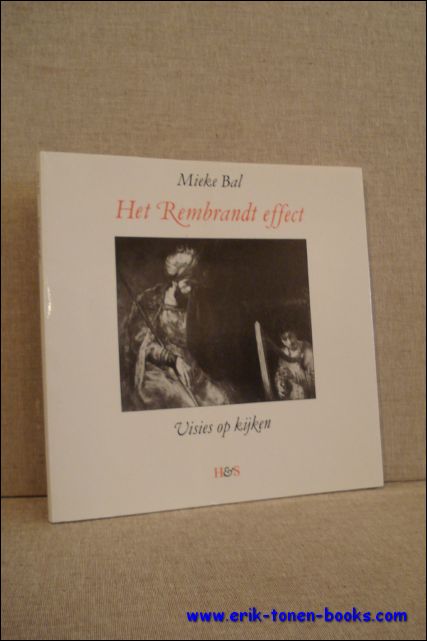
BAL, Mieke;
HET REMBRANDTEFFECT. VISIES OP KIJKEN,
Utrecht, HES Uitgevers, 1987. Wit geillustreerde kartonomslag zwart/rood, 195 x 195mm., 48pp., illustratie z/w. ISBN: 9061942063
Persoonlijke gedachten over vijf schilderijen van Rembrandt. In goede staat.
Boeknummer: 27556 | Prijs: EUR 15.00
Baldwin / Ramsden.
Art & Language Works 1965 - 1978 / 2007 - 2008
Knokke Heist, Mulier Gallery, 2008. Hardcover, 91 pages, Illustrated. color. . ISBN: 9789081322225
Exhibition catalogue 02.08 - 30.09.2008
Boeknummer: 56576 | Prijs: EUR 20.00
Baldwin / Ramsden.
Art & Language Works 1965 - 1978 / 2007 - 2008
Knokke Heist, Mulier Gallery, 2008. Hardcover, 91 pages, Illustrated. color. . ISBN: 9789081322225
Exhibition catalogue 02.08 - 30.09.2008
Boeknummer: 56576 | Prijs: EUR 20.00
Bart Verschaffel
Gezien de verte. Glossen bij kunst en esthetiek
A&S/Books, 2025. Paperback, Dimensions 215 x 140 mm, Illustrations several bw.ill., 256 Pages, Language Dutch (NL) ed. ISBN: 9789076714714
Zestien essays gepubliceerd tussen 1997 en 2024. Het gaat, zeer uiteenlopend, om glossen - verhelderende aantekeningen - bij algemene thema's zoals het belang van geschiedenis voor de kunst en de artistieke werking van het lelijke, parrhesia en artistieke vrijheid, het begrip van kairos, maar ook bij de stand van zaken in de kunstkritiek en de filosofie, en om besprekingen van Shakespeare's Hamlet, de avonturen van Nero & C°, Malpertuis van Jean Ray, en het abjecte in de verhalen van Toussaint van Boelare.
Boeknummer: 67814 | Prijs: EUR 26.00
Bart Verschaffel
Gezien de verte. Glossen bij kunst en esthetiek
A&S/Books, 2025. Paperback, Dimensions 215 x 140 mm, Illustrations several bw.ill., 256 Pages, Language Dutch (NL) ed. ISBN: 9789076714714
Zestien essays gepubliceerd tussen 1997 en 2024. Het gaat, zeer uiteenlopend, om glossen - verhelderende aantekeningen - bij algemene thema's zoals het belang van geschiedenis voor de kunst en de artistieke werking van het lelijke, parrhesia en artistieke vrijheid, het begrip van kairos, maar ook bij de stand van zaken in de kunstkritiek en de filosofie, en om besprekingen van Shakespeare's Hamlet, de avonturen van Nero & C°, Malpertuis van Jean Ray, en het abjecte in de verhalen van Toussaint van Boelare.
Boeknummer: 67814 | Prijs: EUR 26.00
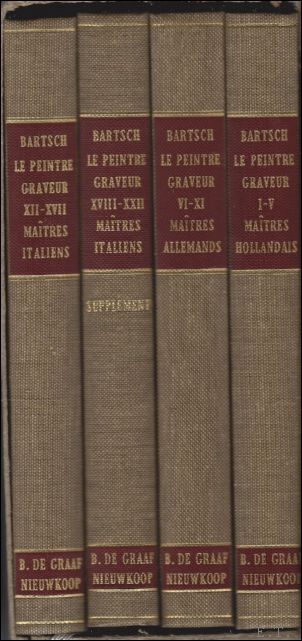
BARTSCH, A
Le peintre graveur. Nouvelle edition. 4 Vols. I-IV: Dutch (and Belgian) artists; V-XI: German artists; XII-XXI: Italian artists; XXII: Supplements.
Nieuwkoop, De Graaf / Hildesheim, Olms, 1970. Gebonden, Hardcovers, Cloth, 4 vols.Small-size.
reprint of the 22 vols. (Wurzburg 1920-22) of this famous standard work in reduced form: each page of the reprint containing four pages of the original. Vols. I-IV: Dutch (and Belgian) artists; V-XI: German artists; XII-XXI: Italian artists; XXII: Supplements.
Boeknummer: 51341 | Prijs: EUR 250.00
BAUMER, P.
Geschichte des Breviers. Versuch einer quellenmassigen Darstellung der Entwicklung des altkirchlichen und des romischen Officiums bis auf unsere Tage. 1 e
Freiburg, Herdersche Verlagshandlung., 1895. Gebunden, 5x24 cm., 640 S., in good condition !!!
Boeknummer: 27264 | Prijs: EUR 85.00
BEKAERT, Geert ;
POP. HET WEZEN VAN DE KUNST,
Leuven, Davidsfonds, 1966. oorspronkelijk, geillustreerde kartonomslag zwart/ rood, 125 x 190mm., 64pp., z/w illustratie.
Horizonreeks nr. 2. In goede staat. scriptie over kunst
Boeknummer: 28562 | Prijs: EUR 12.50
Ben Stoltzfus
Magritte and Literature, Elective Affinities. Magritte?s interarts dialog with literature
The Belgian surrealist artist Rene Magritte (1898?1967) is well known for his thought-provoking and witty images that challenge the observer?s preconditioned perceptions of reality.
BE -, UPL, 2014. paperback, 288 p., English. ISBN: 9789058679604
Magritte and Literature examines some of the artist's major paintings whose titles were influenced by and related to works of literature. Baudelaire's The Flowers of Evil, Goethe's Elective Affinities, and Poe's The Domain of Arnheim are representative examples of Magritte's interarts dialog with literary figures. His strategy is to paint visible thought, and this reverse ekphrasis, the opposite of a rhetorical description of a painting, undermines the written text. When he succeeds,
Boeknummer: 43735 | Prijs: EUR 45.00
Bergamini / Tavano
Storia dell'arte nel friuli venezia giulia
IT., chiandetti editore, 1991. softcover 562 pages Illustrated.
dall'epoca romana al duecento
Boeknummer: 51367 | Prijs: EUR 35.00
Bettina Brand-Claussen |Torsten Kappenberg, Monika M.A. Jagfeld
Geheim schrift de Prinzhorncollectie
Museum Dr. Guislain, 2004. Softcover, 167 pagina's., 195 genummerde afbeeldingen in kleur en z/w.,. ISBN: 9789076745053
Boeken, schriften, kalenders en etc een tentoonstelling Prinzhorncollectie
Boeknummer: 51159 | Prijs: EUR 69.00
Bridgland, Janet (ed.)
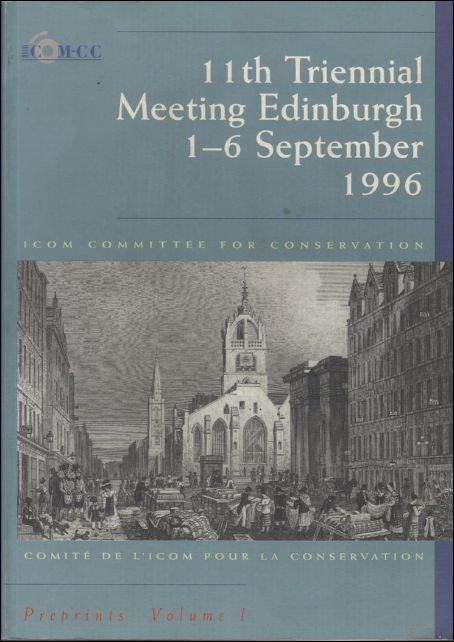
Meeting ICOM Committee for Conservation. Triennial meeting, 11th, Edinburgh, Scotland, 1996
Place, publisher, year London : James and James (Science Publishers), 1996 ; VOLUME 1. only
1996. Softcover, Language(s) English, French Collation 2 v. (xiii, viii, 478 p.) ; illus., graphs ; 30 cm. ISBN: 9781873936504
Primary descriptors conservation; restoration; international committees; meetings. Language(s) Multiple languages Nature of contents Proceedings, final report of a meeting
Boeknummer: 50909 | Prijs: EUR 35.00