




Geesteswetenschappen
502 boeken gevonden





--
Hadewijch d'Anvers. -Écrits mystiques des béguines. Traduit du Moyen-Néerlandais par fr. J.-B. P.
Editions du Seuil,, 1954. soft cover, 187 pag. 18x11 cm. ISBN: 9782020030182
Hadewijch d'Anvers. -Écrits mystiques des béguines. Traduit du Moyen-Néerlandais par fr. J.-B. P.
Boeknummer: 66809 | Prijs: EUR 12.00
--
Hadewijch d'Anvers. -Écrits mystiques des béguines. Traduit du Moyen-Néerlandais par fr. J.-B. P.
Editions du Seuil,, 1954. soft cover, 187 pag. 18x11 cm. ISBN: 9782020030182
Hadewijch d'Anvers. -Écrits mystiques des béguines. Traduit du Moyen-Néerlandais par fr. J.-B. P.
Boeknummer: 66809 | Prijs: EUR 12.00
A. Bisogno;
Il metodo carolingio Identita culturale e dibattito teologico nel secolo nono,
Turnhout, Brepols, 2009. Paperback, II+428 p., 2 colour ill., 16 x 24. ISBN: 9782503528625
Lo stretto nodo che congiunge il progressivo formarsi dell'identita culturale all'evoluzione dinamica del sapere in eta carolingia viene evidenzato in questo studio mediante una serrata analisi critica e storiografica delle diverse opere di argomento teologico scritte dai pensatori che furono piu coinvolti nei dibattiti sull'ortodossia cristiana tra i primi anni di regno di Carlo Magno (dal 780 in poi) e la seconda meta del secolo IX. La lettura, il commento e l'esegesi dei testi che documentano tali discussioni consentono l'accesso piu efficace e sostanziale all'evoluzione della teologia carolingia, che trovo proprio nel confronto con tesi ritenute eterodosse la spinta a chiarire i temi piu delicati della dottrina cristiana. Da Beato di Libana, Alcuino e Rabano Mauro, fino a Ratramno di Corbie e Giovanni Scoto Eriugena, gli intellettuali carolingi si impegnarono nel comporre opere tendenzialmente ispirate dalla volonta di confutare argomentazioni estranee all'ortodossia e di specificare dottrine non ancora stabilmente definite. Il patrimonio patristico, la lettura assidua e consapevole delle Scritture e lo studio delle artes profane, tutti elementi che si ponevano alla base della loro formazione sapienziale, vennero cosi rielaborati in una comune identita teologica: in essa prese forma e concretezza la stessa ossatura culturale della nuova entita civile che con gli strumenti della politica, dell'azione militare e del controllo economico si andava creando e consolidando nell'Occidente latino in quegli stessi anni. Le fasi piu intense del complesso quadro di dibattiti ricostruito nel presente volume evidenziano il duplice ruolo rivestito in eta carolingia dalla discussione su temi teologici: funzionale a contenere e delimitare deviazioni dalla ortodossia di autori contemporanei, e, al contempo, utile ad una progressiva definizione della dottrina e dell'identita culturale del nuovo impero barbaro-cristiano. Languages : Italian.
Boeknummer: 40426 | Prijs: EUR 82.50
A. Maurer (ed.);
Three Quests in Philosophy. The Education of a Philosopher; In Quest of Species; In Quest of Matter,
Turnhout, Brepols, 2008. Paperback, XI+145 pages ., 150 x 230 mm. ISBN: 9780888447319
Etienne Gilson was one of the most influential intellectuals and philosophers of the twentieth century. Some have credited him with expanding the spectrum of philo?sophical thought that had previously been limited by nineteenth-century analysts and positivists. Gilson devoted six decades to the study of the major philosophical figures of the Middle Ages. His interpretations of them are justly seen as new and insightful, and have exercised enormous influence on research in philosophy and on its presentation in the classroom. A 'Gilson Society' has been active for years, and the Institut catholique in Paris has created a Gilson Chair in philosophy. A French publisher has announced a multi-volume publication of his complete works. These seven previously unpublished lectures - Gilson termed them 'Quests' - represent his mature thought on three key philosophical questions: the nature of philosophy, 'species', and 'matter'. These are issues of perennial and pertinent interest to both philosophers and scientists. Gilson presents them here with his characteristic clarity, sense, and humour. Language : English.
Boeknummer: 38114 | Prijs: EUR 18.50
A. Maurer;
Medieval Philosophy,
Turnhout, Brepols, 1982. Paperback, 477 p., 135 x 230 mm.Language : English. ISBN: 9780888447043
Medieval Philosophy
Boeknummer: 38109 | Prijs: EUR 33.00
Abdurishid Yakup (ed)
Buddhhvatamsaka literature in Old Uyghur
Brepols, 2021. Paperback, 536 pages, Size:210 x 297 mm, Illustrations:56 col., Language(s):English, Uygur. ISBN: 9782503584188
Summary This volume presents an edition of the Buddh?vata?saka literature in Old Uyghur mainly focusing on the fragments of the Buddh?vata?saka s?tra in eighty volumes and the Buddh?vata?saka s?tra in fourty volumes kept in the Berlin Turfan collection in close consultation of the fragments of both texts kept in Dunhuang, Kyoto, St. Petersburg and Taibei. It also includes an edition of other Old Uyghur texts, e.g. verse composition and verse translation of the last chapter of the Buddh?vata?saka s?tra in fourty volumes by the famous Old Uyghur translator and poet Anzang, fragments of a commentary to the Buddh?vata?saka s?tra and other texts which can be classified to the Buddh?vata?saka literature.
Boeknummer: 65433 | Prijs: EUR 90.00
Abdurishid Yakup (ed)
Buddhhvatamsaka literature in Old Uyghur
Brepols, 2021. Paperback, 536 pages, Size:210 x 297 mm, Illustrations:56 col., Language(s):English, Uygur. ISBN: 9782503584188
Summary This volume presents an edition of the Buddh?vata?saka literature in Old Uyghur mainly focusing on the fragments of the Buddh?vata?saka s?tra in eighty volumes and the Buddh?vata?saka s?tra in fourty volumes kept in the Berlin Turfan collection in close consultation of the fragments of both texts kept in Dunhuang, Kyoto, St. Petersburg and Taibei. It also includes an edition of other Old Uyghur texts, e.g. verse composition and verse translation of the last chapter of the Buddh?vata?saka s?tra in fourty volumes by the famous Old Uyghur translator and poet Anzang, fragments of a commentary to the Buddh?vata?saka s?tra and other texts which can be classified to the Buddh?vata?saka literature.
Boeknummer: 65433 | Prijs: EUR 90.00
Adriano Oliva OP
Penser l'amour avec Thomas d'Aquin. Lecture philosophique
Brepols, 2023. Paperback, xii + 318 pages, Size:170 x 240 mm, Language: French. ISBN: 9782503607801
Summary Qu'est-ce que l'amour et quelles sont ses différentes formes? C'est la question que Thomas d'Aquin s'est posée dès les débuts de son enseignement. Ce livre étudie ses réponses. Lues au prisme de l'histoire de la philosophie, elles révèlent ce qu'est "essentiellement" l'amour : l'union de l'aimant et de l'aimé, fondée sur une convenance de nature entre les deux. Cette conception philosophique de l'amour, que Thomas déploie en théologie, concerne tous les étants et les relie entre eux dans une sorte d'amitié qui, cependant, est propre aux êtres spirituels et libres. L'intelligence et la volonté, enracinées dans la liberté de la substance spirituelle, concourent à l'acte d'amour selon leur opération propre et réciproque. Le mouvement de la volonté se fait lumière chez l'intelligence: " Là où se trouve l'amour, là est le regard '', écrit Thomas. TABLE OF CONTENTS Préface de Pasquale Porro Avant-propos Introduction 1. La question de l'amour chez Thomas d'Aquin 2. La philosophie dans les écrits théologiques de Thomas d'Aquin 3. Méthode et propos de notre étude I. Qu'est-ce que l'amour en Dieu ? 1. Les autorités révélées et les autorités philosophiques 2. Bien incréé et bien créé 3. L'amour incréé II. L'amour chez les créatures purement spirituelles 1. La nature des substances séparées ou purement spirituelles 2. Y a-t-il une volonté dans les anges ou substances séparées ? 3. L'amour chez les anges ou substances séparées 4. Aimer par nature soi-même et Dieu plus que soi-même 5. Conclusion : l'amour naturel de l'ange au premier instant de sa création III. L'amour chez l'homme 1. La nature humaine : richesse et complexité 2. L'âme et ses puissances 3. Les passions de l'âme en général 4. Excursus à propos du mot complacentia 5. L'amour passion et l'amour en général 6. Les causes ou principes de l'amour 7. L'union d'amour chez les créatures 8. L'amitié comme union d'amour : son fondement et ses caractéristiques 9. Conclusion : La gratuité caractérise tout amour de bienveillance Conclusion générale Sigles et abréviations Bibliographie Index des noms et des ouvrages cités
Boeknummer: 63159 | Prijs: EUR 60.00
Adriano Oliva OP
Penser l'amour avec Thomas d'Aquin. Lecture philosophique
Brepols, 2023. Paperback, xii + 318 pages, Size:170 x 240 mm, Language: French. ISBN: 9782503607801
Summary Qu'est-ce que l'amour et quelles sont ses différentes formes? C'est la question que Thomas d'Aquin s'est posée dès les débuts de son enseignement. Ce livre étudie ses réponses. Lues au prisme de l'histoire de la philosophie, elles révèlent ce qu'est "essentiellement" l'amour : l'union de l'aimant et de l'aimé, fondée sur une convenance de nature entre les deux. Cette conception philosophique de l'amour, que Thomas déploie en théologie, concerne tous les étants et les relie entre eux dans une sorte d'amitié qui, cependant, est propre aux êtres spirituels et libres. L'intelligence et la volonté, enracinées dans la liberté de la substance spirituelle, concourent à l'acte d'amour selon leur opération propre et réciproque. Le mouvement de la volonté se fait lumière chez l'intelligence: " Là où se trouve l'amour, là est le regard '', écrit Thomas. TABLE OF CONTENTS Préface de Pasquale Porro Avant-propos Introduction 1. La question de l'amour chez Thomas d'Aquin 2. La philosophie dans les écrits théologiques de Thomas d'Aquin 3. Méthode et propos de notre étude I. Qu'est-ce que l'amour en Dieu ? 1. Les autorités révélées et les autorités philosophiques 2. Bien incréé et bien créé 3. L'amour incréé II. L'amour chez les créatures purement spirituelles 1. La nature des substances séparées ou purement spirituelles 2. Y a-t-il une volonté dans les anges ou substances séparées ? 3. L'amour chez les anges ou substances séparées 4. Aimer par nature soi-même et Dieu plus que soi-même 5. Conclusion : l'amour naturel de l'ange au premier instant de sa création III. L'amour chez l'homme 1. La nature humaine : richesse et complexité 2. L'âme et ses puissances 3. Les passions de l'âme en général 4. Excursus à propos du mot complacentia 5. L'amour passion et l'amour en général 6. Les causes ou principes de l'amour 7. L'union d'amour chez les créatures 8. L'amitié comme union d'amour : son fondement et ses caractéristiques 9. Conclusion : La gratuité caractérise tout amour de bienveillance Conclusion générale Sigles et abréviations Bibliographie Index des noms et des ouvrages cités
Boeknummer: 63159 | Prijs: EUR 60.00
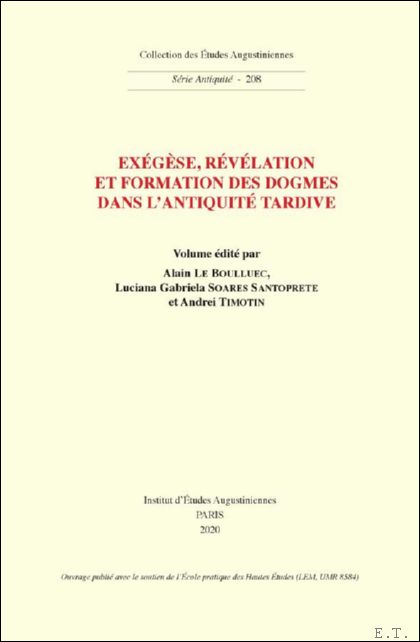
Alain Le Boulluec, Luciana Gabriela Soares Santoprete, Andrei Timotin (eds)
Exégèse, révélation et formation des dogmes dans l'Antiquité tardive
Brepols - Institut d'Etudes Augustiniennes, 2020. Paperback, 330 pages, Size:165 x 250 mm, Languages: French, Latin, Greek. ISBN: 9782851213082
Summary Following the studies of Pierre Hadot, we know that the main approach to philosophy in Late Antiquity takes the form of an exegesis of authoritative texts, not without altering their primary aim. As soon as the texts come to be perceived as the products of a divine revelation, the hermeneutics applied to them are indistinguishable from a theology. Reading and commenting on the revelatory texts imply an almost religious adherence to their doctrinal content, which is close to being understood as articles of belief. These two complementary aspects were accentuated in a complex relationship of rivalry with Christianity. The gradual transition from a philosophical to a religious conception of the world in Late Antiquity, from the first to the sixth century, has not been sufficiently analysed. This book aims to help fill this gap. It brings together the perspectives of various specialists - historians of ancient philosophy, religions in the Graeco-Roman world, and patristics - around three specific themes: the place of theological revelations within the philosophical discourse in Late Antiquity, the exegetical approach as a source of philosophical and theological dogmas, and the role of polemics in the establishment of a new relationship between beliefs and philosophy. Depuis les études de Pierre Hadot, on sait que la démarche philosophique à la fin de l'Antiquité prend principalement la forme d'une exégèse des textes faisant autorité, non sans altérer leur visée première. Dès lors qu'ils sont perçus comme l'objet d'une révélation divine, cette herméneutique est indissociable d'une théologie. La lecture et le commentaire des textes impliquent une adhésion quasi religieuse à leur contenu doctrinal, lequel est près d'être assumé comme un ensemble d'articles de foi. Ces deux aspects complémentaires se sont accentués dans une relation complexe de rivalité avec le christianisme. Cette transition progressive d'une conception philosophique du monde à une perception religieuse dans l'Antiquité tardive, du Ier siècle au VIe, n'a pas été suffisamment analysée. Le présent livre veut contribuer à combler cette lacune. Il fait se croiser les perspectives de divers spécialistes - historiens de la philosophie ancienne, des religions du monde gréco-romain et de la patristique - autour de trois thèmes de réflexion précis?: la place des révélations théologiques dans le discours philosophique de l'Antiquité tardive, la démarche exégétique comme source des dogmes philosophiques et théologiques, ainsi que le rôle de la polémique dans l'instauration d'un nouveau rapport entre croyances et philosophie. TABLE OF CONTENTS Introduction Une exégèse fondée sur l'accord entre la théologie de Platon et les théologies orphique et chaldaïque dans les Écoles d'Athènes et d'Alexandrie (Luc Brisson) Oracles and Revelations as a Philosophical Mannerism (Menahem Luz) Exégèses des Oracles chaldaïques de Porphyre à Pléthon: le fr. 110 des Places (Helmut Seng) Le "signe démonique" de Socrate dans la tradition platonicienne, de l'exégèse à la croyance (Andrei Timotin) Prière et appropriation des dogmes dans le stoïcisme impérial: vers une conversion philosophique de nature religieuse? (Jordi Pià) À la recherche des uiri noui: stratégies de la réfutation et enjeux polémiques chez Arnobe (Chiara O. Tommasi) Les arguments de Porphyre ont-ils joué un rôle dans la constitution des doctrines chrétiennes? (Sébastien Morlet) Le Diptyque des Nicomaques et des Symmaques au coeur de la polémique pagano-chrétienne (Stéphane Ratti) Les "mystères" chez Eusèbe de Césarée: entre débat philosophique et polémique religieuse (Francesco Massa) Métaphysique et Révélation: le débat entre Eunome de Cyzique et Grégoire de Nysse (Laurent Lavaud) "Et l'homme tout entier devient dieu": la déification selon Origène à la lumière des nouvelles Homélies sur les Psaumes (Lorenzo Perrone) Le rôle de l'exégèse pour la formation du dogme chrétien dans la polémique antijuive: le cas de la théophanie de Mambré (Gn 18) (Marie-Odile Boulnois) La conception augustinienne de la uisio dei: de la polémique au dogme (Giovanni Filoramo) Écritures, christologie et (un peu de) philosophie dans la révélation sibylline (Nicoletta Brocca) Usages divinatoires du livre: une "anti-exégèse"? (Aude Busine) Index Table des matières
Boeknummer: 65839 | Prijs: EUR 43.00
Alain Le Boulluec, Luciana Gabriela Soares Santoprete, Andrei Timotin (eds)
Exégèse, révélation et formation des dogmes dans l'Antiquité tardive
Brepols - Institut d'Etudes Augustiniennes, 2020. Paperback, 330 pages, Size:165 x 250 mm, Languages: French, Latin, Greek. ISBN: 9782851213082
Summary Following the studies of Pierre Hadot, we know that the main approach to philosophy in Late Antiquity takes the form of an exegesis of authoritative texts, not without altering their primary aim. As soon as the texts come to be perceived as the products of a divine revelation, the hermeneutics applied to them are indistinguishable from a theology. Reading and commenting on the revelatory texts imply an almost religious adherence to their doctrinal content, which is close to being understood as articles of belief. These two complementary aspects were accentuated in a complex relationship of rivalry with Christianity. The gradual transition from a philosophical to a religious conception of the world in Late Antiquity, from the first to the sixth century, has not been sufficiently analysed. This book aims to help fill this gap. It brings together the perspectives of various specialists - historians of ancient philosophy, religions in the Graeco-Roman world, and patristics - around three specific themes: the place of theological revelations within the philosophical discourse in Late Antiquity, the exegetical approach as a source of philosophical and theological dogmas, and the role of polemics in the establishment of a new relationship between beliefs and philosophy. Depuis les études de Pierre Hadot, on sait que la démarche philosophique à la fin de l'Antiquité prend principalement la forme d'une exégèse des textes faisant autorité, non sans altérer leur visée première. Dès lors qu'ils sont perçus comme l'objet d'une révélation divine, cette herméneutique est indissociable d'une théologie. La lecture et le commentaire des textes impliquent une adhésion quasi religieuse à leur contenu doctrinal, lequel est près d'être assumé comme un ensemble d'articles de foi. Ces deux aspects complémentaires se sont accentués dans une relation complexe de rivalité avec le christianisme. Cette transition progressive d'une conception philosophique du monde à une perception religieuse dans l'Antiquité tardive, du Ier siècle au VIe, n'a pas été suffisamment analysée. Le présent livre veut contribuer à combler cette lacune. Il fait se croiser les perspectives de divers spécialistes - historiens de la philosophie ancienne, des religions du monde gréco-romain et de la patristique - autour de trois thèmes de réflexion précis?: la place des révélations théologiques dans le discours philosophique de l'Antiquité tardive, la démarche exégétique comme source des dogmes philosophiques et théologiques, ainsi que le rôle de la polémique dans l'instauration d'un nouveau rapport entre croyances et philosophie. TABLE OF CONTENTS Introduction Une exégèse fondée sur l'accord entre la théologie de Platon et les théologies orphique et chaldaïque dans les Écoles d'Athènes et d'Alexandrie (Luc Brisson) Oracles and Revelations as a Philosophical Mannerism (Menahem Luz) Exégèses des Oracles chaldaïques de Porphyre à Pléthon: le fr. 110 des Places (Helmut Seng) Le "signe démonique" de Socrate dans la tradition platonicienne, de l'exégèse à la croyance (Andrei Timotin) Prière et appropriation des dogmes dans le stoïcisme impérial: vers une conversion philosophique de nature religieuse? (Jordi Pià) À la recherche des uiri noui: stratégies de la réfutation et enjeux polémiques chez Arnobe (Chiara O. Tommasi) Les arguments de Porphyre ont-ils joué un rôle dans la constitution des doctrines chrétiennes? (Sébastien Morlet) Le Diptyque des Nicomaques et des Symmaques au coeur de la polémique pagano-chrétienne (Stéphane Ratti) Les "mystères" chez Eusèbe de Césarée: entre débat philosophique et polémique religieuse (Francesco Massa) Métaphysique et Révélation: le débat entre Eunome de Cyzique et Grégoire de Nysse (Laurent Lavaud) "Et l'homme tout entier devient dieu": la déification selon Origène à la lumière des nouvelles Homélies sur les Psaumes (Lorenzo Perrone) Le rôle de l'exégèse pour la formation du dogme chrétien dans la polémique antijuive: le cas de la théophanie de Mambré (Gn 18) (Marie-Odile Boulnois) La conception augustinienne de la uisio dei: de la polémique au dogme (Giovanni Filoramo) Écritures, christologie et (un peu de) philosophie dans la révélation sibylline (Nicoletta Brocca) Usages divinatoires du livre: une "anti-exégèse"? (Aude Busine) Index Table des matières
Boeknummer: 65839 | Prijs: EUR 43.00
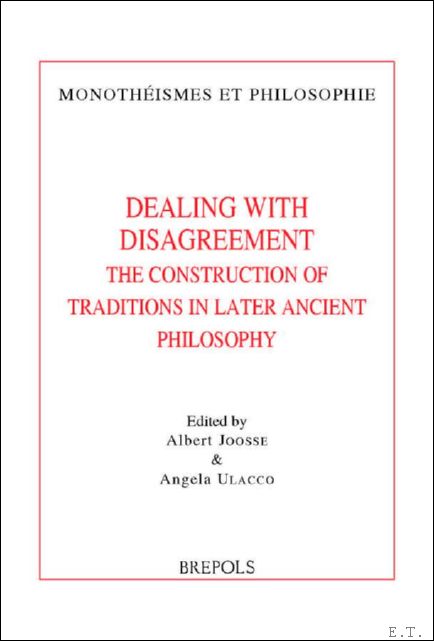
Albert Joosse, Angela Ulacco (eds)
Dealing with Disagreement. The Construction of Traditions in Later Ancient Philosophy
Brepols, 2023. Paperback, 234 pages, Size:156 x 234 mm, Language(s):English, French, German. ISBN: 9782503602844
Summary Ancient philosophy is known for its organisation into distinct schools. But those schools were not locked into static dogmatism. As recent scholarship has shown, lively debate persisted between and within traditions. Yet the interplay between tradition and disagreement remains underexplored. This volume asks, first, how philosophers talked about differences of opinion within and between traditions and, second, how such debates affected the traditions involved. It covers the period from the first century BCE, which witnessed a turn to authoritative texts in different philosophical movements, through the rise of Christianity, to the golden age of Neoplatonic commentaries in the fifth and sixth centuries CE. By studying various philosophical and Christian traditions alongside and in interaction with each other, this volume reveals common philosophical strategies of identification and differentiation. Ancient authors construct their own traditions in their (polemical) engagements with dissenters and opponents. Yet this very process of dissociation helped establish a common conceptual ground between traditions. This volume will be an important resource for specialists in late ancient philosophy, early Christianity, and the history of ideas. TABLE OF CONTENTS Albert Joosse and Angela Ulacco ? Introduction Riccardo Chiaradonna ? The Early Peripatetic Interpreters of Aristotle's Categories and the Previous Philosophical Tradition Franco Ferrari ? È esistita un'eterodossia nel medioplatonismo? Teun Tieleman ? Galen on Disagreement: Sects, Philosophical Methods and Christians Albert Joosse ? ????? ?????? and the Platonic Tradition in Clement of Alexandria Sébastien Morlet ? L'accusation de mauvaise entente (???????) dans la polémique entre païens et chrétiens à la fin de l'Antiquité Robbert M. van den Berg ? Plato's Violent Readers: Pagan Neoplatonists against Christian Appropriations of Plato's Timaeus Helmut Seng ? Mythenkritik und Kultpolemik bei Firmicus Maternus Alexandra Michalewski ? « L'âme est le lieu des formes » Une réponse à l'argument du troisième homme à travers la symphônia de Platon et d'Aristote dans le Commentaire à la Métaphysique d'Asclépius de Tralles Mareike Hauer ? The Use of Stoic References in Simplicius' Discussion of Quality Index Bibliography
Boeknummer: 64330 | Prijs: EUR 50.00
Albert Joosse, Angela Ulacco (eds)
Dealing with Disagreement. The Construction of Traditions in Later Ancient Philosophy
Brepols, 2023. Paperback, 234 pages, Size:156 x 234 mm, Language(s):English, French, German. ISBN: 9782503602844
Summary Ancient philosophy is known for its organisation into distinct schools. But those schools were not locked into static dogmatism. As recent scholarship has shown, lively debate persisted between and within traditions. Yet the interplay between tradition and disagreement remains underexplored. This volume asks, first, how philosophers talked about differences of opinion within and between traditions and, second, how such debates affected the traditions involved. It covers the period from the first century BCE, which witnessed a turn to authoritative texts in different philosophical movements, through the rise of Christianity, to the golden age of Neoplatonic commentaries in the fifth and sixth centuries CE. By studying various philosophical and Christian traditions alongside and in interaction with each other, this volume reveals common philosophical strategies of identification and differentiation. Ancient authors construct their own traditions in their (polemical) engagements with dissenters and opponents. Yet this very process of dissociation helped establish a common conceptual ground between traditions. This volume will be an important resource for specialists in late ancient philosophy, early Christianity, and the history of ideas. TABLE OF CONTENTS Albert Joosse and Angela Ulacco ? Introduction Riccardo Chiaradonna ? The Early Peripatetic Interpreters of Aristotle's Categories and the Previous Philosophical Tradition Franco Ferrari ? È esistita un'eterodossia nel medioplatonismo? Teun Tieleman ? Galen on Disagreement: Sects, Philosophical Methods and Christians Albert Joosse ? ????? ?????? and the Platonic Tradition in Clement of Alexandria Sébastien Morlet ? L'accusation de mauvaise entente (???????) dans la polémique entre païens et chrétiens à la fin de l'Antiquité Robbert M. van den Berg ? Plato's Violent Readers: Pagan Neoplatonists against Christian Appropriations of Plato's Timaeus Helmut Seng ? Mythenkritik und Kultpolemik bei Firmicus Maternus Alexandra Michalewski ? « L'âme est le lieu des formes » Une réponse à l'argument du troisième homme à travers la symphônia de Platon et d'Aristote dans le Commentaire à la Métaphysique d'Asclépius de Tralles Mareike Hauer ? The Use of Stoic References in Simplicius' Discussion of Quality Index Bibliography
Boeknummer: 64330 | Prijs: EUR 50.00
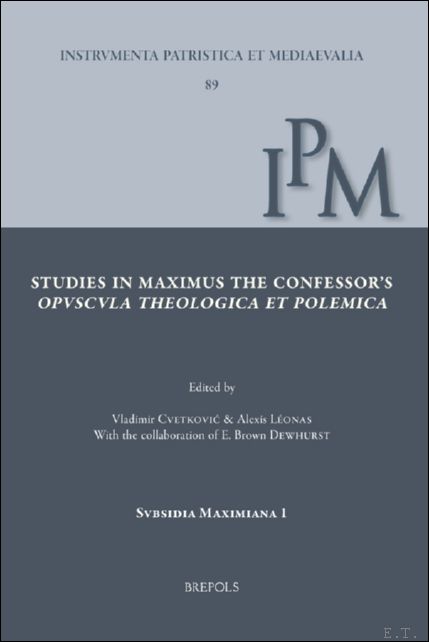
Alexis Léonas, Vladimir Cvetkovic (eds)
Studies in Maximus the Confessor?s Opuscula Theologica et Polemica. Papers Collected on the Occasion of the Belgrade Colloquium on Saint Maximus, 3-4 February 2020
Brepols, 2023. Hardback, 255 pages, Size:156 x 234 mm, Language: English. ISBN: 9782503600833
Summary Opuscula theologica et polemica is a collection of minor works of Maximus the Confessor that has not received much scholarly attention so far. Nevertheless, it offers A unique insight into the Christological and personological universe of the Christian thinker. The present volume is the first attempt to bring together scholars of different traditions and to apply different approaches - theological, philosophical, philological and historical - to this seminal work. TABLE OF CONTENTS Alex Léonas & Vladimir Cvetkovi?, Introduction Christian Boudignon, What are the Opuscula theologica and polemica? A Philological Question Bram Roosen, Maximian ??????? against the Monothelites Bronwen Neil & Ryan Strickler, Letters of Maximus in the Collectanea of Anastasius Bibliothecarius Aleksandar Djakovac, Maximus' Relational Ontology Kevin M. Clarke, Maximus the Confessor's Anti-Severan Polemics in the Opuscula Sebastian Mateiescu, Arguing with the Properties of Christ Romilo Aleksandar Kne?evi?, Maximus' Opuscula and the Concept of the Hypostatic Union Miklós Vassányi, A Problem of Identity in St Maximus' Opusculum 14 Dionisios Skliris, The Ambiguity of the Gnomic Will as Basis for a Theory of Human Individuality in the Thought of Saint Maximus the Confessor Index of Maximus Citations Index of Names Index of Theological and Philosophical Terms List of Contributors
Boeknummer: 64458 | Prijs: EUR 70.00
Alexis Léonas, Vladimir Cvetkovic (eds)
Studies in Maximus the Confessor?s Opuscula Theologica et Polemica. Papers Collected on the Occasion of the Belgrade Colloquium on Saint Maximus, 3-4 February 2020
Brepols, 2023. Hardback, 255 pages, Size:156 x 234 mm, Language: English. ISBN: 9782503600833
Summary Opuscula theologica et polemica is a collection of minor works of Maximus the Confessor that has not received much scholarly attention so far. Nevertheless, it offers A unique insight into the Christological and personological universe of the Christian thinker. The present volume is the first attempt to bring together scholars of different traditions and to apply different approaches - theological, philosophical, philological and historical - to this seminal work. TABLE OF CONTENTS Alex Léonas & Vladimir Cvetkovi?, Introduction Christian Boudignon, What are the Opuscula theologica and polemica? A Philological Question Bram Roosen, Maximian ??????? against the Monothelites Bronwen Neil & Ryan Strickler, Letters of Maximus in the Collectanea of Anastasius Bibliothecarius Aleksandar Djakovac, Maximus' Relational Ontology Kevin M. Clarke, Maximus the Confessor's Anti-Severan Polemics in the Opuscula Sebastian Mateiescu, Arguing with the Properties of Christ Romilo Aleksandar Kne?evi?, Maximus' Opuscula and the Concept of the Hypostatic Union Miklós Vassányi, A Problem of Identity in St Maximus' Opusculum 14 Dionisios Skliris, The Ambiguity of the Gnomic Will as Basis for a Theory of Human Individuality in the Thought of Saint Maximus the Confessor Index of Maximus Citations Index of Names Index of Theological and Philosophical Terms List of Contributors
Boeknummer: 64458 | Prijs: EUR 70.00
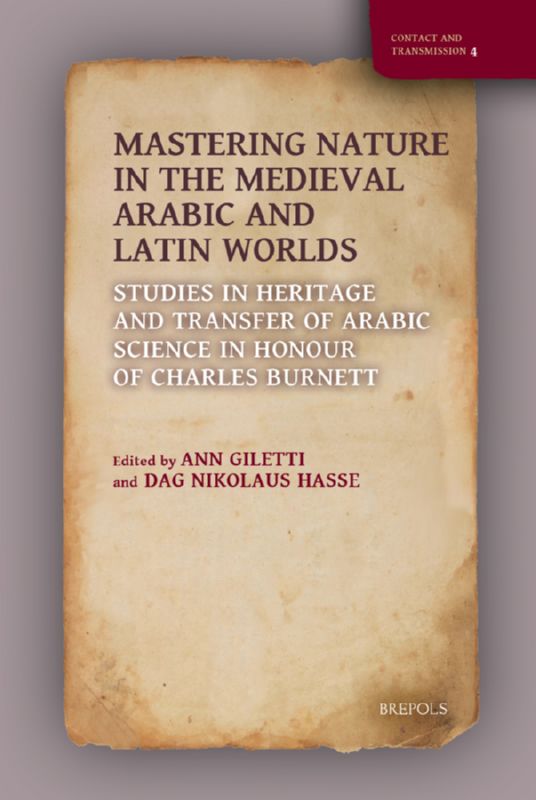
Ann Giletti, Dag Nikolaus Hasse (eds)
Mastering Nature in the Medieval Arabic and Latin Worlds. Studies in Heritage and Transfer of Arabic Science in Honour of Charles Burnett
Brepols, 2023. Hardback, 292 pages, Size:156 x 234 mm, Illustrations:8 b/w, 9 col., 6 tables b/w., Language(s):English, Latin, Arabic. ISBN: 9782503604480
Summary Understanding and influencing nature were preeminent aims of medieval Arabic science, and attracted European fascination with its accomplishments. This volume draws together studies on central themes, presenting a world of enquiry into the earth and the heavens, and ways to harness this information for divination and the occult sciences. It gives examples of how Arabic science travelled to Latin Europe through texts and instruments, and how it underwent transformation there as diverse fields were put to use and reinterpreted. The studies introduce a range of learning and perspectives: astrology conducted with planetary lots; a geography where features of the earth's surface move over time; knowledge of the elements and climates which Adelard of Bath learned from Arab masters; Avicenna's meteorology explaining the extremes of fire storms and catastrophic floods; debates about the eternity or creation of the world; evaluations of magic as a rational, intellectual discipline, or alternatively a danger needing censorship and linked to female witchcraft; and a precious astrolabe which in the Renaissance was reused and inspired new theoretical writings. Together these studies sketch a landscape of medieval Arabic science and Latin European engagement with this new frontier. TABLE OF CONTENTS Introduction Ab? Ma?shar and the Tradition of Planetary Lots in Astrology ?DORIAN GIESELER GREENBAUM The Ikhw?n al-?af?? on the ??rat al-Ar?: A Geography in Motion? GODEFROID DE CALLATA? Adelard of Bath on Climates and the Elements: An Adaptive View on Nature ? PEDRO-MANTAS ESPAÑA Avicenna's On Floods (De diluviis) in Latin Translation: Critical Edition with an English Translation of the Arabic ? DAG NIKOLAUS HASSE Latin Scholastics on the Eternity of the World and Eternal Creation on the Part of the Creature: Did They Amount to the Same Thing? ? ANN GILETTI Whitewash for ?Black Magic': Justifications and Arguments in Favour of Magic in the Latin Picatrix ? DAVID PORRECA Censorship, maleficia, and the Medieval Readers of the Liber vaccae ? SOPHIE PAGE The Transmission of Materialized Knowledge: A Medieval Saphea with Islamic Projections, Re-engraved in the Renaissance ? KOENRAD VAN CLEEMPOEL Bibliography of Works by Charles S. F. Burnett Index
Boeknummer: 63297 | Prijs: EUR 100.00
Ann Giletti, Dag Nikolaus Hasse (eds)
Mastering Nature in the Medieval Arabic and Latin Worlds. Studies in Heritage and Transfer of Arabic Science in Honour of Charles Burnett
Brepols, 2023. Hardback, 292 pages, Size:156 x 234 mm, Illustrations:8 b/w, 9 col., 6 tables b/w., Language(s):English, Latin, Arabic. ISBN: 9782503604480
Summary Understanding and influencing nature were preeminent aims of medieval Arabic science, and attracted European fascination with its accomplishments. This volume draws together studies on central themes, presenting a world of enquiry into the earth and the heavens, and ways to harness this information for divination and the occult sciences. It gives examples of how Arabic science travelled to Latin Europe through texts and instruments, and how it underwent transformation there as diverse fields were put to use and reinterpreted. The studies introduce a range of learning and perspectives: astrology conducted with planetary lots; a geography where features of the earth's surface move over time; knowledge of the elements and climates which Adelard of Bath learned from Arab masters; Avicenna's meteorology explaining the extremes of fire storms and catastrophic floods; debates about the eternity or creation of the world; evaluations of magic as a rational, intellectual discipline, or alternatively a danger needing censorship and linked to female witchcraft; and a precious astrolabe which in the Renaissance was reused and inspired new theoretical writings. Together these studies sketch a landscape of medieval Arabic science and Latin European engagement with this new frontier. TABLE OF CONTENTS Introduction Ab? Ma?shar and the Tradition of Planetary Lots in Astrology ?DORIAN GIESELER GREENBAUM The Ikhw?n al-?af?? on the ??rat al-Ar?: A Geography in Motion? GODEFROID DE CALLATA? Adelard of Bath on Climates and the Elements: An Adaptive View on Nature ? PEDRO-MANTAS ESPAÑA Avicenna's On Floods (De diluviis) in Latin Translation: Critical Edition with an English Translation of the Arabic ? DAG NIKOLAUS HASSE Latin Scholastics on the Eternity of the World and Eternal Creation on the Part of the Creature: Did They Amount to the Same Thing? ? ANN GILETTI Whitewash for ?Black Magic': Justifications and Arguments in Favour of Magic in the Latin Picatrix ? DAVID PORRECA Censorship, maleficia, and the Medieval Readers of the Liber vaccae ? SOPHIE PAGE The Transmission of Materialized Knowledge: A Medieval Saphea with Islamic Projections, Re-engraved in the Renaissance ? KOENRAD VAN CLEEMPOEL Bibliography of Works by Charles S. F. Burnett Index
Boeknummer: 63297 | Prijs: EUR 100.00
Aristoteles, Lisa Devriese (ed)
Physiognomonica. Translatio Bartholomaei de Messana
Brepols, 2019. Hardback, cx + 74 pages, Size:178 x 254 mm, Illustrations:2 b/w, 22 tables b/w., Language(s):Latin, English. ISBN: 9782503585673
Summary The volume offers the first critical edition of the medieval Latin translation of Aristotle's Physiognomonica. This treatise, nowadays considered pseudo-Aristotelian, is translated into Latin between 1258 and 1266 by Bartholomew of Messina and deals with physiognomy, a discipline which connects outward appearance and inward character traits. The translation received wide circulation at the University of Paris by means of several exemplaria. The Physiognomonica has survived in 128 manuscripts, which makes it Bartholomew's most diffused translation. The introduction of the volume first discusses the text and manuscript tradition and then the relation to the Greek model. It appears that the Latin translation contains a unique version of the text compared to the extant Greek manuscripts, which makes it an important witness for the Greek tradition as well. TABLE OF CONTENTS PREFACE INTRODUCTION I. Bartholomew of Messina's translation of the Physiognomonica II. The Greek Physiognomonica: author, discipline and content III. The Physiognomonica in the Middle Ages CHAPTER 1: THE LATIN TRADITION I. Conspectus codicum II. The Parisian tradition 1. The system of exemplar and pecia 2. Pecia tradition for Moerbeke's translations 3. Pecia tradition for Bartholomew's translations III. The pecia tradition for the Physiognomonica 1. Taxation list of 1275 as proof for the first exemplar (P1) 2. Taxation list of 1304 as proof for the second exemplar (P2) 2.1 P2a 2.2 P2b 2.3 P2c 3. The third exemplar (P3) 4. A fourth exemplar (P4)? 5. Corrections IV. The Italian independent tradition V. Double readings VI. Stemma codicum CHAPTER 2: BARTHOLOMEW OF MESSINA'S TRANSLATION AND THE GREEK TRADITION I. Modern studies and editions of the Greek text II. In search of the Greek source manuscript III. Evaluation of FÖRSTER's Greek edition IV. Verbum de verbo translation method 1. Grammar 1.1 Word order 1.2 Concordances 1.3 Degrees of comparison 1.4 Verbs 1.5 Particles, adverbs and conjunctions 2. Vocabulary 2.1 In search for the right terminology 2.2 Translation errors CHAPTER 3: EDITORIAL PRINCIPLES I. The text and Latin apparatus 1. The choice of manuscripts 2. Constitution of the text 3. The Latin critical apparatus 4. Orthography 5. Chapter division and punctuation II. The Greek-Latin comparative apparatus III. The Index verborum BIBLIOGRAPHY PHYSIOGNOMONICA. TRANSLATIO BARTHOLOMAEI INDICES 1. Index codicum manu scriptorium 1.1 Codices Latini 1.2 Codices Graeci 2. Index nominum 2.1 Ante 1600 2.2 Post 1600 3. Index verborum 3.1 Index graeco-latinus 3.2 Index latino-graecus
Boeknummer: 65967 | Prijs: EUR 90.00
Aristoteles, Lisa Devriese (ed)
Physiognomonica. Translatio Bartholomaei de Messana
Brepols, 2019. Hardback, cx + 74 pages, Size:178 x 254 mm, Illustrations:2 b/w, 22 tables b/w., Language(s):Latin, English. ISBN: 9782503585673
Summary The volume offers the first critical edition of the medieval Latin translation of Aristotle's Physiognomonica. This treatise, nowadays considered pseudo-Aristotelian, is translated into Latin between 1258 and 1266 by Bartholomew of Messina and deals with physiognomy, a discipline which connects outward appearance and inward character traits. The translation received wide circulation at the University of Paris by means of several exemplaria. The Physiognomonica has survived in 128 manuscripts, which makes it Bartholomew's most diffused translation. The introduction of the volume first discusses the text and manuscript tradition and then the relation to the Greek model. It appears that the Latin translation contains a unique version of the text compared to the extant Greek manuscripts, which makes it an important witness for the Greek tradition as well. TABLE OF CONTENTS PREFACE INTRODUCTION I. Bartholomew of Messina's translation of the Physiognomonica II. The Greek Physiognomonica: author, discipline and content III. The Physiognomonica in the Middle Ages CHAPTER 1: THE LATIN TRADITION I. Conspectus codicum II. The Parisian tradition 1. The system of exemplar and pecia 2. Pecia tradition for Moerbeke's translations 3. Pecia tradition for Bartholomew's translations III. The pecia tradition for the Physiognomonica 1. Taxation list of 1275 as proof for the first exemplar (P1) 2. Taxation list of 1304 as proof for the second exemplar (P2) 2.1 P2a 2.2 P2b 2.3 P2c 3. The third exemplar (P3) 4. A fourth exemplar (P4)? 5. Corrections IV. The Italian independent tradition V. Double readings VI. Stemma codicum CHAPTER 2: BARTHOLOMEW OF MESSINA'S TRANSLATION AND THE GREEK TRADITION I. Modern studies and editions of the Greek text II. In search of the Greek source manuscript III. Evaluation of FÖRSTER's Greek edition IV. Verbum de verbo translation method 1. Grammar 1.1 Word order 1.2 Concordances 1.3 Degrees of comparison 1.4 Verbs 1.5 Particles, adverbs and conjunctions 2. Vocabulary 2.1 In search for the right terminology 2.2 Translation errors CHAPTER 3: EDITORIAL PRINCIPLES I. The text and Latin apparatus 1. The choice of manuscripts 2. Constitution of the text 3. The Latin critical apparatus 4. Orthography 5. Chapter division and punctuation II. The Greek-Latin comparative apparatus III. The Index verborum BIBLIOGRAPHY PHYSIOGNOMONICA. TRANSLATIO BARTHOLOMAEI INDICES 1. Index codicum manu scriptorium 1.1 Codices Latini 1.2 Codices Graeci 2. Index nominum 2.1 Ante 1600 2.2 Post 1600 3. Index verborum 3.1 Index graeco-latinus 3.2 Index latino-graecus
Boeknummer: 65967 | Prijs: EUR 90.00
Aristoteles, Pieter Beullens, Fernand Bossier (eds)
De historia animalium. Translatio Guillelmi de Morbeka, Pars altera: lib. VI-X
Brepols, 2021. Hardback, xlii + 364 pages, Size:178 x 254 mm, Language(s):Latin, English. ISBN: 9782503586656
Summary This book forms the complement to the first volume published in 2000. The preface contains some remarks about the transmission of the text as a supplement to the first volume. Then follow the critical edition of books 6-10, and the indices for the whole text. The complete edition gives access to the longest and most important work from Aristotle's zoology, De historia animalium, in the Latin translation by William of Moerbeke. This version was part of the standard university curriculum in the late-medieval West. The bilingual indices give access to the richness of the translator's vocabulary and provide an indispensable tool for the study of his translation method. Except for De partibus animalium, all of Moerbeke's translations from the Aristotelian zoological corpus are now available in critical editions.
Boeknummer: 65347 | Prijs: EUR 180.00
Aristoteles, Pieter Beullens, Fernand Bossier (eds)
De historia animalium. Translatio Guillelmi de Morbeka, Pars altera: lib. VI-X
Brepols, 2021. Hardback, xlii + 364 pages, Size:178 x 254 mm, Language(s):Latin, English. ISBN: 9782503586656
Summary This book forms the complement to the first volume published in 2000. The preface contains some remarks about the transmission of the text as a supplement to the first volume. Then follow the critical edition of books 6-10, and the indices for the whole text. The complete edition gives access to the longest and most important work from Aristotle's zoology, De historia animalium, in the Latin translation by William of Moerbeke. This version was part of the standard university curriculum in the late-medieval West. The bilingual indices give access to the richness of the translator's vocabulary and provide an indispensable tool for the study of his translation method. Except for De partibus animalium, all of Moerbeke's translations from the Aristotelian zoological corpus are now available in critical editions.
Boeknummer: 65347 | Prijs: EUR 180.00
AUBIN, H.
L'HOMME ET LA MAGIE.
Paris Desclee de Brouwer & Cie 1952. Broche, Couverture originale, 160 + 245mm, 244pp.
Bibliotheque neuro- psychiatrique de langue Francaise.
Boeknummer: 4577 | Prijs: EUR 20.00
B. Bakhouche, S. Luciani (eds.);
Lactance: De opificio dei Edition et traduction commentee,
Turnhout, Brepols, 2009. Paperback, 261 p., 15 x 21 cm. ISBN: 9782503530826
Pourquoi l'etre humain est-il dote de deux yeux et de deux oreilles ? Pourquoi n'est-il pas recouvert de poils ? Pourquoi l'extremite de son nez est-elle souple ? Pourquoi nait-il nu et sans arme ? A quoi sert la poitrine des hommes ? La luette ? Les replis intestinaux ? La trachee-artere ? La rondeur des fesses ? Comment se produit la conception ? Comment fonctionne la vessie ? Comment s'endort-on et pourquoi reve-t-on ? Comment un fils peut-il ressembler a sa mere ? D'ou vient l'ame ? D'ou viennent la voix et le mutisme ? Qu'en est-il de l'estomac, du coeur, des cheveux, de la barbe, des mains ? C'est a ces questions et a bien d'autres encore que le rheteur Lactance, fraichement converti au christianisme, tente de repondre dans son De opificio Dei, compose a l'aube du IVe siecle, au plus fort de la ?« Grande Persecution ?» contre les chretiens. Pourtant, il ne faudrait pas s'y tromper : ce texte atypique qui chante les louanges du corps humain n'est rien moins qu'un traite medical. Loin d'etre une fin en soi, l'expose d'anatomie n'est qu'un moyen pour louer Dieu a travers sa creature et pour reaffirmer en des temps difficiles la perfection et l'efficience de la Providence divine. Le finalisme militant qui oriente la composition met en evidence la visee protreptique d'un ouvrage qui se signale a la fois par une reception eclectique de la culture antique et par une attitude polemique a l'egard de la tradition philosophique. Ainsi la description lactancienne de l'homme se presente-t-elle en premier lieu comme une reponse critique a Lucrece et a Ciceron. De fait, l'ambiguite du De opificio Dei ne renvoie pas seulement au contexte evenementiel des persecutions, elle s'inscrit aussi dans le cadre d'une confrontation originelle entre christianisme et philosophie, largement diffusee par la litterature apologetique. Meme si Lactance, comme la plupart de ses contemporains, pense au moyen des cadres et des outils fournis par les ecoles philosophiques, il met leur vocabulaire et leurs concepts au service de la vraie sagesse que represente, a ses yeux, le christianisme. Or cette interpretatio christiana prend une forme paradoxale : dans ce qui semble etre son premier ouvrage chretien, l'apologiste mobilise en effet ce que nous appellerions aujourd'hui son ?« bagage culturel ?», constitue en majorite de classiques latins, mais ne donne quasiment aucune place aux references explicitement chretiennes. Comment rendre compte de ce ?« crypto-christianisme ?», qui ne put assurement tromper quelque lecteur que ce fut ? L'objectif de la presente edition est de faire connaitre a un large cercle de lecteurs eclaires l'interet et le role mediateur d'un ouvrage meconnu, qui se situe a la croisee de multiples traditions : litteraire, philosophique, medicale, poetique, rhetorique, etymologique, encyclopedique. Il s'agit de restituer le De opificio Dei dans son contexte culturel et intellectuel pour mettre en valeur les enjeux ideologiques d'une synthese qui constitue une etape importante dans la transmission et la vulgarisation des savoirs anthropologiques depuis le Timee de Platon jusqu'au Moyen Age. Dans cette perspective, l'introduction, fondee sur une mise en perspective a la fois synchronique et diachronique, vise en premier lieu a fournir les elements necessaires a l'intelligence de ce traite, qui offre un exemple representatif de ce que pouvait etre la culture generale d'un lettre de l'Antiquite tardive. La traduction se veut attentive a l'enthousiasme - parfois naif - de Lactance pour l'oeuvre du Createur, aux images qui pallient l'imprecision de la terminologie anatomique ainsi qu'aux marques d'oralite, qu'elles soient traces d'un dialogue reel avec Demetrianus, le destinataire du traite, ou mise en scene d'une vehemente polemique anti-epicurienne. Quant aux annotations, qui abordent a la fois les questions anatomiques, philosophiques et litteraires, elles s'attachent a situer le texte dans l'histoire des idees et a expliciter le dialogue que Lactance entretient avec ses predecesseurs. L'approche privilegiee ici tend a degager le De opificio d'une interpretation religieuse et d'une tonalite chretienne qui ne suffisent pas a rendre compte de sa specificite. Languages : French, Latin.
Boeknummer: 40217 | Prijs: EUR 71.50
B. Cassin, C. Levy (eds.);
Geneses de l'acte de parole,
Turnhout, Brepols, 2011. Paperback, 320p., 15 x 21. ISBN: 9782503528861
L'objectif de ce recueil est de definir l'acte de parole, ou plus exactement les differents statuts et composantes de l'acte de parole, a partir des pratiques grecques, romaines et medievales, telles que peuvent retrospectivement les eclairer les concepts et / ou les pratiques modernes et contemporaines, apparus en philosophie du langage avec les speech-acts d'Austin et en esthetique avec la ?« performance ?». ?« Comment faire des choses avec des mots? ?», How to do things with words?, le titre de l'oeuvre d'Austin peut en effet servir de motif a une grande partie des pratiques discursives de l'Antiquite et du Moyen-Age - le titre, mais non pas exactement les concepts qui se trouvent forges aujourd'hui sous ce titre ou en rapport avec lui. Ce sont ainsi les singularites antiques et medievales des actes de parole que nous voudrions determiner: comprendre ce qu'est la ?« performance ?» d'avant le ?« performatif ?». Languages : French.
Boeknummer: 40219 | Prijs: EUR 82.50
B. Decharneux, S. Inowlocki (eds.);
Philon d'Alexandrie. Un penseur a l'intersection des cultures greco-romaine, orientale, juive et chretienne,
Turnhout, Brepols, 2011. Paperback, 526 p., 1 b/w ill., 15 x 21 cm. ISBN: 9782503528854
Philon fut un penseur longtemps neglige, voire rejete par les principales traditions a l'intersection desquelles il a deploye une pensee originale et feconde. Le judaisme, tout d'abord, qui ignora ou fit mine d'ignorer un philosophe qui avait seduit les chretiens; le christianisme, dont la dette a son egard est considerable, mais fut rarement reconnue de maniere explicite. Quant aux admirateurs de l'hellenisme, ils n'ont vu trop longtemps dans ses ecrits qu'une pensee abatardie et depourvue d'interet. C'est sans doute au vingtieme siecle que l'Alexandrin - appellation qui s'est imposee, se substituant a ?« Philon le Juif ?» - sortit de son 'purgatoire' pour susciter l'interet des chercheurs. La valorisation de la pluridisciplinarite et de la transdisciplinarite fut assurement une des causes qui favorisa la relecture de son oeuvre. Considere jusqu'au debut du vingtieme siecle comme un auteur aux marges de l'antiquite, du judaisme et du christianisme, Philon a quitte le limes de l'empire officiel des idees pour gagner le coeur scientifique, et parfois ideologique, de certaines recherches. Il demeure cependant encore trop souvent prisonnier de l'archaisme de certaines categories epistemologiques, culturelles et religieuses dans la recherche moderne, qui masquent le caractere multiple de sa pensee. Il semble donc necessaire de poursuivre les efforts entrepris au cours du siecle passe afin d'envisager le travail de Philon dans toute sa complexite. Ni seulement grec, ni seulement juif, Philon appartenait a un monde eminemment multiculturel et, a ce titre, il est, plus que beaucoup d'autres, infiniment proche de la realite que nous vivons. C'est pourquoi notre colloque international s'assigne pour tache l'etude de l'oeuvre de Philon dans la totalite de ses aspects, ce qu'exprime le theme que nous avons choisi: ?« Philon d'Alexandrie: un penseur a l'intersection des cultures greco-romaine, orientale, juive, et chretienne ?». Il apparait, en effet, aujourd'hui, apres un siecle de recherche, que seule une approche plurielle de son oeuvre permet de cerner de facon adequate une pensee qui puisa aux sources des differentes traditions de l'Antiquite pour parfois les nourrir a son tour. Languages : French.
Boeknummer: 40216 | Prijs: EUR 104.50
BAYARD, Jean - Pierre;
LES TALISMANS. PSYCHOLOGIE ET POUVOIRS DES SYMBOLES PROTECTEURS,
St Jean de Braye, Editions Dangles, 1983. Broche, couverture carton illustree, jacquette d'editeur, frontispice, 150 x 210mm., 345pp., illustrations en b/n.
Deuxieme edition. Peut-on croire en l'efficacite et aux pouvoirs des talismans? Ni credule, ni positiviste, l'auteur laisse parler les faits et les soumet a une critique de bon sens. Bon etat.
Boeknummer: 15710 | Prijs: EUR 22.00
BELLON, K.L.
INLEIDING TOT DE NATUURLIJKE GODSDIENSTWETENSCHAP.
Antwerpen, Standaard, 1948. Gebonden in linnen met originele uitgeversomslag, 165 + 225mm, 383pp.
Boeknummer: 4582 | Prijs: EUR 10.00
Benoît Castelnérac, Luca Gili, Laetitia Monteils-Laeng (eds)
Foreign Influences: The Circulation of Knowledge in Antiquity
Brepols, 2024. Paperback, approx. 304 pages, Size:156 x 234 mm, Illustrations:2 tables b/w., Language(s):English, French. ISBN: 9782503598956
Summary The essays collected in this volume focus on the Ancient Greeks' perception of foreigners and of foreign lands as potential sources of knowledge. They aim at exploring the hypothesis that the most adventurous intellectuals saw foreign lands and foreigners as repositories of knowledge that the Greeks ????? had to engage with, in the hope of bringing back home valuables in the form of new ideas. It is a common place to state that the ?Greeks? displayed xenophobia, which is probably best exemplified in the binary and ethnocentric division of humanity in two groups: the Greek world (i.e., the hellenophones) and the others, the Barbarians - those who speak foreign languages. This attitude of insularism and defiance, however, did not hinder the curiosity of Greek and Roman societies towards strangers. Lycurgus, Pythagoras, Democritus, etc.: there is a long list of sages and philosophers who travelled around the world for a significant period of time. The Greeks had a rich and varied relationship with foreign lands and people, which made possible a real circulation of knowledge throughout the Archaic, Classical and Hellenistic times; this is also true of the Roman Empire. Each of the articles included in this collective work explore one aspect of the ?stranger? as a possible source of knowledge, with contributions mostly focused on Plato, Xenophon, Democritus, Aristotle, Diogenes, Cicero and Galen. TABLE OF CONTENTS Foreword ? Benoît Castelnérac and Laetitia Monteils-Laeng Remarques sur les emplois stylistiques de ?????, ??????? et ?????? ? André Rehbinder Democritus, B 299 (D.K.). Alien Wisdom, Geometry, and the Contemporary Prose Landscape ? Ilaria Andolfi Étrangèreté du vrai et politique chez Platon ? Étienne Helmer Cephalus: A Role Model for the Producers in Plato's Kallipolis ? Anna Schriefl Xenophobia in Utopia: On the Metics in Plato's Laws ? David Merry Social Science and Universalism in Xenophon's Oeconomicus IV ? Zoli Filotas Aristotle on the Intellectual Achievements of Foreign Civilizations ? Mor Segev Carthage: Aristotle's Best (non-Greek) Constitution? ? Thornton C. Lockwood, Jr. Translatio, Imitatio, Aemulatio: Assimilation of Greek Thought in Cicero's Philosophical Writings ? Katarzyna Borkowska Étrangers ou étranges ? La sagesse des confins et la connaissance du monde dans la littérature grecque des premiers siècles de l'empire ? Marine Glénisson Déterminisme environnemental et influence culturelle : la vision de l'étranger chez Galien ? Julien Devinant Le privilège philosophique de l'étranger ? Isabelle Chouinard Index of Passages Index of Ancient Names and Places
Boeknummer: 64296 | Prijs: EUR 75.00
Benoît Castelnérac, Luca Gili, Laetitia Monteils-Laeng (eds)
Foreign Influences: The Circulation of Knowledge in Antiquity
Brepols, 2024. Paperback, approx. 304 pages, Size:156 x 234 mm, Illustrations:2 tables b/w., Language(s):English, French. ISBN: 9782503598956
Summary The essays collected in this volume focus on the Ancient Greeks' perception of foreigners and of foreign lands as potential sources of knowledge. They aim at exploring the hypothesis that the most adventurous intellectuals saw foreign lands and foreigners as repositories of knowledge that the Greeks ????? had to engage with, in the hope of bringing back home valuables in the form of new ideas. It is a common place to state that the ?Greeks? displayed xenophobia, which is probably best exemplified in the binary and ethnocentric division of humanity in two groups: the Greek world (i.e., the hellenophones) and the others, the Barbarians - those who speak foreign languages. This attitude of insularism and defiance, however, did not hinder the curiosity of Greek and Roman societies towards strangers. Lycurgus, Pythagoras, Democritus, etc.: there is a long list of sages and philosophers who travelled around the world for a significant period of time. The Greeks had a rich and varied relationship with foreign lands and people, which made possible a real circulation of knowledge throughout the Archaic, Classical and Hellenistic times; this is also true of the Roman Empire. Each of the articles included in this collective work explore one aspect of the ?stranger? as a possible source of knowledge, with contributions mostly focused on Plato, Xenophon, Democritus, Aristotle, Diogenes, Cicero and Galen. TABLE OF CONTENTS Foreword ? Benoît Castelnérac and Laetitia Monteils-Laeng Remarques sur les emplois stylistiques de ?????, ??????? et ?????? ? André Rehbinder Democritus, B 299 (D.K.). Alien Wisdom, Geometry, and the Contemporary Prose Landscape ? Ilaria Andolfi Étrangèreté du vrai et politique chez Platon ? Étienne Helmer Cephalus: A Role Model for the Producers in Plato's Kallipolis ? Anna Schriefl Xenophobia in Utopia: On the Metics in Plato's Laws ? David Merry Social Science and Universalism in Xenophon's Oeconomicus IV ? Zoli Filotas Aristotle on the Intellectual Achievements of Foreign Civilizations ? Mor Segev Carthage: Aristotle's Best (non-Greek) Constitution? ? Thornton C. Lockwood, Jr. Translatio, Imitatio, Aemulatio: Assimilation of Greek Thought in Cicero's Philosophical Writings ? Katarzyna Borkowska Étrangers ou étranges ? La sagesse des confins et la connaissance du monde dans la littérature grecque des premiers siècles de l'empire ? Marine Glénisson Déterminisme environnemental et influence culturelle : la vision de l'étranger chez Galien ? Julien Devinant Le privilège philosophique de l'étranger ? Isabelle Chouinard Index of Passages Index of Ancient Names and Places
Boeknummer: 64296 | Prijs: EUR 75.00
BERKELEY, George and DANCY, Jonathan (edit.).
A TREATISE CONCERNING THE PRINCIPLES OF HUMAN KNOWLEDGE.
Oxford/New York, Oxford University Press, 1998. Paperback, original editor's jacket, 23.4x15.6 cm., 237 pp. ISBN: 9780198751618
Serie of authoritative teaching editions of canonical texts in the history of philosophy from the ancient world down to modern times. Aims to build up a definitive corpus of key texts in the Western philosophical tradition, which will form a reliable and enduring resource for students and teachers alike. This new edition of Berkeley's most famous work provides the student with a thorough introduction to the central ideas of one of the world's greatest philosophers.
Boeknummer: 36330 | Prijs: EUR 10.00
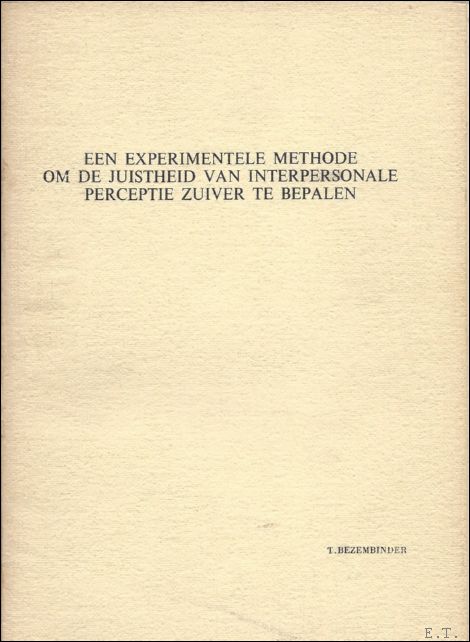
Bezembinder, T.
EEN EXPERIMENTELE METHODE OM DE JUISTHEID VAN INTERPERSONALE PERCEPTIE ZUIVER TE BEPALEN.
Gronigen, Kleine der A3-4, 1961. Paperback, in-8?°, 165pp.
An experimental method to obtain pure accuracy scores in interpersonal perception with a summary in english, french and german.
Boeknummer: 2755 | Prijs: EUR 20.00
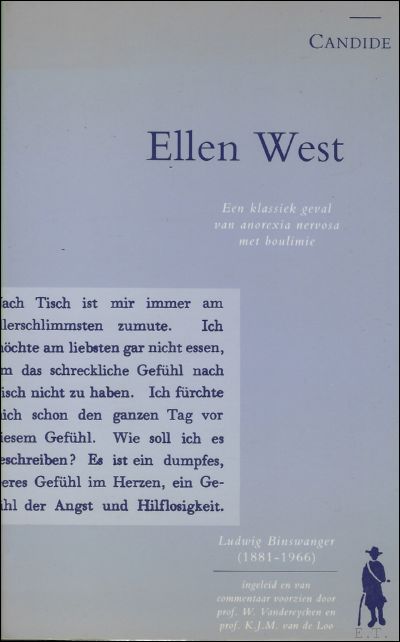
BINSWANGER, Ludwig; VERT. VLAANDEREN HANS
ELLEN WEST,
Antwerpen, De Vries -, 1992. Paperback. Formaat 20x13x2 cm text in Nederlands ISBN: 9789064811562
Zwitserse psychiater en pionier op het gebied van existentiele psychologie. Zijn beroemdste onderwerp was Ellen West, een diep onrustige patient.
Boeknummer: 29622 | Prijs: EUR 14.99
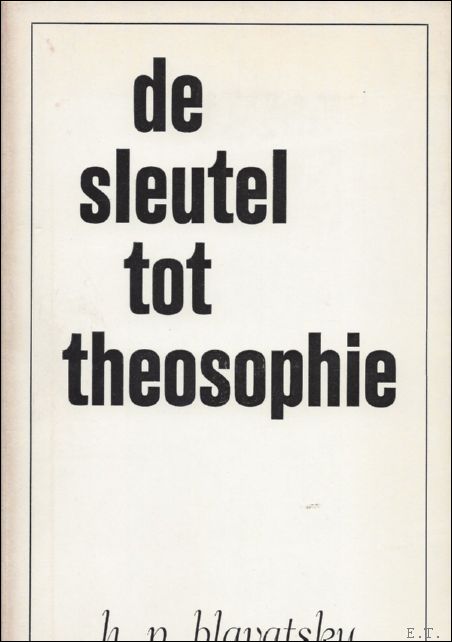
Blavatsky, H.P.
DE SLEUTEL TOT THEOSOPHIE. EEN DUIDELIJKE UITEENZETTING IN DE VORM VAN VRAAG EN ANTWOORD VAN DE ZEDENLEER, WETENSCHAP EN WIJSBEGEERTE.
's Gravenhage, J. Couvreur,. Softcover, originele uitgeversomslag, 13x21cm., 235 pp.
Theosophie, wetenschap, zedenleer en wijsbegeerte.
Boeknummer: 4189 | Prijs: EUR 8.00
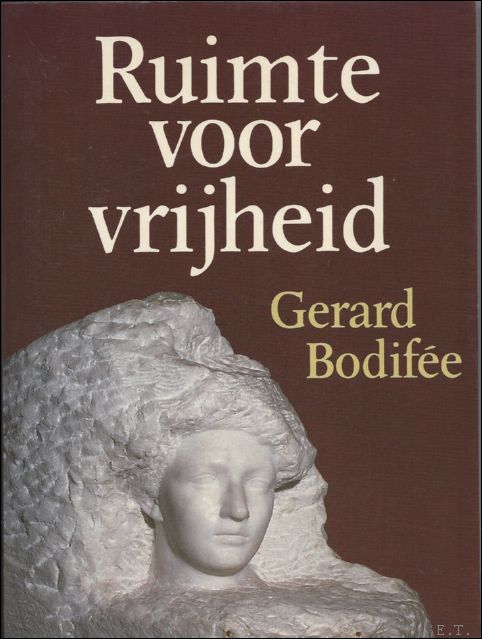
Bodifee
RUIMTE VOOR VRIJHEID.
Kapellen, Pelckmans, 1990. Paperback, geillustreerde uitgeversomslag z/w, 22,5x15cm, 236pp.
De onvoltooide natuur en het menselijke initiatiaf.
Boeknummer: 1597 | Prijs: EUR 15.00
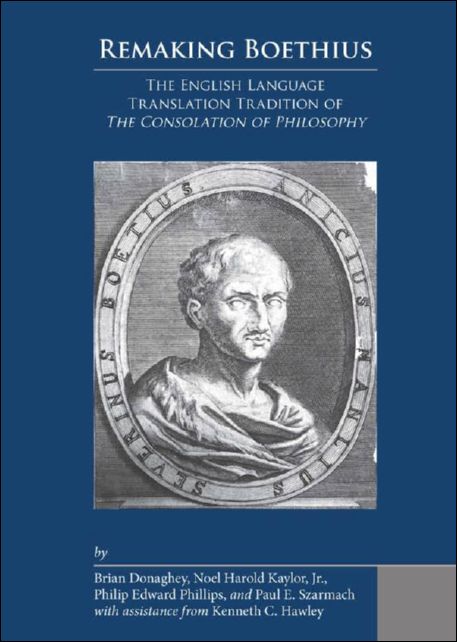
Boethius(auth), Brian Donaghey, Noel Harold Kaylor, Philip Edward Phillips, Paul E. Szarmach (eds)
Remaking Boethius. The English Language Translation Tradition of 'The Consolation of Philosophy'
Brepols, 2019. Hardback, xxviii + 496 pages, 156 x 234 mm, Language: English. ISBN: 9782503584676
Summary This volume is a reference work, organized chronologically in its sections, with a separate entry for each translator's work. The sections are defined by the type of translations they comprise, whether complete, partial, meters only, etc. The plan of the book is encyclopedic in nature: some biographical material is provided for each translator; the translations are described briefly, as are their linguistic peculiarities, their implied audiences, their links with other translations, and their general reception. Sample passages from the translations are provided, and where possible these are two of the most well-known moments in the Consolatio: the appearance of Lady Philosophy, narrated by the Prisoner, and the cosmological hymn to the Deus of the work, sung by Lady Philosophy. TABLE OF CONTENTS Preface Acknowledgments Prologue: The Foundation of the Tradition: The Latin De consolation philosophiae Part I: Complete Translations into English of De consolation philosophiae Part II: Partial or Abridged Translations into English of De consolation philosophiae Part III: Translations into English of the Meters or Selected Meters of De consolation philosophiae Part IV: Spurious, Mislabeled, or Lost Translations of De consolation philosophiae Part V: Modern English Translations of Old English Prose and Verse Translations of De consolation philosophiae Part VI: An Early Adaptation of Chaucer's Translations into English of De consolation philosophiae with Commentary Interspersed Part VII: Some Minor Uses of Translations or Adaptations of Passages from De consolation philosophiae Part VIII: Two Early Discussions on De consolation philosophiae translation Epilogue: Some Relevant Definitions: Samuel Johnson's Dictionary Notes on the Editors
Boeknummer: 65980 | Prijs: EUR 95.00
Boethius(auth), Brian Donaghey, Noel Harold Kaylor, Philip Edward Phillips, Paul E. Szarmach (eds)
Remaking Boethius. The English Language Translation Tradition of 'The Consolation of Philosophy'
Brepols, 2019. Hardback, xxviii + 496 pages, 156 x 234 mm, Language: English. ISBN: 9782503584676
Summary This volume is a reference work, organized chronologically in its sections, with a separate entry for each translator's work. The sections are defined by the type of translations they comprise, whether complete, partial, meters only, etc. The plan of the book is encyclopedic in nature: some biographical material is provided for each translator; the translations are described briefly, as are their linguistic peculiarities, their implied audiences, their links with other translations, and their general reception. Sample passages from the translations are provided, and where possible these are two of the most well-known moments in the Consolatio: the appearance of Lady Philosophy, narrated by the Prisoner, and the cosmological hymn to the Deus of the work, sung by Lady Philosophy. TABLE OF CONTENTS Preface Acknowledgments Prologue: The Foundation of the Tradition: The Latin De consolation philosophiae Part I: Complete Translations into English of De consolation philosophiae Part II: Partial or Abridged Translations into English of De consolation philosophiae Part III: Translations into English of the Meters or Selected Meters of De consolation philosophiae Part IV: Spurious, Mislabeled, or Lost Translations of De consolation philosophiae Part V: Modern English Translations of Old English Prose and Verse Translations of De consolation philosophiae Part VI: An Early Adaptation of Chaucer's Translations into English of De consolation philosophiae with Commentary Interspersed Part VII: Some Minor Uses of Translations or Adaptations of Passages from De consolation philosophiae Part VIII: Two Early Discussions on De consolation philosophiae translation Epilogue: Some Relevant Definitions: Samuel Johnson's Dictionary Notes on the Editors
Boeknummer: 65980 | Prijs: EUR 95.00
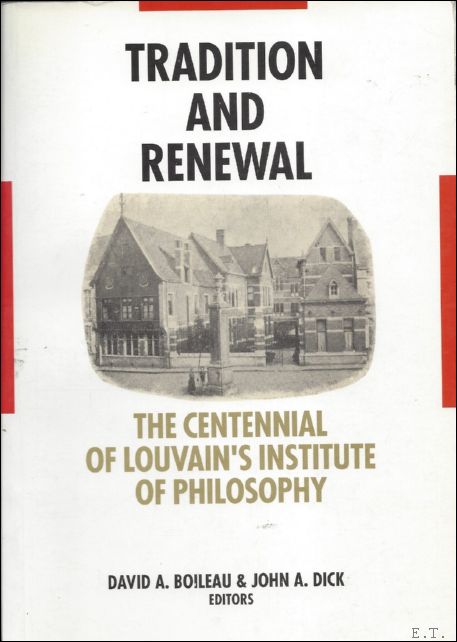
BOILEAU, D.A., DICK, J.A. ed.
TRADITION AND RENEWAL. THE CENTENNIAL OF LOUVAIN'S INSTITUTE OF PHILOSOPHY VOLUME 1 & 2
Leuven, University Press,, 1992 / 1993. 1. Wrapped, 160 x 240 mm., Volume 1 : 218 pag. / Volume 2 : 283 pag. in good condition,
Louvain Philosophical Studies
Boeknummer: 877 | Prijs: EUR 59.95
Bram Demulder, Peter Van Deun (eds)
Questioning the World. Greek Patristic and Byzantine Question-and-Answer Literature
Brepols, 2021. Hardback, 472 pages, Size:156 x 234 mm, Illustrations:6 tables b/w., Language(s):English, French, Greek. ISBN: 9782503590752
Summary This volume discusses cosmological issues in Greek Patristic and Byzantine question-and-answer literature. By adopting this focus, it yields novel insights into both the (theological / philosophical) content and the (literary) form of the texts under scrutiny. How did Greek Patristic and Byzantine authors understand the cosmos of which they were a part and the world in which they lived? And what literary forms did they use to express their questions and answers on these issues? This collection of studies shows that, in order to bring out the important intellectual contribution of the authors under discussion, both 'cosmology' and 'question-and-answer literature' should be defined more broadly than expected. Several papers deal with the crucial corpora by Pseudo-Justin and Maximus the Confessor. Other authors under discussion include Philoponus, Pseudo-Caesarius, Michael Psellus, Severian of Gabala, and Nilus Doxopatres. Attention also goes to the critical edition of question-and-answer literature, as well as to the Greek Patristic and Byzantine reception of cosmological questions and answers from Antiquity (i.c. Aristotle, Philo of Alexandria, Plutarch, and Iamblichus). TABLE OF CONTENTS Introduction: Questions and Kosmoi (Bram Demulder & Peter Van Deun) Part 1: Pseudo-Justin Cosmology and its 'Problems' in Ps.-Justin's Quaestiones et responsiones ad orthodoxos (Yannis Papadogiannakis) The Ps.-Justinian Corpus of Erotapokriseis and Apologetical Treatises. In Search of an Author and a Historical Setting (Benjamin Gleede) Is the Prime Mover the Source of All Movement? Pseudo-Justin on Aristotle's Unmoved Mover (Marcelo D. Boeri) Une polémique contre Philon d'Alexandrie dans la Question 69 ad orthodoxos attribuée à Justin ? (Sébastien Morlet) Part 2: Maximus the Confessor Re-interpreting Tradition: Maximus the Confessor on Creation in Ambigua ad Ioannem (Vladimir Cvetkovi?) St Maximus the Confessor on the Mystery of Christ (Torstein Theodor Tollefsen [University of Oslo]) Jamblique et Maxime le Confesseur, cosmologie et théurgie (Christian Boudignon) What Theodosius of Gangra wanted to Know from Maximus the Confessor (Bram Roosen) Part 3: Cosmologies in Sixth-Century Byzantium Les conditions de l'avènement de la lumière dans le De opificio mundi de Jean Philopon. Difficultés et solutions (Pascal Mueller-Jourdan) Pre-Existence and the Creation of the World in Pseudo-Caesarius (István Perczel) Part 4: Questioning Genre in the Middle-Byzantine Period Pagan Garlands and Christian Roses. Plutarch's Quaestiones convivales in Michael Psellus' De omnifaria doctrina (Michiel Meeusen) Cosmological Questions Answered with Severian of Gabala in MS Athonensis, Lavras B 43 (Eustratiadis 163) (Reinhart Ceulemans) Le De oeconomia Dei de Nil Doxapatrès. Quelques observations sur le genre littéraire de l'?uvre et sur sa transmission manuscrite (Peter Van Deun) List of Abbreviations Index biblicus (Maxim Venetskov) Index fontium (Maxim Venetskov)
Boeknummer: 65166 | Prijs: EUR 110.00
Bram Demulder, Peter Van Deun (eds)
Questioning the World. Greek Patristic and Byzantine Question-and-Answer Literature
Brepols, 2021. Hardback, 472 pages, Size:156 x 234 mm, Illustrations:6 tables b/w., Language(s):English, French, Greek. ISBN: 9782503590752
Summary This volume discusses cosmological issues in Greek Patristic and Byzantine question-and-answer literature. By adopting this focus, it yields novel insights into both the (theological / philosophical) content and the (literary) form of the texts under scrutiny. How did Greek Patristic and Byzantine authors understand the cosmos of which they were a part and the world in which they lived? And what literary forms did they use to express their questions and answers on these issues? This collection of studies shows that, in order to bring out the important intellectual contribution of the authors under discussion, both 'cosmology' and 'question-and-answer literature' should be defined more broadly than expected. Several papers deal with the crucial corpora by Pseudo-Justin and Maximus the Confessor. Other authors under discussion include Philoponus, Pseudo-Caesarius, Michael Psellus, Severian of Gabala, and Nilus Doxopatres. Attention also goes to the critical edition of question-and-answer literature, as well as to the Greek Patristic and Byzantine reception of cosmological questions and answers from Antiquity (i.c. Aristotle, Philo of Alexandria, Plutarch, and Iamblichus). TABLE OF CONTENTS Introduction: Questions and Kosmoi (Bram Demulder & Peter Van Deun) Part 1: Pseudo-Justin Cosmology and its 'Problems' in Ps.-Justin's Quaestiones et responsiones ad orthodoxos (Yannis Papadogiannakis) The Ps.-Justinian Corpus of Erotapokriseis and Apologetical Treatises. In Search of an Author and a Historical Setting (Benjamin Gleede) Is the Prime Mover the Source of All Movement? Pseudo-Justin on Aristotle's Unmoved Mover (Marcelo D. Boeri) Une polémique contre Philon d'Alexandrie dans la Question 69 ad orthodoxos attribuée à Justin ? (Sébastien Morlet) Part 2: Maximus the Confessor Re-interpreting Tradition: Maximus the Confessor on Creation in Ambigua ad Ioannem (Vladimir Cvetkovi?) St Maximus the Confessor on the Mystery of Christ (Torstein Theodor Tollefsen [University of Oslo]) Jamblique et Maxime le Confesseur, cosmologie et théurgie (Christian Boudignon) What Theodosius of Gangra wanted to Know from Maximus the Confessor (Bram Roosen) Part 3: Cosmologies in Sixth-Century Byzantium Les conditions de l'avènement de la lumière dans le De opificio mundi de Jean Philopon. Difficultés et solutions (Pascal Mueller-Jourdan) Pre-Existence and the Creation of the World in Pseudo-Caesarius (István Perczel) Part 4: Questioning Genre in the Middle-Byzantine Period Pagan Garlands and Christian Roses. Plutarch's Quaestiones convivales in Michael Psellus' De omnifaria doctrina (Michiel Meeusen) Cosmological Questions Answered with Severian of Gabala in MS Athonensis, Lavras B 43 (Eustratiadis 163) (Reinhart Ceulemans) Le De oeconomia Dei de Nil Doxapatrès. Quelques observations sur le genre littéraire de l'?uvre et sur sa transmission manuscrite (Peter Van Deun) List of Abbreviations Index biblicus (Maxim Venetskov) Index fontium (Maxim Venetskov)
Boeknummer: 65166 | Prijs: EUR 110.00
Brian L. Weiss ; Amy E. Weiss
Wonderen bestaan heling en transformatie door reincarnatie
Zwerk, 2013. 1. Paperback, 332 pagina's, NL, 230 x 160 mm, Nieuw, . ISBN: 9789077478523
Dr Brian Weiss geeft sinds de verschijning van Vele levens, vele meesters (ISBN 978 90 77478 031 8) in 1988 reïncarnatieworkshops. Inmiddels hebben meer dan tienduizend deelnemers zijn workshops gevolgd. In deze Nederlandse vertaling van Miracles Happen beschrijven deelnemers en therapeuten hun ervaringen, aangevuld met commentaren en observaties van Weiss. Het resultaat is een inspirerend en aangrijpend boek vol opzienbarende herinneringen, inzichten en ervaringen.
Boeknummer: 59398 | Prijs: EUR 24.50